


 Ireland may be synonymous with lush green landscapes, but is the country also a green destination?
Tourism Ireland, the organization responsible for marketing Ireland overseas, believes the answer is yes, and its CEO is happy to tell you why.
“We are a little country known for being green and getting more green all the time, from an environmental point of view,” says Alice Mansergh. The Emerald Isle’s natural beauty and commitment to preserving its heritage make it uniquely positioned to embrace sustainable tourism — and she says it’s worth a visit in 2025.
Ireland’s green credentials can be seen in several places, including ships that ply the River Shannon using sustainable fuels. These rail lines have been converted into greenways and sustainable peat bogs. But the path to achieving this vision isn’t without its challenges.
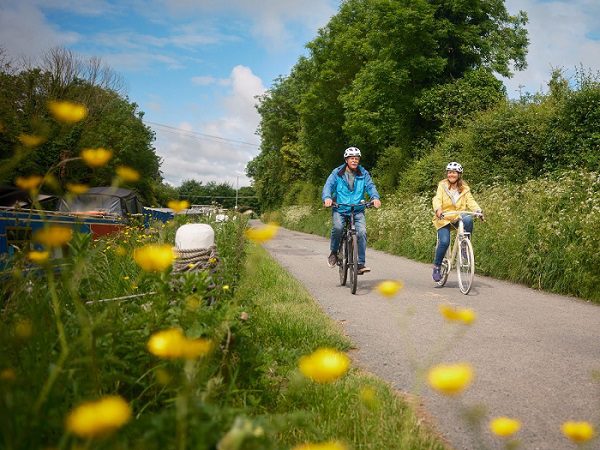
Cyclists along the Limerick Greenway near Limerick, Ireland. – Photo courtesy of Tourism Ireland.
How Ireland turned green
On paper, Tourism Ireland’s sustainability journey looks routine, if a little late by European standards. 2018, the organization adopted sustainable destination marketing principles, emphasizing regional and seasonal tourism distribution. A year later, Tourism Ireland reviewed its offices’ environmental practices to identify areas for improvement.
In 2021, Tourism Ireland’s board designated sustainability as a strategic priority, developing a sustainability action plan and establishing an internal task force to implement it. Tourism Ireland’s 2023-2025 corporate strategy incorporated this focus to promote growth based on economic, social and environmental sustainability.
But in practice, what does all that mean? Like many destinations, Ireland grapples with the inherent tension between attracting visitors and minimizing the environmental impact of travel.
“There is a carbon footprint associated with getting people to the island, of course,” says Mansergh.
To address this, Tourism Ireland focused on attracting visitors who stay longer, explore more, and engage deeply with local communities. Ireland measures the success of its programs based on a metric called revenue per carbon footprint, which rewards the type of tourism that spends less carbon and stays longer — and discourages visitors who fly in for the weekend.
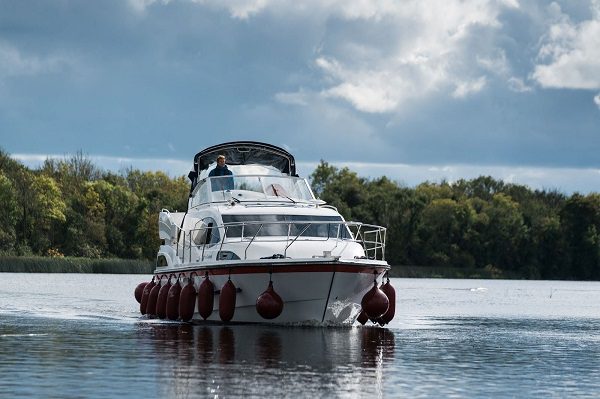
A boat on the River Shannon. The vessels along this river have transitioned to sustainable fuels. – Photo courtesy of Tourism Ireland.
How is Ireland sustainable now?
It’s one thing to have a sustainability plan but quite another thing to implement. Mansergh cites three examples of sustainable tourism in Ireland.
Switching to HVO on the River Shannon
Mansergh praises Shannon’s boat rental sector for switching from fossil fuels to hydrotreated vegetable oil (HVO). The boat rental businesses on the River Shannon consume about 500,000 litres of diesel per season, producing about 1.3 million kilograms of carbon dioxide emissions. By switching to HVO, these businesses reduced their total emissions to 107,000 kilograms of carbon dioxide, a 92 per cent reduction.
Greenways offer sustainable tourism opportunities.
Ireland’s extensive network of Greenways is another example of its dedication to sustainability. These off-road paths, created from repurposed railway lines, allow visitors to engage in slow tourism by cycling or walking through picturesque landscapes. For example, visitors can travel by train from Dublin to Waterford and then cycle along the Waterford Greenway, seeing gardens, the river, and beaches. Mansergh emphasizes that Greenways allow visitors to enjoy the biodiversity of the trails, including wildflowers and wildlife returning as a result of Ireland’s regenerative tourism initiatives. The Greenways offer a way to experience Ireland’s natural beauty while minimizing environmental impact, aligning with Tourism Ireland’s goals of promoting sustainable and responsible travel.
Revitalizing Ireland’s famous bogs
In the past, peat was harvested from bogs to generate electricity in Ireland. However, the process harmed the environment, and the European Union offered funding to help Ireland transition away from using peat for fuel. Ireland used the money to revitalize the boglands and develop trails, allowing for the creation of low-impact tourism destinations. According to Mansergh, this transformation of the bogs helps sequester carbon and provides economic opportunities for rural communities through tourism.
These are steps in the right direction toward sustainability, but can visitors trust these green initiatives?
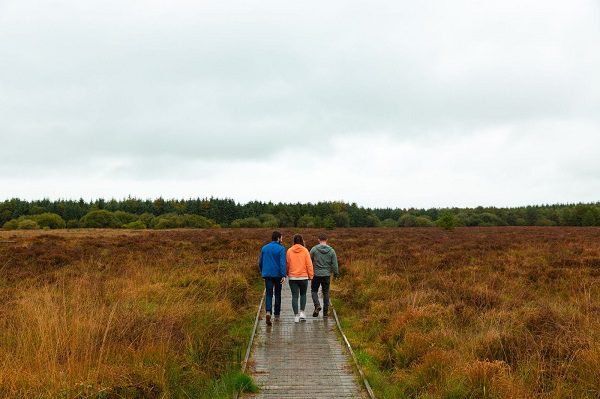
A revitalized peat bog near Limerick, Ireland. – Photo courtesy of Tourism Ireland.
Fighting greenwashing on the Emerald Isle
One of sustainable tourism’s biggest challenges is greenwashing — the practice of making misleading or unsubstantiated environmental claims.
Mansergh is acutely aware of this problem and the need to build trust with travellers. She points out that many existing certification programs are based on a pay-to-play model, where businesses essentially purchase a badge without undergoing rigorous scrutiny.
Tourism Ireland is collaborating with Fáilte Eire and Tourism Northern Ireland to develop a new, island-wide certification program to address this.
“We won’t necessarily be relying on private operators where you’re paying someone for a badge,” she says. “It will be a state-backed and state-run island-wide certification program so that when you see a certification, it means something.”
Still in development, this new program aims to provide a more transparent and reliable way for visitors to identify sustainable businesses.
What’s next for a greener Ireland?
Ireland may receive a boost from the European Union, which has proposed a new directive to combat misleading environmental claims.
The Green Claims Directive will establish a clear set of rules businesses must follow when making environmental claims about their products. The directive will require enterprises to back up their environmental claims with robust scientific evidence, taking into account the entire life cycle of a product. Additionally, it will standardize environmental labelling schemes, ensuring transparency and credibility for consumers seeking eco-friendly products.
“We’ve got lots of people wanting to say that they’re green, but there has to be some standardization of what that means,” explains Mansergh. “Otherwise, it is an empty promise that’s more commercially driven than verifiable.”
However, Ireland’s tourism industry isn’t waiting for the EU to act. The idea of visiting Ireland, where visitors can immerse themselves in nature, connect with local communities, and support businesses prioritising sustainability, has already taken hold.
“There’s this hunger to get about in nature, touching and feeling things, and helping support traditional ways of life,” says Mansergh. “And so, I think that’s part of the opportunity. When you talk about sustainability, how do we help people enjoy nature and age-old traditions in a responsible way? And that’s really exciting because I think Ireland has so much to offer in those terms.”
There is no question that Ireland’s green revolution is worth seeing. But Ireland is just beginning a long and winding road toward sustainable tourism.
It’s a journey that requires innovation, collaboration, and a commitment to transparency. With its stunning landscapes, rich culture, and growing network of sustainable experiences, Ireland offers a compelling invitation to travellers looking for a more meaningful and responsible way to explore the world.
Written by: Christopher Elliott
BIO:
Christopher Elliott is an author, consumer advocate, and journalist. He founded Elliott Advocacy, a nonprofit organization that helps solve consumer problems. He publishes Elliott Confidential, a travel newsletter, and the Elliott Report, a news site about customer service. If you need help with a consumer problem, you can reach him here or email him at [email protected].











