

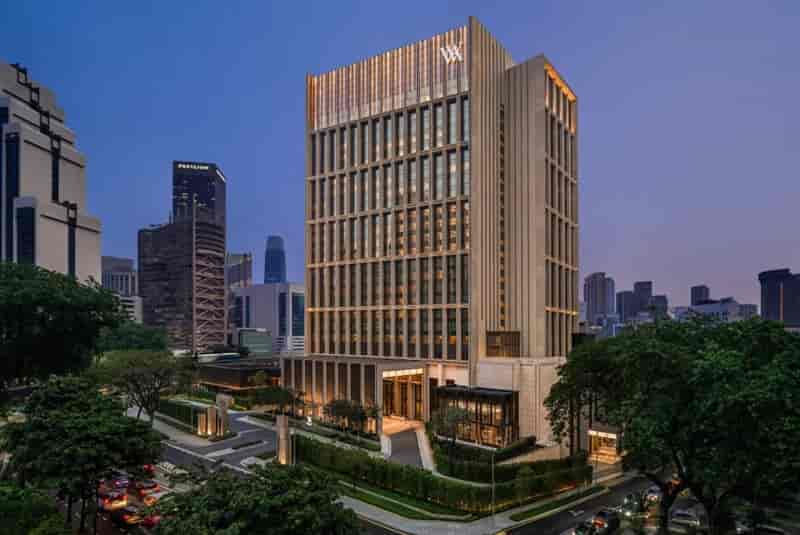
Kuala Lumpur has never struggled to make an entrance. Yet even by the Malaysian capital’s standards, the arrival of a Waldorf Astoria with 268 suites, a pair of internationally celebrated chefs and a ballroom built for 2,500 guests is difficult to overlook.
Waldorf Astoria Kuala Lumpur made its Malaysian debut on 30 October 2026, bringing Hilton’s flagship luxury brand to the Golden Triangle. This is no conventional city hotel with a few impressive rooms at the top. Every accommodation is a suite, and even the smallest begins at 80 square metres.
The opening gives travel advisers another heavyweight address for clients seeking space, privacy and polished service in one of Southeast Asia’s most energetic capitals. It also signals something more ambitious: Hilton wants the hotel to be a place Kuala Lumpur residents visit, not simply somewhere international guests sleep.
All-suite luxury, without the squeeze
The 23-storey property occupies 73 Jalan Raja Chulan, close to Bukit Bintang, Pavilion Kuala Lumpur and the Petronas Twin Towers. Guests have the city’s shopping, dining and business districts close at hand, although the traffic outside remains reassuringly indifferent to the price of anyone’s suite.
Inside, the numbers tell a more comfortable story. The hotel’s 268 suites range from 80 square metres to a 745-square-metre Waldorf Astoria Suite. That gives couples, families and guests on longer visits room to work, entertain or simply close a door between themselves and the rest of their travelling party.
Design studio Deboss Collective has favoured natural stone, warm timber, woven fabrics and bespoke joinery influenced by traditional Malay craftsmanship. Full-height windows bring Kuala Lumpur’s skyline into view, while separate living spaces give the rooms a residential feel rather than the familiar hotel arrangement of bed, desk and hopeful minibar.
For the luxury travel trade, the all-suite format is a clear selling point. It may appeal particularly to multigenerational families, high-end leisure visitors and business travellers who want a base that works beyond an overnight stop. The value, of course, will depend on the rate and on whether the promised service matches the generous floor plan.
A famous clock finds its Malaysian voice
Every Waldorf Astoria needs a clock. It is one of the brand’s enduring customs, and the Kuala Lumpur version gives the tradition a distinctly local accent.
The bronze-and-illuminated-glass timepiece, positioned beside Peacock Alley, takes design cues from historic Islamic astrolabes in the Islamic Arts Museum Malaysia collection. The museum also collaborated on an art collection that brings Malaysian works into conversation with pieces from a wider cultural history, including a nineteenth-century painting of Qajar princes.
There are other thoughtful references. Songket-inspired textiles soften Peacock Alley’s grand stone columns, while subtle details in the suites acknowledge traditional marquetry. The result, according to Hilton, is a deliberate attempt to avoid the interchangeable look that can afflict global luxury hotels.
Peacock Alley itself moves from afternoon tea to evening drinks. It is designed as a meeting place for guests and locals alike, although anyone arranging to meet beneath the clock may still need to be more punctual than the average holidaymaker.
Two headline chefs and seven places to dine
A hotel can buy marble by the tonne. Giving people a reason to cross town for dinner is more difficult. Waldorf Astoria Kuala Lumpur has addressed that challenge by assembling seven restaurants and bars, with Garima Arora and Jean-Georges Vongerichten prominent in the line-up.
Arora, the chef behind Bangkok’s acclaimed Restaurant Gaa, shapes Yaari, a contemporary Indian dining concept. Its menu draws on regional Indian flavours, from coastal curries to northern kebabs, rather than treating the subcontinent as one enormous spice rack.
Vongerichten contributes three venues. JG KL pairs French technique with Asian influences; abc kitchens KL takes a more relaxed approach to seasonal produce; and The Bar by JG puts cocktails and lighter dishes centre stage.
The Istana focuses on Malaysian heritage cooking. Peacock Alley offers tea and lighter fare, while Coda adds a music-led cocktail setting. Together, the venues give the hotel a serious opportunity to compete for local dining business, not just spending by guests who have already checked in.
For visitors, that range is useful. For Kuala Lumpur’s established restaurant scene, it represents a well-funded new arrival with recognisable culinary names. The test will be whether the food develops a loyal local audience once the opening celebrations have finished.
Wellness is becoming serious business
The wellness facilities occupy 2,275 square metres over two floors. Hilton is positioning the Waldorf Astoria Spa around recovery and longevity, with La Prairie treatments and a rotating Masters in Residence programme covering disciplines such as yoga, nutrition, Pilates and fitness.
The emphasis extends upstairs. Suites include yoga mats and digital-detox prompts, while exercise accessories and optional wellness products are designed to make a private routine easier to maintain.
The language of longevity can promise more than any spa could reasonably prove. Here, the real appeal is the range of facilities and the option to tailor a visit, whether that means a massage after a long flight or time away from a crowded calendar. Guests should judge individual treatments on their merits rather than mistake a luxury spa programme for medical care.
That distinction matters as wellness becomes a larger part of premium travel. Travellers increasingly want holidays that leave them feeling better, but they still expect a comfortable bed and a good breakfast. The Waldorf Astoria is pitching for both.
A grand ballroom with business in mind
The hotel also makes a substantial play for meetings, incentives, conferences and events. Hilton promotes roughly 3,700 square metres of function space, including a pillarless grand ballroom that can host up to 2,500 people for a reception. Its dedicated Executive Hub targets smaller corporate gatherings and focused meetings.
For event planners, the appeal is as much practical as it is theatrical. Large functions can combine accommodation, catering and meeting space at one address, while visiting delegates remain close to the capital’s commercial and retail districts.
The ballroom’s reception capacity should not be confused with seating for 2,500 at a banquet; configurations vary. Organisers should confirm their precise floor plans, capacities and quotations directly with the property. As any event manager knows, a room that looks spacious in photographs can become much smaller once the stage, tables and audiovisual equipment arrive.
What the opening means for travel advisers
Hilton executives have made clear that the ambition reaches beyond overnight stays. Dino Michael, senior vice president and category head of Hilton Luxury Brands, described the vision as hotels that “contribute to the social life of their cities”. That is a useful way to judge this opening.
For Australian agents, the hotel broadens Kuala Lumpur’s upper-end accommodation options for stopovers, premium city breaks, corporate travel and longer stays. Its location suits clients who want access to shopping and dining without sacrificing suite space. Its culinary programme also gives travellers a reason to recommend the property, even if they’re not usually impressed by a hotel restaurant.
Waldorf Astoria Kuala Lumpur participates in Hilton Honors, with eligible direct bookings attracting member rates and other programme benefits. Travellers can check current room prices, availability and inclusions through the hotel’s official booking website. No published rate should be assumed to apply to every date or suite category.
The larger story is straightforward. Kuala Lumpur already has towers, shopping centres and fine hotels. Waldorf Astoria has arrived with space, culinary star power and a determined sense of occasion. Whether it becomes an institution will be decided not by the height of its ceilings, but by the quality of the welcome beneath them.
By: Octavia Koo – © 2026.
Read Time: 6 minutes.
Author Bio:
 Octavia Koo arrived in Australia in the early eighties with little fuss and a good eye. Sydney suited her. At UNSW, she studied Arts, then found her footing in graphic design before drifting, quite naturally, into the digital side of things, building websites and shaping words that made people want to stay.
Singapore followed, and with it, the fast pace of tourism platforms and ITB Asia. Long before SEO became a buzzword, Octavia understood how stories travelled online. That’s where she met Stephen, and the seed for something more was planted.
A few years later, she joined Stephen’s EGT Media.
Today, Octavia works with quiet assurance, blending art, instinct and experience to produce stories that don’t shout; they simply work and linger.











