

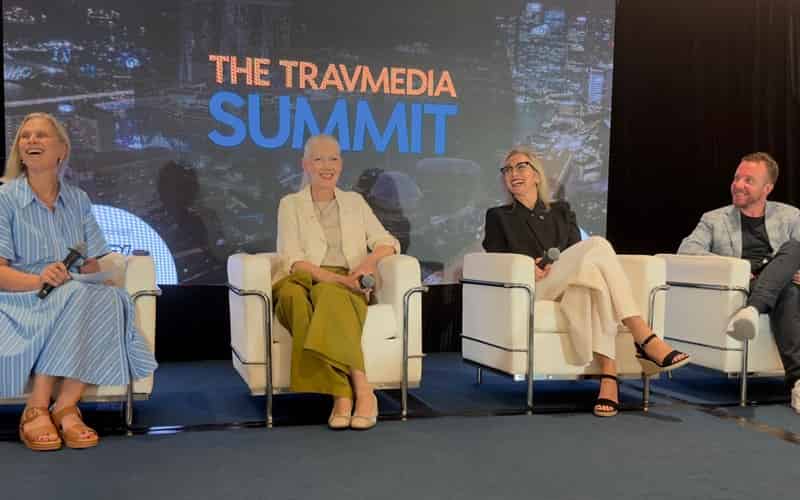
From Vietnam and India to regional Japan, Australian travellers are seeking greater value, deeper cultural experiences and more personalised holidays, according to tourism and media experts.
Australian travellers are increasingly looking beyond traditional holiday hotspots, seeking destinations that offer value, cultural immersion, and memorable experiences rather than just low prices.
Speaking at the Australian Traveller Market in Focus panel, moderated by freelance travel writer Carolyn Beasley, industry experts examined changing booking trends and purchasing behaviours, and how Asian destinations can better attract Australian visitors.
Panellists included Alison Roberts-Brown, founder of tourism marketing agency Tourism Garden; Kelli Armstrong, Managing Editor of Escape; and Tom McMenemie, General Manager Commercial at Luxury Escapes.
With Australians making a reported 12.5 million overseas trips in 2025, the panel highlighted opportunities for destinations able to combine competitive pricing with distinctive experiences.
Vietnam and India lead emerging trends
McMenemie said Indonesia, particularly Bali, remained Luxury Escapes’ leading Asian destination, but Vietnam, India and the Maldives were showing significant momentum.
Luxury Escapes reported a 154 per cent increase in bookings to India, while Maldives bookings rose 75 per cent after the introduction of direct charter flights from Melbourne to Malé.
Vietnam was identified as a market with considerable further growth potential, supported by expanding aviation capacity, new luxury hotels and improved tourism infrastructure.
Armstrong said Australians were increasingly looking beyond major cities and established attractions, with growing interest in regional destinations, local communities and less familiar experiences.
This extended to South Korea beyond Seoul, Indonesia beyond Bali and Japan’s lesser-visited regions.
Japan’s appeal continues
Roberts-Brown, whose agency represents Tokyo and Kyoto, said Japan’s popularity reflected far more than favourable exchange rates.
Australian arrivals reached the one-million milestone in 2025, supported by growing cultural familiarity, improved accessibility and increasing opportunities for repeat visitors.
While overtourism remains a challenge at popular Kyoto attractions, she said the city was encouraging visitors to explore quieter neighbourhoods and surrounding rural areas rather than discouraging tourism altogether.
The strategy also gives travel media opportunities to highlight lesser-known destinations and experiences.
Armstrong agreed that Australians were responding to stories offering alternatives to heavily promoted attractions, particularly those grounded in firsthand local knowledge.
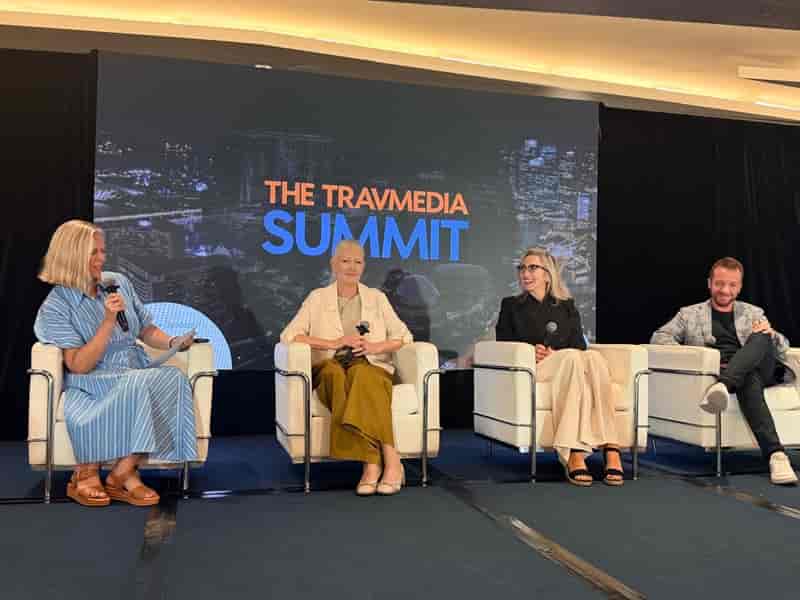
‘Australian Traveller Market in Focus’ moderated by Carolyn Beasley, Freelance Travel Writer, with panellists Alison Roberts-Brown, Founder, Tourism Garden; Kelli Armstrong, Managing Editor, Escape; and Tom McMenemie, General Manager, Commercial, Luxury Escapes. The session examined booking trends, research and purchasing behaviours of Australian travellers, and discussed strategies for Asian destinations and brands to engage this market through media and commercial partnerships.
Value, not simply price
McMenemie emphasised that Australians were seeking value rather than necessarily choosing the cheapest holiday.
This could mean upgrading accommodation, extending a stay, or choosing packages with meals, activities, and other inclusions.
Luxury Escapes was also seeing growing interest in specialist, hosted journeys combining travellers’ personal interests with exclusive experiences.
For luxury travellers, convenience and personalised attention were increasingly important, he said, with seamless service and memorable interactions often outweighing traditional measures of luxury.
Roberts-Brown added that travellers were placing greater value on time, particularly opportunities to share meaningful experiences with family and friends.
What Australian travel media wants
Armstrong offered practical advice for destinations and tourism operators seeking Australian editorial coverage.
With editors receiving large volumes of pitches, successful submissions needed concise subject lines, original angles, strong imagery and a clear understanding of the publication’s audience.
She cited commissioning two stories from a previously unknown writer exploring an alternative, analogue side of Japan and ways to avoid social-media-driven tourism.
Generic destination invitations, she warned, were not compelling editorial propositions.
The panel’s message for Asian tourism operators was clear: Australians remain enthusiastic international travellers, but they are increasingly discerning.
Destinations that can demonstrate genuine value, regional diversity and meaningful experiences, supported by strong storytelling and effective commercial partnerships, will be best positioned to capture this evolving market.
By: Roderick Eime – © 2026.
Read Time: 3 minutes.
Author Bio:
 Widely published, multiple award-winning specialty travel and tourism journalist and photographer with a broad general knowledge.
Rod’s professional media experience spans four decades, giving him a firm grounding in traditional media and insight into the evolution of digital and online communications.
A natural storyteller, Rod seeks to entertain, inspire, and engage readers while also informing and educating. Whether it is an adventure travel story among reindeer herders in Siberia or a potentially stodgy end-user account for an industrial lubricant manufacturer, Rod believes readers should leave enriched and motivated.
His photography has won several awards, including a rare double ‘Travel Photographer of the Year’ gong from the Australian Society of Travel Writers in 2011 and 2013.
An early adopter of digital and online publishing, he launched his first web pages in 1994.
Learn more at www.traveloscopy.com or contact him at [email protected].
The TravMedia Summit Asia 2026 took place on 19 October at the Suntec Singapore Convention & Exhibition Centre, ahead of the 14th annual International Media Marketplace (IMM Asia) on 20 October. Organised by TravMedia, founded by CEO Nick Wayland, the two-day gathering brought together leading travel journalists, editors, content creators, tourism boards, hotel groups and industry representatives from across the Asia-Pacific region. The Summit featured discussions on emerging travel trends, culinary tourism, customer loyalty, destination marketing, and the evolving media landscape, while IMM offered pre-scheduled meetings between travel media and industry partners. YOTEL was the Summit’s headline sponsor, with Accor Plus sponsoring the travel loyalty panel and Pan Pacific Singapore supporting the Summit’s networking cocktails. Sofitel Singapore City Centre sponsored the IMM Asia cocktail reception.











