

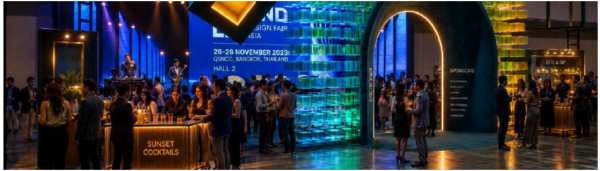
In the last week of November, Bangkok becomes the meeting point for the people deciding how Asia will be designed, built and inhabited. FIND – Design Fair Asia today unveils the programme for the FIND Global Summit 2026: three days of keynotes, panels and fireside conversations that place architects, hoteliers, developers and makers in the same room – and, often, on the same stage. More than 60 speakers from 17 countries take part, and trade visitors who pre-register attend free.
Held from 26–28 November 2026 at Queen Sirikit National Convention Center (QSNCC), alongside the fifth edition of the fair, the Summit is built around a single argument: that the most consequential ideas in the region’s built environment now emerge where design authorship, cultural memory and commercial ambition meet. The Governor of Bangkok, Chadchart Sittipunt, will officially open FIND – Design Fair Asia on 26 November in the Summit space, setting the tone for three days of exchange between the city’s design community and its international guests.
Architecture sets the opening register. Shao-wei Huang, Associate Director and Head of the Shenzhen Office at ZHA, delivers the Summit’s opening keynote, “Designing Beyond Boundaries”, on architecture, intelligence and human experience in a new era. Richard Wood, Managing Director Asia at Snøhetta, opens the second day with “Liberating Laughter”, a keynote on delight as a condition of design; Garett Hwang, Director at UNStudio, asks how deep the role of artificial intelligence in architecture should go; and Kulapat Yantrasast, Founder of WHY Architecture, closes the day with a keynote on the future of the museum. They are joined by Massimo Iosa Ghini, Founder of Iosa Ghini Associati; Simon Yu, Director and Head of the Hong Kong Office at ZHA; Lionel Teh, Creative Director of Architecture at WATG; Marina Almeida, Senior Principal and Co-Head of Interior Design Asia-Pacific at Populous; and Boonserm Premthada of Bangkok Project Studio.
Around them sit the people who commission, develop and operate the spaces under discussion: Mandar Zaware, Global VP Design and Project Management at Marriott International; Stéphane Lombard, VP Design Luxury Asia Pacific at Accor; Viri Kaur Chopra, Global Corporate Director of Residences at Six Senses Hotels Resorts Spas; Krid Kusumawalee, Senior Director, Development at Seibu Prince Hotels & Resorts; Arunwan Chantanavicharn, Group Director of Brands at Narai Hospitality Group; Nida Wongphanlert, Managing Director & Owner of 137 Pillars Hotels & Resorts; Ian Hendricks, Creative Director at Central Pattana; Jariya Thumtrongkitkul, PhD, Head of Retail Leasing and Group Transaction Management, Thailand, at CBRE; and Viona Zhang, Deputy Managing Director at C9 Hotelworks.
The wider programme draws on practice from 17 countries – from the United Kingdom, the United States, France, Italy, Germany and Spain to India, Singapore, the Philippines, Korea, Hong Kong and mainland China – alongside a strong Thai contingent. The American Institute of Architects is represented by its regional leadership: J Lee Rofkind, FAIA, of AIA Hong Kong; Cathy Saldaña, President of AIA Southeast Asia and Principal & CEO of PDP Architects; and Manon Koestoer, Immediate Past President of AIA Southeast Asia. Senior figures from Hirsch Bedner Associates (HBA) arrive from its Asian studios, alongside Ed Gaskin, Associate Director at ZHA and Secretary of AIA Hong Kong, and Monika Choudhary, Founding Partner & Chief Development Officer of ZHCollective | Habitat Architects. Representatives of Kristina Zanic Consultants, the international hospitality interior design consultancy, will also join the Summit’s hospitality conversations. Further voices come from Aedas, Fenn Designers, Concept i, greymatters, A Sharma Associates, TROP, HAS design and research, Inverse Lighting Design, EKAR, ENARI Architects, Thai Furniture Association, C&R Thailand and the Interior Design Continuing Education Council (IDCEC).
It is this convergence – of international design leadership, regional authorship and the people behind Asia’s major hospitality, real-estate and development decisions – that gives the 2026 Summit its particular character.
Three questions for a region in transformation
The FIND Global Summit 2026 is organised around three interlocking questions that cut across architecture, interiors, hospitality and real estate.
Who authors Asian design? How might the region build forward without erasing what already stands? And how is Asia’s understanding of hospitality, wellbeing and experience changing the way people live?
Each question becomes an editorial pillar. The pillars run through all three days, and many sessions deliberately sit between them.
01 – The Asian Design Authority | Beyond the Blueprint
The first pillar addresses Asia’s growing confidence as a design vanguard: a region where cultural identity, regional authorship and ambitious civic and commercial projects increasingly set the terms of the global conversation.
Its sessions travel from architecture and interiors to museums, cultural institutions and large-scale development, tracing a shifting relationship between international expertise and local authorship.
The Asian Design Authority casts Asia as the author of its own ideas and asks what happens when knowledge of place, culture and climate leads the brief.
02 – The New Vernacular | Salvaged. Engineered. Reauthored.
What does vernacular mean when heritage meets artificial intelligence, advanced materials and a city in perpetual transformation?
The New Vernacular examines how Southeast Asia is reading its existing buildings, materials, climate and cultural memory, and reauthoring them into something unmistakably contemporary.
Adaptive reuse, circularity, craft and material innovation enter the discussion as generators of new architectural expression, rooted in the realities of designing in the region.
03 – Asia’s Sensory Sanctuaries | A Way of Living
The third pillar turns to a field in which Asia has become quietly influential: the meeting of hospitality, materiality, sensory experience and wellbeing.
Ideas once refined in hotels and resorts are now migrating into branded residences, resort living, private healthcare and new forms of everyday domestic life.
Asia’s Sensory Sanctuaries brings designers, hotel groups, developers and operators together to consider how light, material, flexibility, longevity and care are reshaping the spaces in which people stay and, increasingly, the homes in which they live.
From international practice to local authorship
The opening day, Authorship, Experience & A New Way of Living, begins with the question of who writes the brief.
Following Shao-wei Huang’s keynote, “Global Expertise, Local Soul: The Future of Authentic Regional Design” gathers Christin Castillo, Principal at HBA Indonesia, JoonSuk Suh, Managing Principal at HBA Seoul, and Sabine Beck, Partner at HBA, in a conversation moderated by Thomas Meier, Design Director at HBA Bangkok, on how an international practice can work across cultures while keeping the identity of a place intact.
The day closes in a material register. The TIDA keynote panel “Salvaged, Woven, Reauthored: Material, Reuse and Craft” brings Korakot Aromdee of Korakot International and Decha Archjananun of THINKK Studio into dialogue with Massimo Iosa Ghini, on how material intelligence and craft can produce a contemporary language that still belongs to its place.
Hospitality moves beyond the hotel
Between these bookends, hospitality – and the shifting definition of luxury – runs as a continuous thread.
“Beyond Wellness: The Rise of the Longevity Economy” brings together Nida Wongphanlert, Lydia Tiasiri, Director of Design & Chief Sustainability Officer at Fenn Designers, and Viona Zhang of C9 Hotelworks to ask where wellness is creating genuine value for hotels, residences and mixed-use destinations – and where the market is heading next. A companion panel, “Where Hospitality Meets Healthcare: Designing for Care and Longevity”, follows the guest into clinical environments with Diana Kraemer, Chief Wellness Officer at The Longevity Suite Asia and Founder of DK Wellness.
In “The Luxury of Constraint”, Stéphane Lombard of Accor, Alan Barr, Founder of greymatters, Francisco Nicolas, Design Director at Aedas Hospitality, and Lionel Teh of WATG, in conversation with Sanjog Modgil, Managing Director – Asia Pacific at SNS Group, examine how tighter budgets, brand standards, existing buildings and local context are redrawing what gets designed – and what actually gets built. “What Makes a Journey Worth Retelling?”, with Stefan Bruns, General Manager of DTH Travel Thailand / Blue Jasmine Train, Worapan Klampaiboon, Founder of Supergreen Studio, and Chalida Sirikhunwong, Founder & Owner of Baan Chomprang, considers how culture and design turn a stay into a memory.
In the fireside conversation “When Wellness Moves In”, Viri Kaur Chopra of Six Senses, traces how principles developed in hospitality are entering the home, quietly rewriting expectations of how people live.
From buildings to places
The second day widens the frame from the single building to the city.
After Richard Wood’s keynote – an exploration of how design can create the conditions for spontaneity, curiosity and shared experience – “Can Retail Design the Next Cultural District?” brings Ian Hendricks of Central Pattana together with Natalie Chelliah, Associate Director (Interior) at Concept i, to ask whether commercial development can move beyond transaction towards lasting civic and cultural value, and how retail mix, placemaking and experience bring people back. In his keynote “Designing with AI to What (Long-Term) Depth”, Garett Hwang of UNStudio then looks beyond the promise of speed to ask where AI genuinely adds value to architecture, and where human judgement must remain firmly in place.
The afternoon turns to the city. “Culture as Infrastructure: Designing Cultural Spaces That Shape the City” brings together Stefano Rabolli Pansera, Founder of Bangkok Kunsthalle and Khao Yai Art Forest, with fellow thought leaders to ask whether art spaces and institutions can become lasting urban infrastructure rather than isolated destinations. The day then closes with a TIDA keynote by Kulapat Yantrasast, Founder of WHY Architecture, whose museum work spans the United States and Asia. In “The Future of Museum Design”, he sets out how the museum is evolving from a “temple of art” into an open, inclusive public space.
Making is given its own stage. “Furniture Made in Asia: Rethinking the Materials Behind It” brings Jirawat Tangkijngamwong, President of the Thai Furniture Association and CEO of DEESAWAT, together with designer Eugenio Hendro to explore how material choices shape the design, durability and footprint of furniture made in the region. “Active Spaces: How Design Shapes Performance and Wellbeing at Work”, with Deni Davis, General Manager of C&R Thailand, turns to the contemporary workplace. In “Beyond the Horizon: How Experiential Design Is Shaping the Future”, Krid Kusumawalee of Seibu Prince Hotels & Resorts and Arunwan Chantanavicharn of Narai Hospitality Group, moderated by Khachornsak Tuntisook of Kristina Zanic Consultants, explore how destination hotels create a sense of place where little or none existed.
In “Built for the Site, Not the Brand”, Anil Sharma, Principal of A Sharma Associates, Mandar Zaware of Marriott International, Attaporn Kobkongsanti, Founder & Design Director of TROP: terrains + open space, and Monika Choudhary of ZHCollective | Habitat Architects, moderated by Shuchita Gupta of Kristina Zanic Consultants, consider how global brand expectations can coexist with architecture that genuinely belongs to its setting. In the TIDA fireside “The 50% Architect: Building With What’s Already There”, Boonserm Premthada reflects on an architecture that leaves half its work to nature, context and community.
Asia, from within
The final day turns the lens on the region itself, opening with the TIDA Thesis Awards 2026, which celebrate the next generation of Thailand’s interior design community.
“One Profession, Many Rulebooks: Practising Architecture Across Asia”, presented by AIA Hong Kong and AIA Southeast Asia, brings together Ed Gaskin of ZHA, J Lee Rofkind, Cathy Saldaña and Manon Koestoer to consider what it takes to practise across a region of radically different markets, cultures and client expectations. The Summit closes with “Beyond the Blueprint: Future Nostalgia in Architecture”, in which Prof. Kulthida Songkittipakdee, Vice President of the Association of Siamese Architects under Royal Patronage (ASA), and Jenchieh Hung, co-founders of HAS design and research, explore how architecture might draw on cultural memory, nature and local ways of living and reinterpret them for today.
Thailand’s own creative community is present throughout. The TIDA panel “Crafting Spaces, Threading Narratives” brings together Nichepak Torsutkanok of ease studio and Charif Lona of Studio Act of Kindness; “Form, Light & Emotion: Sculpting Sensory Atmospheres” gathers Nuttapol Techopitch of Looklen Architects, Ekaphap Duangkaew of EKAR and Bernhard Bstieler of Inverse Lighting Design; and Somchai Jongsaeng of DECA Atelier delivers the TIDA keynote “Architecture from Within: Crafting Mindful Spaces & Sensory Sanctuaries”. The cross-sector “Design Forecast 2027: What’s Next for the Places We Live, Work, Shop & Play”, with Saran Yenpanya of 56thStudio and Marina Almeida of Populous, moderated by Haziq Ariffin of ING Media, looks to the year ahead.
This dialogue between international and Thai perspectives is central to FIND’s Bangkok edition: not a division between “global” and “local”, but a programme designed to put them in the same conversations.
Bangkok as a meeting point for Asian design
The 2026 Summit unfolds against the backdrop of FIND – Design Fair Asia’s move to Bangkok for its fifth edition.
For FIND, the move places the fair at one of Southeast Asia’s most active intersections of hospitality, real estate, retail, architecture and interior design – within reach of a regional market whose projects, practices and supply chains increasingly cross borders.
Carl Press, General Manager, Fiera Milano Asia Pacific, sees the Summit as the clearest expression of that shift. “Asia has been shaping its own design agenda for many years, and many of the studios doing that work across the region are based right here in Thailand,” he said. “The FIND Global Summit assembles speakers from 17 countries with the specifiers, developers, hoteliers and design community who shape this region. In times that keep changing how we live, travel and build, those conversations have to be relevant to real projects and real business, and they should open doors for everyone in the room.”
The programme is built around those encounters, often on a single stage. “The strength of the programme lies in that intersection,” he added. “A global hospitality design leader can be in conversation with a Thai architect, a developer with an emerging studio, or an international practice with someone whose understanding of local culture and place fundamentally changes the project. That exchange is where the Summit earns its place.”
Across three days, the FIND Global Summit 2026 will feature keynotes, panel discussions, fireside conversations, insight sessions, presentations and TIDA-led sessions alongside the FIND exhibition.
Further speakers and final session details will be announced on the FIND website. The summit is a free to attend conference.
Early Bird Registration is now open, offering complimentary access to the exhibition, the FIND Global Summit and special features across all three days. Onsite registration will be subject to a THB 500 admission fee.











