
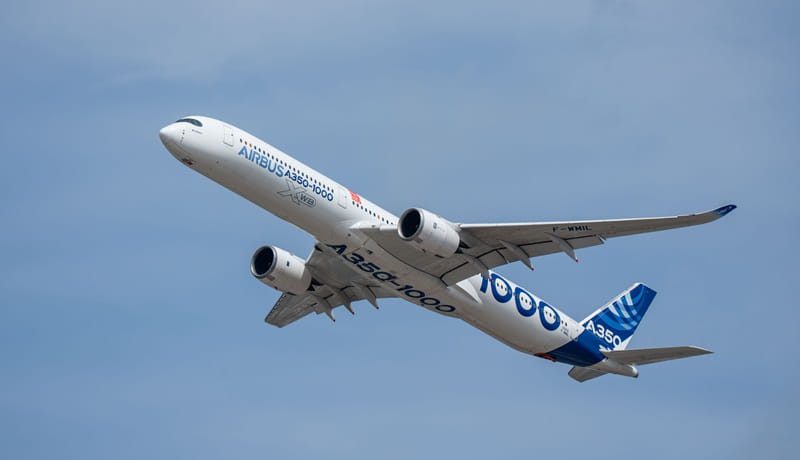
Asia-Pacific is not merely taking part in aviation’s next great growth cycle. It is increasingly shaping it.
Airbus says the region will require a staggering 19,120 new passenger aircraft over the next two decades, accounting for about 45 per cent of projected worldwide demand.
That is an aircraft requirement of formidable scale and another clear sign that the commercial centre of gravity in global aviation continues its long march towards Asia-Pacific.
The numbers come from the Airbus Global Market Forecast 2026–2045, which projects demand for 42,060 new aircraft worldwide as airlines expand, replace ageing fleets and respond to a new generation of travellers.
Airbus expects passenger traffic across Asia-Pacific to grow at a compound annual growth rate of 5.1 per cent, comfortably outpacing the projected global average of 3.9 per cent.
Put simply, the region is expected to grow faster, fly further and connect more cities than almost anywhere else.
And this is not simply a tale about aviation heavyweights such as Singapore, Hong Kong, Tokyo, Seoul, Sydney, Bangkok, Delhi or Shanghai.
The next chapter is increasingly being written in secondary cities, where rising incomes, expanding airports and longer-range aircraft are making routes possible that once struggled to escape an airline network planner’s spreadsheet.
That could be enormously important for tourism.
A market too large to ignore
Of the 19,120 new passenger aircraft Airbus expects Asia-Pacific airlines to require by 2045, roughly one-third will be needed to replace existing aircraft. The remainder will accommodate growth.
That distinction matters.
Replacement is not merely a case of trading yesterday’s aluminium for tomorrow’s carbon fibre. Airlines are using fleet renewal to reduce fuel consumption and emissions, improve reliability and secure aircraft with the range and economics necessary to tackle routes that were previously difficult to justify.
Growth aircraft tell an even bigger story.
Airbus projects Asia-Pacific’s middle-income population will reach three billion by 2045.
Add continued urbanisation, rising household incomes and a seemingly insatiable regional appetite for travel, and airlines have a substantially deeper pool of future passengers.
For tourism, that means potentially millions more domestic and international journeys.
For airports, hotels, tour operators, travel advisers and tourism boards, it makes aviation capacity an increasingly important part of long-term visitor economy planning.
Airbus argues that air transport will increasingly function as an economic and social lifeline rather than merely a premium convenience attached to large metropolitan centres.
That point is particularly relevant in Asia-Pacific, where geography can be gloriously attractive to travellers but thoroughly inconvenient to transport planners.
Oceans, archipelagos, mountain ranges and enormous distances make aviation essential to commerce and tourism. In countries including Indonesia and the Philippines, flying is often far more than a convenient alternative.
Try building an efficient national tourism economy across thousands of islands using a coach.
Single-aisle aircraft will do the heavy lifting
The greatest share of Asia-Pacific demand will remain in the single-aisle market.
Airbus forecasts that the region will require 15,700 aircraft in the 100-to-244-seat category by 2045.
These aircraft will underpin domestic expansion, short-haul international services and an increasingly dense web of intra-Asian flying.
That number should catch the attention of every airport operator and tourism authority hoping to secure additional direct services.
The single-aisle aircraft of today is no longer confined to the short sectors of yesterday.
New-generation types can travel further, consume less fuel and make lower-density routes commercially more realistic.
The A321XLR is a prime example.
Airbus lists the aircraft with a range of up to 4,700 nautical miles, or about 8,700 kilometres, allowing airlines to operate considerably longer routes with a single-aisle aircraft.
That opens the possibility of connecting city pairs that might not produce enough passengers to justify a larger widebody aircraft.
The result can be a bypassed traditional hub, a shorter journey for travellers and a secondary airport suddenly appearing on the international aviation map.
The smaller A220 occupies another important part of the equation.
Airbus says the type is particularly suited to opening thinner routes and connecting smaller markets. The manufacturer believes these services have considerable untapped potential in Asia-Pacific.
Its latest forecast suggests the A220 could help unlock more than 800 currently unserved city pairs across the region.
That is not an insignificant number.
For travellers, those routes could mean fewer connections.
For airlines, they provide additional network options.
For destinations, they can mean the difference between being directly connected to a lucrative source market or remaining several hours and another flight away.
There is another strategic advantage.
Airlines using aircraft more closely matched to actual passenger demand can sometimes add frequency rather than simply adding more seats.
In aviation, frequency is one of the quieter currencies of competitiveness.
A daily route generally has greater appeal to corporate travellers, wholesalers, tour operators and connecting passengers than one operating only two or three times each week.
The right aircraft can therefore change not merely whether a route works, but how useful that route becomes.
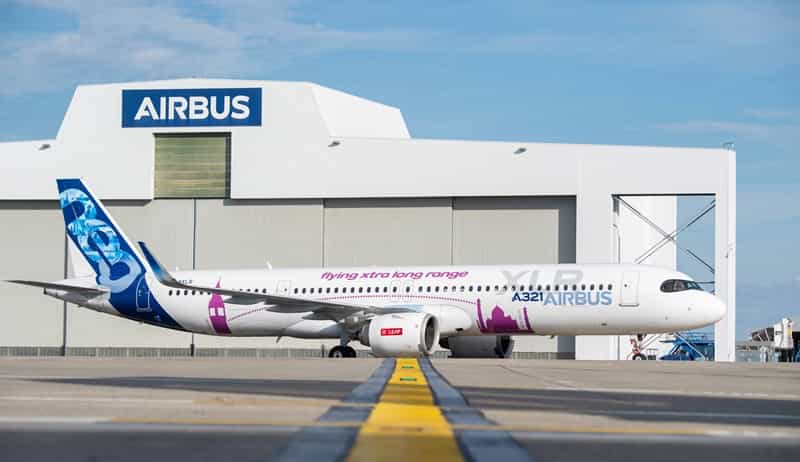
Airbus – A321XLR
Widebodies remain vital to Asia-Pacific
If single-aisle aircraft provide the volume, widebodies will continue delivering the reach.
Airbus forecasts demand for 3,420 new widebody aircraft in Asia-Pacific over the next 20 years, representing almost half of worldwide widebody demand.
That reflects the region’s enormous long-haul requirements.
Asia-Pacific sits at the heart of some of the world’s longest passenger flows, linking Australia and New Zealand with Asia, Europe and North America while supporting major intercontinental markets from China, India, Japan, South Korea and Southeast Asia.
Airbus is naturally talking up its own machinery.
The manufacturer points to its A330neo and A350 families as its principal widebody answers and says its share of the regional widebody backlog has risen to around 50 per cent over the past three years.
The A350, in particular, is now well established among Asia-Pacific long-haul operators. Airbus describes the larger A350-1000 as a natural successor to the Boeing 777-300ER at the upper end of the passenger market.
That is, of course, Airbus making the case for Airbus.
Airlines will continue to make fleet decisions based on acquisition cost, availability, range, payload, financing, maintenance requirements, fleet commonality, and the competing attractions of Boeing aircraft.
Still, no one can disguise the size of the prize.
Thousands of widebody deliveries over two decades mean much more than aircraft sales.
They represent decades of maintenance contracts, technical support, pilot and engineer training, spare parts, airport infrastructure, financing and associated aviation services.
The aircraft may receive most of the glamour.
The ecosystem behind them receives a very substantial share of the business.
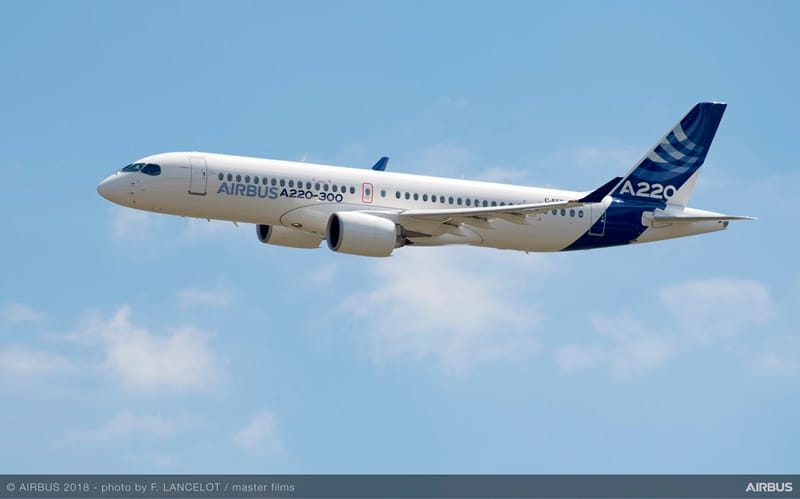
Airbus – A220
The hub-and-spoke map is being redrawn
Perhaps the most interesting element of the forecast is not how many aircraft airlines will buy, but where those aircraft will fly.
Anand Stanley, President Airbus Asia-Pacific, says the region’s networks are evolving as airlines increasingly look beyond traditional hub-and-spoke operations.
“We are seeing an evolution in the Asia-Pacific networks and how they connect,” Stanley said. “Alongside sustained expansion in long-haul networks, airlines are decentralising beyond traditional hub-and-spoke models to connect secondary cities directly to the global economy. By leveraging latest generation aircraft technology, carriers in the region are rewriting connectivity maps and driving the region’s long-term economic prosperity.”
The shift is already visible.
For decades, international journeys in Asia revolved around a relatively limited collection of major gateways.
Those hubs will remain critically important.
But aircraft offering greater range and lower operating costs can support more direct links between smaller markets.
That has consequences well beyond aviation.
A secondary city with direct international flights suddenly becomes easier for the travel trade to sell.
Meetings and events planners gain another destination option.
Hotels can target previously difficult source markets.
Tour operators can develop itineraries that do not automatically begin with an overnight stop in the national capital.
In tourism terms, few marketing campaigns are as powerful as a nonstop flight.
It also offers the chance to spread visitor expenditure.
When travellers can fly directly into regional gateways, tourism dollars are more likely to move beyond the biggest cities and into regional economies.
That will appeal to governments trying both to expand tourism and distribute its benefits more evenly.
Airports face a race of their own
Aircraft demand on this scale will be difficult to realise without equally serious investment on the ground.
New terminals, additional runways, air traffic management systems, ground handling, baggage facilities, lounges, fuel infrastructure and public transport links will all become part of the growth equation.
Some airports will need to expand simply to cope with additional passengers.
Others will be competing aggressively to become the preferred gateways for fast-growing secondary markets.
The difficulty is that aviation infrastructure operates on very long lead times.
An airline can announce a new route in months.
A terminal, runway or rail connection can require years of planning, environmental assessment, financing, approval and construction.
Governments that wait until congestion becomes painfully obvious may find themselves chasing an aircraft that has already departed.
Then comes the people problem.
More aircraft require more pilots, licensed engineers, cabin crew, airport employees, air traffic controllers and maintenance specialists.
Airbus’s broader 2026–2045 forecast expects the world passenger fleet to nearly double, from about 23,310 aircraft at the end of 2025 to 45,550 aircraft by the end of 2045.
That puts skills development firmly alongside aircraft acquisition as one of Asia-Pacific aviation’s major challenges.
There is little point ordering thousands of aircraft if the industry cannot find enough qualified people to fly, maintain and support them.
The maintenance market will grow with the fleet
The coming aircraft wave also points towards a sizeable opportunity in maintenance, repair and overhaul, better known throughout aviation as MRO.
A larger fleet requires more line maintenance, engine work, component support, software capability and technical training.
Countries that can build credible aviation-service clusters stand to capture economic value long after an aircraft leaves the production line.
That opportunity is particularly significant in Southeast Asia, where governments have been working to establish aerospace manufacturing and MRO capability alongside airport expansion.
The commercial logic is refreshingly uncomplicated.
If Asia-Pacific is going to operate an increasingly large share of the world’s aircraft, the region will naturally want more of the highly skilled work required to keep those aircraft flying.
For airlines, stronger local and regional capabilities can reduce downtime and logistics costs.
For governments, aerospace services create skilled jobs, enable technology transfer, and generate potential export earnings.
For aircraft manufacturers, a strong support network makes their products more appealing to airline customers.
In other words, 19,120 new aircraft is not merely a sales forecast.
It is also an industrial-policy number.
Airbus already holds a powerful regional position
By the end of August 2026, Airbus says 119 airlines in Asia-Pacific were operating about 5,000 Airbus commercial aircraft, giving the manufacturer a regional in-service market share of about 58 per cent.
Nearly 3,500 additional Airbus aircraft were on order for future delivery, the manufacturer said.
Airbus says those orders represent about 61 per cent of the backlog across all manufacturers for jets with more than 100 seats.
Those numbers explain why Asia-Pacific is so commercially important to Toulouse.
Globally, Airbus’s latest GMF expects demand for 42,060 new aircraft during the next two decades, while its August 2026 order and delivery data showed 475 commercial aircraft had been delivered during the first eight months of this year.
Demand, however, is only one side of the equation.
The aviation industry continues to negotiate supply-chain constraints, engine availability, delivery delays and geopolitical uncertainty.
In a report published on 15 September 2026, Reuters said Stanley saw no softening in Asia-Pacific demand or aircraft deliveries because of geopolitical or supply-chain headwinds.
That confidence will ultimately be tested by manufacturers’ ability to build and deliver aircraft at the rate airlines require.
An enormous order book looks excellent in a presentation.
A delayed aircraft waiting for engines or components looks rather less impressive sitting on an airline’s fleet plan.
What it means for the travel industry
For travel sellers, tourism boards and hospitality operators, a forecast reaching all the way to 2045 can appear comfortably distant.
It should not.
Aircraft decisions being made today will influence the routes travellers use for years.
Airport projects being debated now will shape the gateways of the 2030s and 2040s.
And a new nonstop service can change the fortunes of a destination almost overnight.
The strongest message from the Airbus numbers is that Asia-Pacific aviation growth is becoming broader as well as larger.
The next wave will not simply involve putting more seats between the region’s biggest hubs.
It will include new connections between regional cities, more long-range narrowbody flying, denser domestic networks and increased widebody capacity on major intercontinental corridors.
That represents a major opportunity.
It also raises the competitive bar.
Destinations chasing new air services will need convincing demand data, strong airline relationships and coordinated marketing.
Airports will need infrastructure that can handle growth without turning the passenger experience into an endurance test involving three queues and a missing suitcase.
Tourism operators will need products suited to increasingly diverse Asian source markets.
And airlines will need to make enormous capital decisions while balancing fuel prices, environmental pressures, supply constraints, and changing passenger expectations.
No small assignment.
Yet the direction of travel is increasingly difficult to miss.
Asia-Pacific is progressing from being one of global aviation’s great growth stories to becoming the region where much of the industry’s future capacity will be built, deployed and filled.
The 19,120-aircraft requirement grabs the headline.
But perhaps the more revealing figure is the region’s 45 per cent share of projected worldwide demand.
Almost one in two new passenger aircraft expected to be required worldwide over the next two decades will be needed in Asia-Pacific.
For manufacturers and airlines, that represents a market of extraordinary proportions.
For airports and governments, it represents an infrastructure challenge.
For tourism, it represents an invitation.
And for anyone still assuming the future of aviation will be decided somewhere else, Airbus has just supplied 19,120 reasons to reconsider.
By: Michelle Warner – © 2026.
Read Time: 9 minutes.
Author Bio:
 Michelle Warner has always carried stories the way others carry passports lightly, faithfully, and with purpose. She learned her craft in newsrooms, shaping sentences with care, before swapping deadlines for departures as a flight attendant with some of the world’s great airlines. Years aloft sharpened her eye for character and deepened her fondness for the small, dignified rituals of travel, the quiet kindness of strangers, the poetry of arrival, the patience learned between time zones.
Now grounded by choice, Michelle has come home to writing with the same calm authority she once brought to turbulent cabins. Her prose blends an editor’s discipline with a traveller’s wonder, tinged with humour and reverence for the golden age of travel. Each piece feels like a handwritten boarding pass, gracious, observant, and unmistakably alive.