

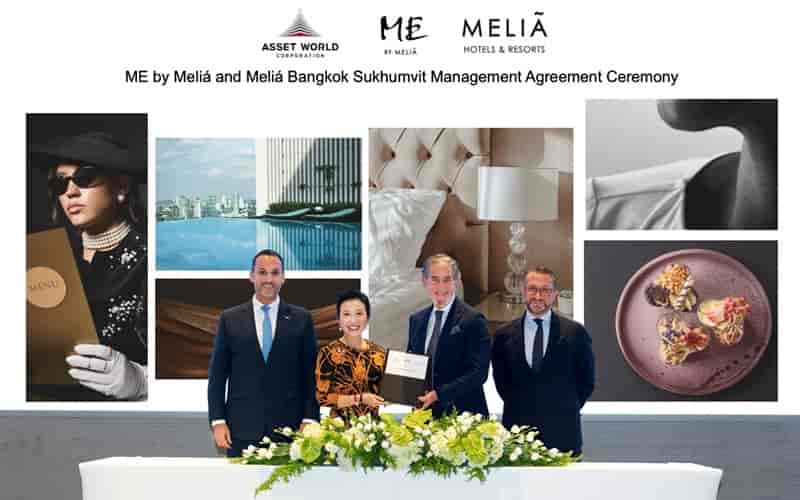
AWC and Meliá are putting serious weight behind Thailand’s luxury hotel future, extending their strategic partnership through 2036 and targeting more than 3,000 rooms across some of the country’s best-known destinations.
The agreement brings together Asset World Corp Public Company Limited, better known as AWC, and Spain’s Meliá Hotels International. It is not a small extension to an existing arrangement. It is a decade-long growth plan covering several Meliá brands, including Meliá Hotels & Resorts, ME by Meliá, Paradisus by Meliá, INNSiDE by Meliá and Gran Meliá Hotels & Resorts.
For travel sellers, hotel partners and destination marketers, the significance is straightforward. Thailand is chasing higher-value visitors, while major hotel groups are chasing guests who want more than a bed, a buffet and a cheerful wave at reception.
Increasingly, the battleground is lifestyle, wellness, local culture and experiences that feel genuinely connected to the destination.
AWC and Meliá clearly intend to be in the thick of it.
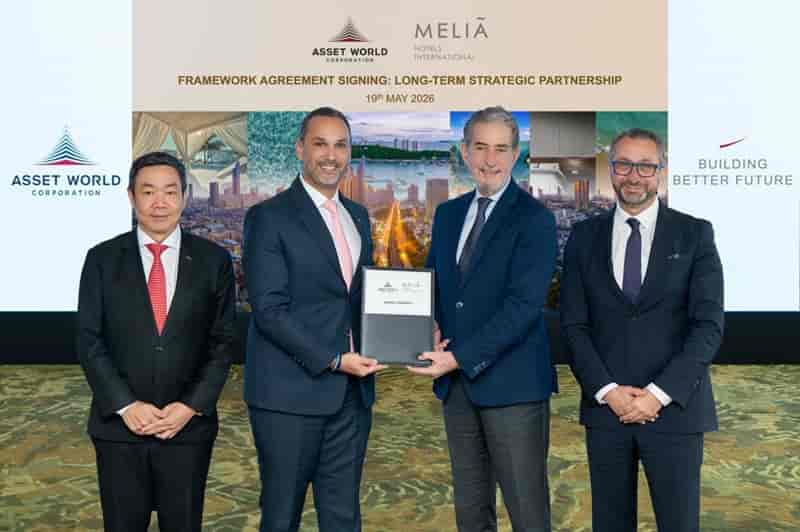
MOU Photo: AWC Partner MHI
From 1,900 rooms to more than 3,000
The partnership already has four operating hotels in Thailand: Meliá Chiang Mai, Meliá Koh Samui, Meliá Pattaya Hotel and INNSiDE by Meliá Bangkok Sukhumvit.
AWC says it has about 1,900 rooms across its operating and development pipeline with Meliá, making it the Spanish group’s largest hotel owner in Thailand. Under the expanded framework, that figure is expected to climb beyond 3,000 rooms by 2036.
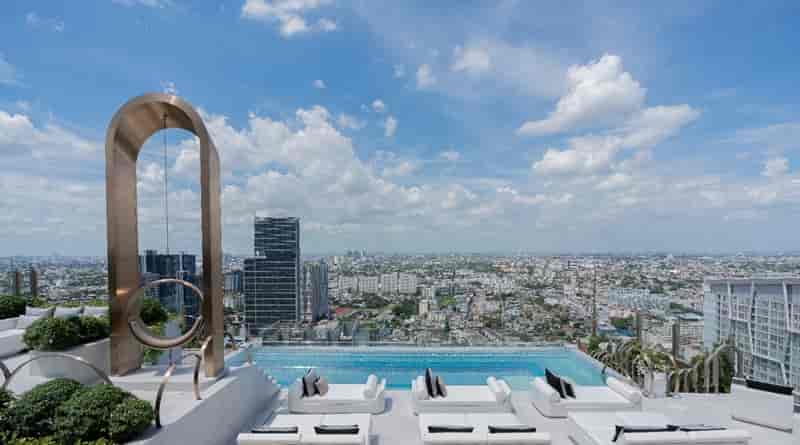
INNSiDE Bangkok
That is a substantial vote of confidence in Thailand’s ability to keep attracting affluent leisure travellers, families and lifestyle-driven guests.
And Bangkok is one of the immediate beneficiaries.
Two properties are planned for Sukhumvit 24 and Sukhumvit 26, both in the fashionable Phrom Phong area. The hotels are scheduled to begin welcoming guests in the fourth quarter of 2026 under a conversion arrangement, before moving to their intended brands in the fourth quarter of 2027.
The Sukhumvit 24 property is earmarked to become ME by Meliá, which AWC says will mark the lifestyle brand’s Asian debut. Nearby, Sukhumvit 26 will become a Meliá Hotels & Resorts property, offering a warmer, more family-oriented interpretation of the group’s Spanish hospitality style.
There is also a clever practical twist.
Guests at either hotel are expected to have access to selected facilities and experiences at the other. In a neighbourhood already thick with hotels, restaurants, shopping malls and considerable competition, that gives the pair a broader resort-style footprint — without pretending central Bangkok has suddenly acquired a beach.
Jomtien gets the luxury all-inclusive treatment
Further south, the bigger long-term statement is being made at Jomtien.
Paradisus Jomtien Resort is now scheduled to open in 2031 on the beachfront near Pattaya. It will introduce the Paradisus by Meliá brand to Thailand and bring the hotel group’s luxury all-inclusive concept into one of the country’s busiest resort markets.
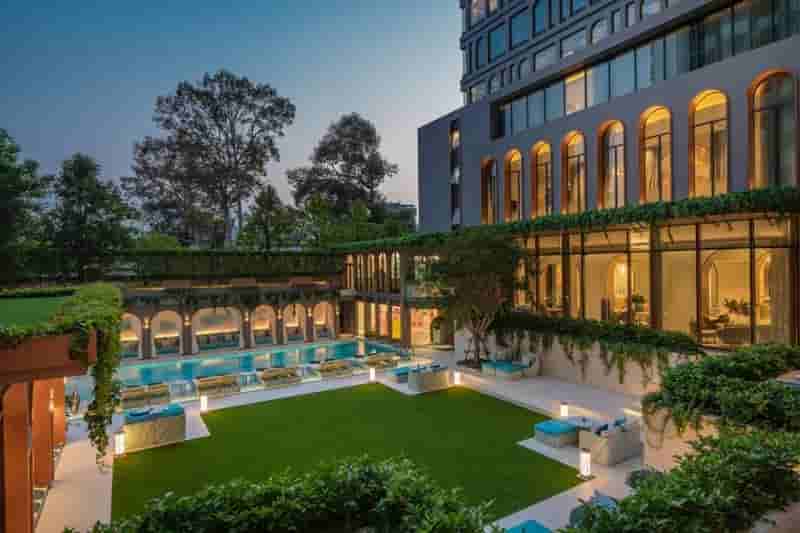
Meliá Pattaya Hotel Thailand
The timing is worth noting.
An earlier AWC announcement in April 2024 placed the resort’s opening in 2028. The latest September 2026 announcement has shifted that date to 2031, making the new schedule the one the travel trade should work from.
That development also suggests where the international resort market is heading.
All-inclusive no longer necessarily means wristbands, overflowing buffets and a heroic dawn campaign to secure a sun lounge.
Luxury operators have steadily pushed the model towards better dining, wellness, design, personal service and experiences tied closely to the destination. Paradisus is Meliá’s vehicle for precisely that approach.
Thailand moves from volume to value
The expanded AWC-Meliá agreement also arrives at an unusually appropriate moment for Thai tourism.
The Tourism Authority of Thailand has spent 2026 placing greater emphasis on “Value over Volume”, with a national strategy designed around higher-value visitors, wellness, sustainability, meaningful experiences and wider economic benefits for local communities.

Melia Chiang Mai Thailand
As of early June 2026, Thailand had received more than 14 million international visitors, while TAT was projecting around 33 million arrivals for the full year under its quality-led tourism strategy.
The policy direction is important. Thailand no longer wants success judged purely by immigration queue length.
It wants more visitor spending, longer stays, stronger regional distribution and greater benefits flowing into Thai businesses and communities. TAT has also made luxury travellers, wellness, culture and sustainability priority areas.
That positioning dovetails neatly with what AWC and Meliá say they want to build.
Sustainability moves out of the brochure
Sustainability is a major part of the partnership’s pitch.
Across the existing portfolio, AWC points to LEED, WELL and ECOSTARS certifications as evidence that environmental performance and guest wellbeing are being pushed into hotel design and operations rather than quietly deposited in the final paragraph of the corporate brochure.
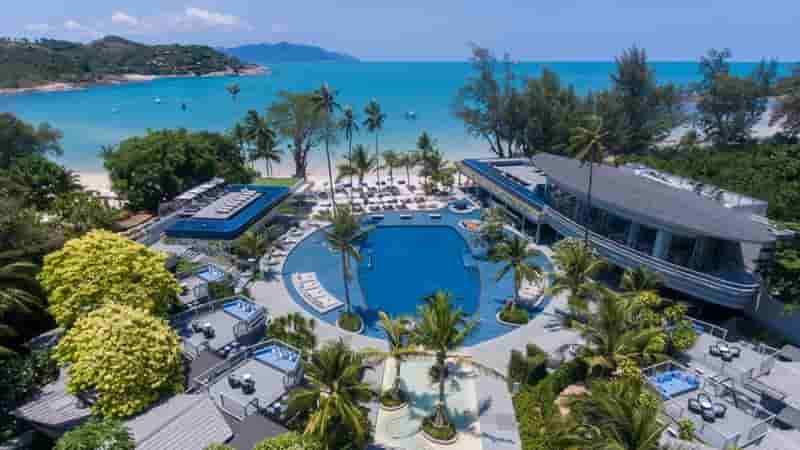
Melia Koh Samui
Meliá Pattaya Hotel is a particularly strong example.
AWC reported in 2026 that the property became the first hotel in Southeast Asia to achieve WELL Certified Platinum level, alongside LEED Gold certification. AWC also disclosed the achievement in its corporate reporting.
The hotel was also recognised among Smart Travel Asia’s Top 10 New Hotels.
Other hotels in the partnership have collected their share of trophies. INNSiDE by Meliá Bangkok Sukhumvit received recognition in the Thailand Tourism Awards’ Design Hotel category, while Meliá Chiang Mai and Meliá Koh Samui have also received tourism and hospitality awards.
Awards, of course, look nice in a lobby cabinet.
The more important commercial question is whether the hotels can keep filling rooms and lifting yield.
AWC numbers provide some encouragement
AWC’s recent results suggest there is momentum in several of the destinations where this partnership is expanding.
In its second-quarter 2026 results, the company reported hospitality revenue of THB2.761 billion, up 5.7 per cent year on year. Hospitality EBITDA reached THB742 million, up 9.7 per cent.
AWC also reported RevPAR growth of 169 per cent in Pattaya, 31 per cent in Chiang Mai and 10 per cent in Koh Samui during the quarter. Pattaya’s figure was boosted by the ramp-up of two hotels opened in 2025.
Those figures do not guarantee future performance. Hotels have an irritating habit of making yesterday’s forecast look terribly confident.
But the numbers help explain why AWC is prepared to keep developing and why Meliá is willing to attach more of its brands to the pipeline.
For Meliá, Thailand also fits a wider strategic shift towards premium and luxury growth.
The Spanish hotel company has been increasing the weight of luxury within its development pipeline. Meliá reported that roughly one in three new openings in its pipeline would fall within the luxury segment, reflecting the company’s push towards higher-value properties and experiences.
That makes the Thai expansion less an isolated deal and more a regional expression of Meliá’s global strategy.
Local communities part of the equation
Wallapa Traisorat, AWC’s chief executive officer and president, said the partnership rested on a shared belief in Thailand’s tourism potential and in hospitality that creates benefits beyond hotel walls.
“Our partnership is built not only on the hotels we develop together, but also on a shared vision of how tourism can create broader value.”
She pointed to local sourcing, Thai ingredients, farmers, artisans, and community products as areas where hotel expenditure can connect more directly with local livelihoods.
AWC’s The Gallery initiative forms part of that effort, bringing products created by Thai communities into the hospitality experience.
Meliá Hotels International chairman and chief executive Gabriel Escarrer Jaume also described Thailand as one of the group’s most strategic Asia-Pacific markets.
“This agreement creates exciting opportunities to introduce distinctive luxury and lifestyle brands to some of Thailand’s most iconic destinations.”
Meliá was founded in Mallorca in 1956 and has a portfolio of more than 400 hotels open or in development across more than 40 countries.
What it means for travel advisors
For travel advisors, this expansion ultimately means more recognisable branded inventory to sell across Bangkok, Pattaya, Chiang Mai, Koh Samui and future Thai destinations, spanning city, beach, family, lifestyle and luxury segments.
For Thailand, it represents another sizeable international hotel commitment at a time when the country is trying to move its tourism proposition further up the value chain.
The deal also reflects a broader change in hotel development.
Owners increasingly want brands that bring global distribution, loyalty members, operating systems and international recognition. Hotel operators, meanwhile, need strong local partners with property expertise, capital and access to prime sites.
AWC and Meliá appear to have found that combination in each other.
Plenty of road remains between a development announcement and an opening-day ribbon. Construction schedules move, brands evolve, and markets have a habit of ignoring even the prettiest PowerPoint forecasts.
But the direction is clear.
AWC wants a larger luxury and lifestyle hotel footprint.
Meliá wants more premium growth in Asia.
Thailand wants tourism that delivers more value per visitor and more benefit to local communities.
With more than 3,000 rooms, this partnership could become one of the most substantial examples of all three ambitions meeting under the same roof.
By: Karuna Johnson – © 2026.
Read Time: 6 minutes.
Author Bio:
 Karuna Johnson’s career only makes sense if you know she truly loves travel. Thai by birth and a dual citizen, she moves easily between worlds, equally at home sharing street food in Bangkok or sitting quietly through a Sydney boardroom meeting.
Educated in both Thailand and Australia, she speaks several languages and has applied them across destination management companies and hotels, spanning sales and administration. She’s the sort who keeps things running smoothly while others are still waking up.
Her journeys have taken her across Asia, Europe, and the United States, but it’s the smaller details that stay with her: people, customs, and the stories beneath every trip.
Worldly without being showy, Karuna brings a steady, thoughtful voice to Global Travel Media, exactly what travel needs.











