

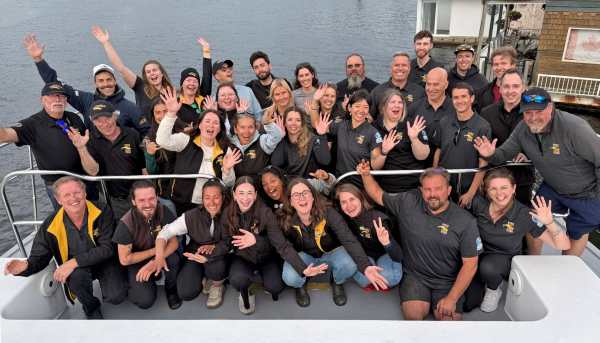
AI can be a force for good in tourism, by giving conservation-led operators the tools to build healthier, more resilient businesses. That is the case TripWorks, the booking and business intelligence platform for tour and experience operators, is making, pointing to Eagle Wing Tours, the Vancouver Island whale watching operator, as proof of what is possible when automation and purpose come together.
TripWorks’ automated abandoned cart tools have recovered nearly $400,000 in bookings for Eagle Wing, which guests started but never completed. This extra revenue has enabled Eagle Wing to reinvest funds straight back into its conservation work.
“AI in travel tends to get talked about purely in terms of efficiency and what it can automate away,” said Aaron Fessler, CEO and founder of TripWorks. “What gets missed is what it frees operators up to do more of. For conservation-led businesses like Eagle Wing, that means more time, more revenue and more energy going back into the destination they depend on. Used the right way, AI is a genuine force for good in this industry, and regenerative tourism is where that should show up first.”
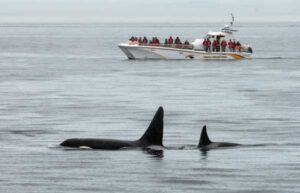
AI-powered review monitoring, which flags any guest rating of three stars or lower so the team can step in before a review goes public, has also helped double the company’s online reviews over the past year, lifting Eagle Wing into TripAdvisor’s Top 1% of experiences worldwide and the number two experience in Canada.
Eagle Wing has built its business around what co-founder Brett Soberg calls regenerative tourism, going beyond sustainability to actively leave the marine ecosystem it operates in healthier than it found it. Since Soberg and fellow co-founder Don Stewart acquired the company in 2005, Eagle Wing has become Canada’s first carbon-neutral whale watching operator and invested more than $1.8 million in local conservation, research, habitat restoration and education, in a market of nearly 30 whale watching operators across Victoria, Vancouver and Seattle. The company now runs a fleet of five custom-built boats, up from a single open-air vessel, carrying more than 510 guests a day at peak season across up to 12 daily departures spanning Canadian and US waters, a pace of growth that had begun to outstrip its previous booking system and needed a technology partner able to scale alongside it.
“We’re a conservation organization that happens to do whale watching,” said Brett Soberg, co-founder of Eagle Wing Tours. “We make the right choices for the right reasons. Getting bums in seats is a positive by-product of making the correct choices for the right reasons. We wanted a partner that would scale alongside us and be receptive to helping us scale appropriately as our needs changed.”
Eagle Wing adopted TripWorks in 2024 after meeting the team at the Arival 360 conference in San Diego, with TripWorks’ onboarding team traveling to Victoria to guide the migration in person.
“Tourism is one of the few industries that can actually move the needle in a positive way,” Soberg said. “When people have that emotional connection with nature, they’re motivated to learn more, do more and put boots on the ground.”
“Regenerative operators like Eagle Wing are proving that doing right by a destination and running a healthy business are not competing goals, they reinforce each other,” Fessler added. “That is what we mean when we talk about AI being used as a force for good in travel.”











