

Queensland has put First Nations tourism firmly on the road to Brisbane 2032, unveiling a new long-term strategy designed to grow Aboriginal and Torres Strait Islander-led visitor experiences while keeping culture, Country and community authority at its centre.
The Queensland First Nations Tourism Strategy 2026–2032, developed by the Queensland Tourism Industry Council (QTIC) with government support, sets out a statewide direction for the sector through to the Olympic and Paralympic Games and beyond.
The ambition is substantial: make authentic First Nations tourism one of Queensland’s defining visitor strengths, while ensuring the economic and social benefits flow back to the people whose cultures and stories make those experiences possible.

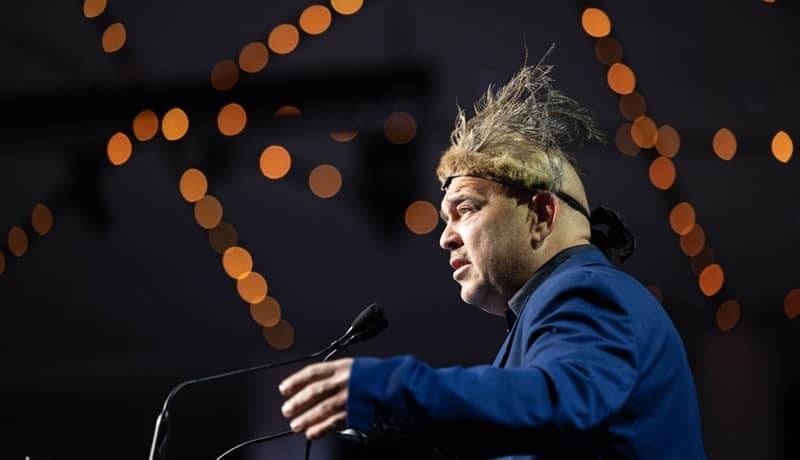
QTIC CEO Natassia (Tash) Wheeler
It is an important distinction. Cultural tourism can be marketed quickly; cultural authority cannot. The strategy therefore puts First Nations leadership at the front of the bus rather than somewhere near the luggage rack.
QTIC chief executive Natassia Wheeler said the strategy reflects increasing visitor interest in meaningful cultural experiences and a determination to ensure growth remains First Nations-led.
“Queensland is home to the world’s oldest living cultures, and there is growing demand from visitors seeking authentic cultural experiences that connect them to Country, community and story,” Wheeler said.
“This Strategy has been shaped through extensive consultation with First Nations communities across Queensland and provides a clear direction for sustainable growth that is led by Aboriginal and Torres Strait Islander peoples.”
Building on the first plan
The new strategy follows the Queensland First Nations Tourism Plan 2020–2025, which helped establish a stronger framework for Indigenous tourism development across the state.
That earlier plan contributed to initiatives including Queensland’s Year of Indigenous Tourism and the establishment of the Queensland First Nations Tourism Council, now the independent peak industry body for First Nations tourism in Queensland.
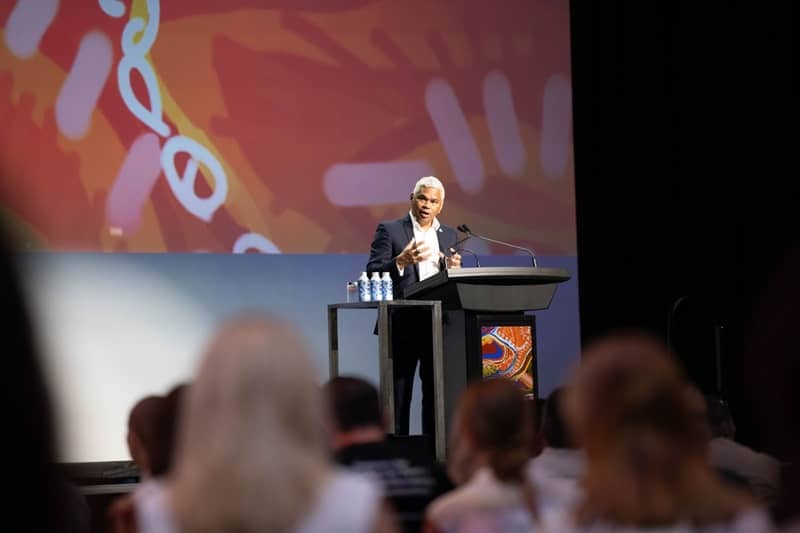
John Paul Janke at DestinationIQ 2025 – full day conference focussed on First Nations tourism which this year will be held November 6 on the Gold Coast
Queensland Government programs supporting the plan also included business mentoring, regional action plans, industry events and First Nations tourism development initiatives. The state previously committed $10 million to the Year of Indigenous Tourism program, while later funding continued work supporting First Nations tourism businesses and employment pathways.
The new strategy moves that work towards 2032 around four central priorities: strengthening First Nations leadership and cultural authority; supporting sustainable business growth and capability; developing workforce and leadership pathways; and increasing market presence and visitor demand through authentic storytelling.
Those priorities are both practical and cultural.
For tourism operators, the opportunity is not merely to put more cultural product into brochures, websites and booking engines. It is about building sustainable businesses with the skills, governance, workforce and market access to compete confidently at home and internationally.
Wheeler made clear that simple head-counting is not the measure of success.
“Importantly, this isn’t simply about growing visitor numbers. It’s about creating long-term economic, cultural and social benefits for First Nations communities while protecting culture, strengthening businesses and ensuring cultural authority remains at the heart of tourism development.”
An $84 billion tourism backdrop
The timing is particularly significant.
Queensland’s broader Destination 2045 tourism strategy aims to more than double visitor expenditure to $84 billion by 2045, while positioning Queensland as a global tourism leader. The Queensland Government also identifies Aboriginal and Torres Strait Islander cultures as one of the state’s key competitive tourism strengths.
Against that backdrop, First Nations tourism is no longer a niche sitting politely at the edge of Queensland’s tourism ambitions. It could become part of the destination’s international identity.
And then there is Brisbane 2032.
For First Nations operators, the Olympic and Paralympic Games present an unusually powerful international shop window. Queensland will be seen through television coverage, social media, sporting events, international media visits and the cultural program surrounding the Games.
The commercial prize is obvious. The more important challenge is ensuring that the stories visitors encounter are genuine, locally authorised and told by the people entitled to tell them.
“The Games will place Queensland on the world stage, and First Nations tourism will be central to telling the stories that make this state unlike anywhere else,” Wheeler said.
“Our ambition is that by 2032, Queensland is internationally recognised for authentic, First Nations-led tourism that protects culture and Country while delivering lasting benefits for communities and future generations.”
Consultation from Brisbane to the regions
Consultation has been central to developing the strategy.
QTIC had already begun bringing First Nations communities, tourism operators and stakeholders together while preparing the next iteration of the plan, including consultation designed to establish a community-led vision ahead of Brisbane 2032.
According to the strategy announcement, engagement included communities and stakeholders across locations such as Mount Isa, Longreach, Thursday Island, Port Douglas, Bamaga, Townsville, Brisbane and the Gold Coast.
That matters enormously in a state where a cultural experience on Thursday Island, Cape York Peninsula, in the Wet Tropics, Outback Queensland or South-East Queensland can be profoundly different.
“First Nations tourism” is not a single product category with one universal story. It represents many Nations, languages, landscapes, traditions and cultural protocols.
Indeed, the principles underpinning Queensland’s First Nations tourism approach emphasise that Indigenous peoples determine the nature and extent of their participation in tourism, and that culture, intellectual property, Country, and traditional practices must be respected.
That is considerably more substantial than putting a boomerang on a brochure and declaring the cultural component sorted.
From strategy to delivery
The strategy is aligned with Destination 2045, creating a policy bridge between First Nations-led tourism development, Queensland’s wider visitor-economy ambitions and the extraordinary global attention that will arrive with Brisbane 2032.
The work now moves from strategy to delivery.
According to the announcement, a final publication is expected to provide further implementation timeframes, recommended actions and details of the organisations and partners responsible for progressing individual initiatives.
That next document will be particularly important for industry.
Strategies can set the compass. Operators, communities, investment, measurable targets and — that occasionally troublesome little detail — actual implementation determine whether anybody reaches the destination.
For Queensland, however, the prize is considerably larger than another tourism campaign.
Done properly, First Nations tourism gives visitors something no competing destination can simply copy and paste: experiences grounded in living cultures, Country and stories belonging specifically to this place.
And with the world coming to Queensland in 2032, there may never be a better opportunity to make sure those stories are heard — clearly, respectfully and, most importantly, from the right voices.
By: Anne Keam – © 2026.
Read Time: 4 minutes.
Author Bio:
 Anne Keam’s story begins in Queensland, on a grain farm in the state’s wide western reaches, where the days were long and the lessons simple: work hard, look after your own, and don’t make a fuss. Those early years left their mark.
She later studied Arts at the University of Queensland, before doing what felt natural at the time, heading back home to the family property. But the world was calling. Anne packed a backpack and went looking, spending years on the road and finding herself most alive in South America. She wrote everything down along the way. Those notebooks, full of dust, colour, and curiosity, eventually became her blog, a quiet, personal record of seeing the world and learning from it.











