

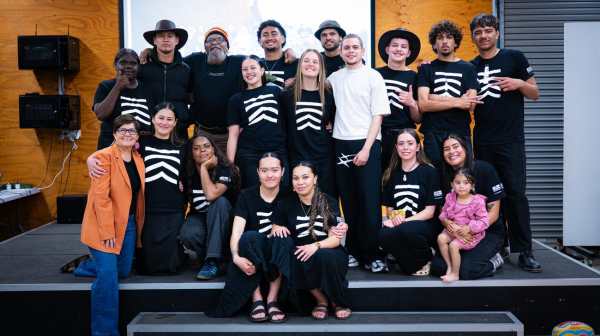
An extraordinary cultural exchange bringing together Aboriginal young people from Central Australia and Māori rangatahi from Aotearoa has concluded in Mparntwe / Alice Springs on Arrernte Country, following a journey across two countries designed to strengthen cultural identity, build confidence and forge lasting connections between the next generation of First Nations leaders.
The Native Nations Indigenous Youth Exchange 2026 culminated on Saturday, 29 August with A Celebration of Connection: Aboriginal & Māori Youth Exchange 2026 at Discovery Parks in Mparntwe / Alice Springs. Young participants were joined by Elders, cultural knowledge holders, families, community leaders, partners and supporters to celebrate and reflect on their experiences together across Aotearoa and Central Australia.
The exchange brought together eight Aboriginal young people aged 16 to 24 from remote Central Australian communities and nine Māori rangatahi from Aotearoa. For many of the Australian participants, travelling to New Zealand meant receiving their first passport and taking their first international flight, while three had never seen the ocean before.
After travelling together through Aotearoa earlier in August, the exchange continued on Arrernte Country in Central Australia, including time in Mparntwe / Alice Springs, Tjoritja / West MacDonnell Ranges and Uluru. The young people walked together on the Larapinta Trail, spent time learning on Country and shared stories, knowledge and cultural practices.
At Saturday evening’s celebration, participants spoke powerfully about what the experience had meant to them and the relationships they will carry forward.
“Our bloodlines connect us to the past, and these new relationships connect us to the future,” said participant Alesha Braun, Central Arrernte / Pertame woman with Jawoyn connections. “Because of this, I now look to the future with a newfound confidence and pride. I know I am now strong enough to carve a pathway forward for not just myself, but for my daughter to follow.”
For Sharni Cardona, Central Eastern Arrernte woman, the exchange reinforced the strength that comes from connection across cultures: “We as Indigenous Nations are stronger together. It’s time to unite as one.”
Addyson Lowe, Central and Western Arrernte man with Ngāpuhi connections said the experience had changed much more than his understanding of another place.
“Native Nations gave me more than places to see and things to do. It gave me people who became family. It gave me permission to feel. And it showed me that there is another version of myself, one who can be vulnerable, make hard decisions and still stand strong in who I am.”
The friendships formed between the Australian and New Zealand participants were a recurring theme.
Shabella Rambler and Nikaylah Nelson from Alparra community said “When we arrived in New Zealand, we felt welcomed to the beautiful country and less nervous. We were sad to leave our friends from New Zealand but excited to welcome them to our Country.”
Ella Williams, Western Arrernte woman from Ntaria, reflected: “This experience has given me a different point of view on how leadership and cultural aspirations can be seen. As some as quiet as myself I found it difficult at first to express myself, but later into the experience I felt very comfortable and proud to share my own knowledge”
For Edward Tilmouth, an Eastern Arrernte, Larrakia man with Banyjima connections the journey reinforced the enduring role of culture in guiding younger generations: “Our ancestors and culture is so ancient and powerful that even years and years later it still shows guidance for us through stories, Dreamtime and songs.”
Donna Lawrence, Global Sustainability & Impact Manager at World Expeditions, said the significance of the exchange extended well beyond the journey itself.
“The exchange was an incredibly powerful experience, but what is most exciting is what comes next. We’ve come away with tangible ideas and actions that emerged directly from listening to the young people and the experiences we shared together. It’s a beautiful illustration of the role tourism can play in strengthening culture and connection, and importantly, in creating pathways for those connections to translate into meaningful action and opportunity.”
Rayleen Brown, a respected Ngen’giwumirri / Eastern Arrernte woman and founder of Kungkas Can Cook, said watching the young people connect across cultures had reinforced the importance of creating opportunities for the next generation to spend time together on Country.
“Seeing these young people come together, share culture and learn from one another has been very special. Our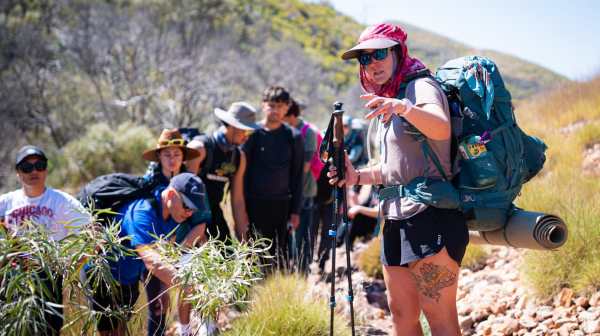 young people need opportunities like this to be strong in who they are and where they come from, but also to see what is possible for their future. The relationships they have built with each other are something they can carry forward long after the exchange.”
Meg Mussehl, World Expeditions guide who accompanied the group on the Larapinta Trail said witnessing those connections develop on Country had also been a powerful experience for the guides.
“One of the reasons I became a guide is to help people connect to place and help foster relationships to landscape. Trips like Native Nations are unique and meaningful for participants and also for the guides. It’s been a privilege to see these youth on Country, sharing their stories, connecting to nature and building friendships.”
The exchange is about much more than travel. Cultural immersion and time on Country are used to strengthen identity, confidence and leadership, while helping create clearer pathways for young First Nations people into education, training and employment, including opportunities within Indigenous tourism.
Led by Native Nations United and delivered by Australian Walking Holidays, the Central Australian leg of the exchange was supported by World Expeditions Foundation, Charles Darwin University, Paddy Pallin, Northern Territory Tourism & Events and Voyages.
The conclusion of the 2026 exchange marks the end of the physical journey, but not its impact. The relationships forged across the Tasman, together with the ideas and actions that emerged from the program, provide a foundation for the exchange to create opportunities long after participants have returned home.











