

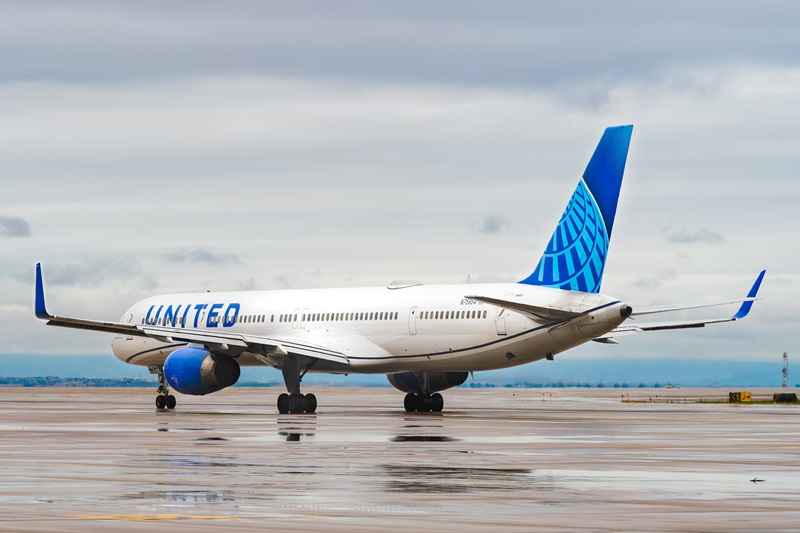
Flying from New York to Los Angeles is not so much a domestic hop as a working day conducted at 35,000 feet. The continent is broad, the schedule is demanding, and economy can make California feel rather farther away than geography intended.
United Business aims to remove much of that strain and, at Newark Liberty International Airport, the premium treatment begins well before the aircraft door closes.
Check-in: a calmer opening act
United’s principal New York-area hub is Newark, in New Jersey, rather than JFK or LaGuardia. For this journey, “NYC to LAX” therefore means Newark (EWR) to Los Angeles (LAX), an important distinction for readers booking cars, trains or tight connections.
United operates from both Terminal A and Terminal C at Newark, so check the boarding pass and United app before arrival. Passengers may check in and drop bags at either terminal. An airside shuttle links the two, meaning travellers using it after security do not need to undergo TSA screening again.
On arrival, the business-class booking provides access to United’s designated Premier Access check-in area. United lists priority check-in, designated security lanes where available and priority boarding among the benefits.
In practice, the greatest advantage at check-in is not theatre but order: a shorter queue, a clearly marked desk and more time to resolve any baggage or seating matter without joining the main scrum.
Where required, the agent checks the passenger’s identification, confirms the destination and issues the boarding pass. Eligible checked baggage should be tagged for priority handling as part of the applicable premium-cabin benefits, although as every seasoned traveller knows, a bright tag is a promise of preference, not a legally binding appointment with the carousel.
United notes that Premier Access purchased separately does not, by itself, include priority baggage handling.
The process feels efficient, not lavish. That is exactly as it should be. Good premium travel begins by removing friction, not by supplying a red carpet wide enough to trip over.
Security: priority does not mean exemption
Premier Access may provide an expedited security lane at participating airports, but the Transportation Security Administration still conducts the screening.
Business class does not waive the rules, and the passenger must still present acceptable identification and a valid boarding pass before screening.
The precise experience depends on whether the traveller has TSA PreCheck printed on the boarding pass. In a dedicated PreCheck lane, the TSA says eligible passengers may generally leave laptops and compliant liquids in their bags and keep shoes, belts, and light jackets on.
Without PreCheck, passengers follow the instructions in the standard or available priority lane. The TSA ended its general shoes-off policy in July 2025, although officers may still direct any passenger to remove footwear or undergo additional screening.
Procedures and lane availability can change, so the officers on duty—not the cabin booked—have the final word.
That distinction matters. Premier Access can shorten the queue; TSA PreCheck can simplify screening. They are not the same benefit.
At a busy hub such as Newark, the premium lane is valuable, but passengers should still allow a sensible margin. Traffic approaching the airport, bag-drop cut-offs and variable security demand have defeated many an otherwise elegant itinerary.
The United Club: useful, comfortable and correctly pitched
A customer travelling in United Business on a qualifying premium transcontinental service between Newark and Los Angeles receives United Club access with a same-day boarding pass.
This is United Club access, not access to the United Polaris Lounge, which is reserved for eligible long-haul international premium-cabin passengers.
At Newark, the appropriate club depends on the departure terminal. Terminal C has United Clubs near gates C74 and C123, while Terminal A has a United Club near gate A26. Checking the departure gate before choosing a lounge can prevent an unnecessary terminal dash later.
Once inside the club, the airport’s noise falls back a few degrees. Seating, charging points, Wi-Fi, snacks and complimentary drinks create a practical refuge for answering emails, making a call or simply recovering from Manhattan traffic.
The lounge is best viewed as a well-equipped staging post rather than a private dining club.
For a morning departure, it offers a chance to grab breakfast and coffee without balancing both on one knee at a crowded gate. Later in the day, a drink and something light to eat take the edge off the wait.
At peak periods, however, finding the ideal seat can require the watchful instincts of a theatre usher.
The real luxury is time under control. The passenger can recharge devices, check the flight in United’s app, and head to the gate without spending an hour orbiting the concourse.
Boarding and the business-class cabin
Premier Access includes priority boarding, allowing the business-class passenger to settle in before the general flow reaches full tide.
Cabin configuration and aircraft type can vary, so the traveller’s booking and seat map should be treated as the authority for the individual flight.
On the premium transcontinental route, United positions its business cabin as a space in which passengers can work or rest in greater comfort.
The practical gains are straightforward: more personal space, attentive cabin service, room for devices and a seat designed for a far more civilised crossing than the standard domestic experience.
Once airborne, the flight becomes a contest between productivity and sleep. A good business-class seat makes either possible.
The passenger can dine, work, watch a film or recline the seat and convert it into a lie-flat bed where the assigned aircraft is fitted with one. On a route of this length, that freedom matters more than decorative flourishes.
Meal choice, beverage selection and service pace vary by departure and flight. The most credible judgement should therefore be added from the traveller’s actual experience.
What can fairly be said of the proposition is that the cabin gives United’s crew a platform to deliver proper transcontinental service; final quality depends on how consistently they use that platform.
Arrival at LAX
After spending much of the day in the air, arriving less fatigued is the product’s strongest argument.
Eligible priority baggage handling may help at the carousel, but delivery order is operational, not guaranteed.
Those continuing into Los Angeles should also remember that the city’s traffic can make the final ground sector feel like an unsolicited sequel.
The verdict
United Business from Newark to Los Angeles succeeds where premium travel should: it makes a long, busy journey easier at every practical stage.
Premier Access improves check-in, can reduce the security queue and brings early boarding. The United Club offers a useful pre-flight retreat, while the business cabin provides space to work, dine, or rest across the country.
It is important to keep expectations precise. This is a premium transcontinental United Business journey with United Club access, not an international Polaris Lounge experience.
Security priority is subject to availability, and TSA PreCheck is a separate entitlement.
With those distinctions understood, the package is convincing. United does not make America any narrower, but it does make crossing it considerably more agreeable.
By: Jason Smith – © 2026.
Read Time: 6 minutes.
Author Bio:
 Jason Smith didn’t learn travel from textbooks. He learned it in airports, taxis and hotel lobbies, watching the business unfold long before he played his own part. Half American, half Asian, he grew up around the quiet workings of tourism, where people come and go, and stories rarely stand still.
Bangkok came first, then formal study, then a career that carried him through Singapore, Malaysia and Vietnam. Each place left something behind. In the end, Thailand felt like home, along with a senior role in hotel sales.
Then everything stopped. Borders shut, planes grounded, and Jason found himself back in America with time to reflect.
Now at Global Travel Media, he writes travel as it really is, not polished, not perfect, but human, and all the better for it.











