

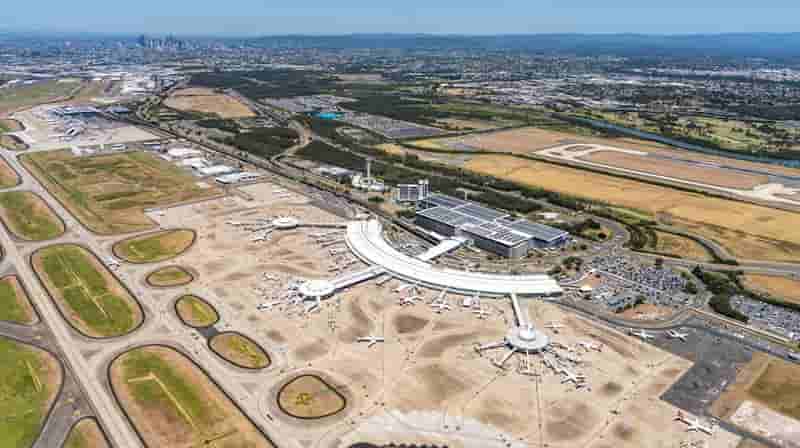
Brisbane Airport has broken another passenger record, welcoming 25.2 million travellers in FY26. It gives Queensland’s main gateway more than one million extra reasons to feel rather pleased with itself.
A total of 25,246,950 passengers passed through Brisbane Airport in the year to 30 June 2026. That was 1,017,009 more than FY25. It was a 4.0 per cent rise.
The result is more than a large number on an airport spreadsheet. It shows that demand for travel remains strong. It also shows that Brisbane’s air links have held up well. The year brought global uncertainty, route changes and disruption in the Middle East.
International travel led the growth. The International Terminal handled 7,080,057 passengers, up 7.9 per cent. It was the first time the terminal had passed seven million passengers in a financial year.
Domestic traffic also grew. The Domestic Terminal handled 18,166,893 passengers, up 2.5 per cent.
For Queensland’s tourism industry, the figures carry weight. More passengers can mean more hotel nights and tours. They can also mean more restaurant bookings, regional trips and retail spending.
For travel sellers, this means a wider choice of routes. They also show growing airline capacity.
China powers back
Mainland China was Brisbane Airport’s fastest-growing international market in FY26. Passenger numbers rose 51.1 per cent, with an extra 137,710 travellers using Brisbane.
That rise is good news for Queensland tourism. More airline capacity gives operators a larger pool of potential guests. That matters while destinations around the world fight hard for the same traveller.
Asia also played a larger role as a hub for connections. More than one million passengers travelled to Brisbane via Singapore Changi Airport. They did so during the financial year.
Singapore became the first international airport gateway to reach that mark for Brisbane.
That says plenty about the way people travel now. A strong hub can be almost as valuable as a new non-stop route. When one path becomes difficult, travellers tend to find another.
Holidays, it seems, are remarkably hard to cancel once the suitcase has come down from the cupboard.
Brisbane Airport CEO Gert-Jan de Graaff said the result showed both momentum and strength.
“The result underscores the momentum we’re seeing at Brisbane Airport, while also demonstrating the resilience of our aviation network.
“More than 25 million passenger journeys were made through Brisbane Airport in the year to June, equivalent to nearly two Gabba-sized crowds passing through the airport every day.”
It is a neat way to picture the scale. Airport data can look dry until it is turned into almost two stadium crowds, every day, complete with carry-on bags.
Airlines add more choice
Airline growth helped drive the record year.
Malaysia Airlines restored direct flights between Brisbane and Kuala Lumpur in late November 2025. The service returned with five flights a week. It improved links to Southeast Asia, India and Europe.
The airline has since announced plans to grow its Brisbane schedule, moving to six weekly flights from 16 August 2026 and daily services from 25 October.
New Zealand also remained a major part of Brisbane’s network. Airlines offered more than two million seats between Brisbane and Auckland, Christchurch, Wellington and Queenstown during FY26.
Qantas added an aviation first.
Brisbane became the launch city for the airline’s first scheduled international Airbus A220 service. The aircraft started flying between Brisbane and Wellington in February 2026.
The A220 offers up to 25 per cent lower fuel burn than previous-generation aircraft, together with a reduced noise footprint and a more modern cabin. For passengers crossing the Tasman, newer metal is rarely an unwelcome addition to the timetable.
Jetstar also passed one million international passengers through Brisbane’s International Terminal for the first time. Its network growth included new services to Cebu, Queenstown and Rarotonga.
Virgin Australia recorded the largest rise in international passengers of any airline at Brisbane, adding more than 150,000 passengers year-on-year.
There is more to come.
Qantas and Jetstar have announced Brisbane services to Western Sydney International Airport. The new airport is due to open on 25 October 2026. It will create another link between two fast-growing parts of Australia.
Big events keep BNE busy
Major events also helped fill aircraft.
Brisbane Airport’s busiest day of FY26 was 6 October 2025. On that day, 84,265 passengers moved through the airport following the NRL Grand Final and during the Queensland school holidays.
The figure is a reminder that airport growth rarely comes from one source.
New routes matter. Fares matter. Big sporting events matter. So do family visits, business trips and the old Australian habit of treating unused annual leave as a personal failure.
By the end of FY26, Brisbane offered direct access to 35 international destinations. That gives Queensland travellers more choice. It also spreads traffic across a wider range of overseas markets.
De Graaff said the figures showed strong airline confidence in Queensland.
“These results highlight the confidence airlines have in Queensland, the growing appeal of Brisbane as a destination, and the important role aviation plays in connecting people, supporting tourism and enabling economic growth across the state,” said Mr De Graaff.
$5 billion set for Future BNE
The record comes as Brisbane Airport starts one of the largest building programs in its history.
Through Future BNE, the airport plans to invest more than $5 billion over the next five years. The work covers airport projects. It also covers terminal and commercial projects.
The aim is to support growth and improve the passenger journey as South East Queensland expands.
The timing is important.
Brisbane and Queensland are moving towards the 2032 Olympic and Paralympic Games. Population growth is also rising. That puts more pressure on transport links and airport capacity.
Brisbane Airport’s 2026 Master Plan was approved in June 2026. It sets a longer view of the airport’s growth and includes a forecast of 50 million passengers a year by 2045–46.
That makes the latest record look less like a finish line and more like a marker on the runway.
For the travel trade, the message from FY26 is clear. Brisbane is not simply replacing lost traffic. It is adding new routes, drawing more airline seats and building a wider international network.
More than 25 million passengers is a serious crowd by any measure.
The bigger point is where the numbers are heading.
Brisbane Airport is growing, airlines are backing the market, and Queensland’s front door to the world has plenty more traffic on final approach.
By: Sandra Jones – © 2026.
Read Time: 5 minutes.
Author Bio:
 Sandra has spent a working lifetime quietly rescuing journeys, one itinerary, one anxious caller, one impossible connection at a time. Years in Australia’s finest travel agencies taught her the art of calm, how to find a flight in a fog of cancellations, how to soothe a traveller when luggage wanders, how to turn nine frantic days in Europe into something resembling sense. Qualified, seasoned, endlessly patient, she learned that good travel advice is part logistics, part listening.
But the storyteller in her was always waiting its turn. Writing offered a new map, a way to turn experience into reflection, detail into delight. At Global Travel Media, Sandra now writes the truths only insiders know: the mishaps, the laughter, the grace found between gates and goodbyes. She reminds us that travel, for all its fuss, is still one of life’s better ideas.











