

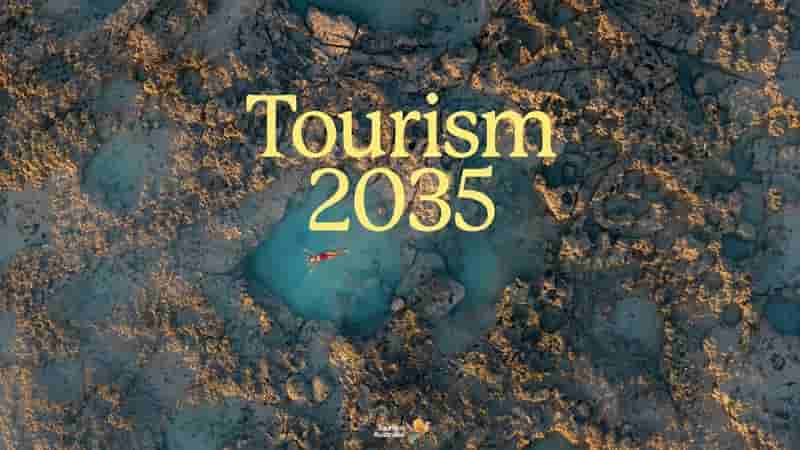
Australia’s new Tourism 2035 strategy aims to attract higher-value visitors, enable smarter digital discovery, and deliver greater returns from major events without losing the very things travellers come to see.
Australia has never been short of things to sell to the world. There is reef, rock, rainforest, remarkable food, ancient culture and enough coastline to keep a postcard printer in overtime. The harder job is making sure travellers choose Australia. Almost every destination on earth is bidding for the same attention and the same wallet.
That is the contest behind Tourism Australia’s new Tourism 2035 strategy, released on 5 August. The 10-year plan sets a target of lifting overnight spend from high-yield international travellers to between $61 billion and $69 billion by 2035.
It is an ambitious number, but this is not simply another exercise in putting a shinier sunset on a billboard. The market itself is changing. Travellers may now be influenced by an adviser, a creator, an airline, a search engine or an AI assistant, sometimes all before breakfast.
Managing Director Robin Mack put the ambition plainly: “Our vision is for Australia to be the first destination every traveller dreams of, and the one they ultimately choose.”
The second half of that sentence is the commercial bit. Dreaming is lovely; booking pays the bills.
A $69 billion prize, with some hard numbers underneath
The latest official figures give the plan a strong base to work from. Tourism Research Australia reports total international trip spend of $57.6 billion in the year ending March 2026. That was up 16 per cent year on year. Importantly, the figure includes some spending outside Australia, such as airfares, connections, visas and other pre- or post-trip costs. Spend in Australia is a separate measure.
Tourism Australia’s target is narrower: the organisation says its target audience of high-yield travellers generated $33 billion in 2025, with Tourism 2035 seeking to lift that figure to as much as $69 billion.
The industry’s footprint is just as telling. Current Tourism Research Australia fast facts put tourism-filled jobs at about 727,000 in March 2026. The country had 361,270 tourism-related businesses in June 2025. About 95 per cent of them are small firms with fewer than 20 staff.
That makes the strategy more than just a matter for the marketing office in Australian tourism. When overseas demand rises and spreads well beyond regional operators, hotels, restaurants, attractions, transport firms and travel sellers can all feel it.

Robin Mack MD – Tourism Australia
First priority: sell Australia to people and algorithms
The most striking of Tourism 2035’s four near-term priorities is “marketing to humans and machines”. It sounds faintly like a campaign written after too much science fiction. The sales logic, however, is firmly in the present day.
Recommendation systems, search tools and generative AI now play a bigger role in travel discovery. The challenge is therefore twofold. Tourism Australia must inspire the traveller. It must also make local destinations, products and experiences clear enough for digital systems to find and recommend them.
For the travel trade, the implication is practical. Accurate product descriptions, current availability, consistent destination information and credible online content become more valuable when machines help assemble the shortlist. Technology may change the shop window; it does not abolish the need for trustworthy product or a knowledgeable travel adviser.
The other three immediate priorities are more familiar, though no less important.
Tourism Australia wants to show the breadth of the country rather than rely on the familiar shorthand of beaches and wildlife. Travellers increasingly want multiple experiences in a single journey. That gives the trade a strong reason to link cities with regions, food with nature, culture with events and icons with places that rarely make the first brochure spread.
It also wants to turn Australia’s major-events calendar into a runway for travel demand. A national marketing platform will aim to spread the tourism benefit of the Brisbane 2032 Olympic spotlight across states and regions.
Then there is luxury. Tourism 2035 says the idea is moving beyond showy opulence towards rarity, nature and real connection. Australia has plenty to work with there.
Think of a private encounter with Country or a remote lodge beneath an indecently clear night sky. Add a table near the people who grew and harvested the produce. That can carry more bragging rights than another marble lobby.
Aviation remains the unavoidable reality
Australia can market brilliantly, but geography still gets a vote.
At Tourism Australia’s Destination Australia conference in March, Mack said overseas air capacity had reached record levels in 2025. Almost 1,900 flights a week linked 70 overseas ports with 13 Australian destinations.
Tourism Australia estimated another 4.4 million seats would be needed by 2035 to support growth.
That makes the strategy’s focus on aviation’s future more than a fashionable heading. Air access, cost, journey time and perceived effort can determine whether distant Australia remains a dream or becomes a booking.
Marketing cannot sell a seat that does not exist.
Ten forces, one increasingly demanding traveller
Tourism 2035 identifies 10 forces shaping the decade ahead. They include tougher competition for high-yield visitors and more growth from Asian markets. Wider itineraries, big events and changes in flying will also matter.
Then come global politics, economic shocks and climate risks. Travellers have more ways to plan and buy, while their attention is split across crowded screens. At the same time, demand is growing for trips that do some good and for genuine nature experiences.
That last pair matters.
Tourism Australia’s Green is Our Gold program aims to rally operators to adopt responsible travel practices. Tourism Australia’s consumer research shows that sustainability matters to 70 per cent of overseas holidaymakers when choosing how they travel.
The point is simple. There is little commercial genius in selling Australia’s natural and cultural assets if success ultimately harms them.
For agents and operators, Tourism 2035 is therefore less a distant government document than a useful signal about where demand-building money and attention are heading: premium value, richer multi-stop itineraries, major events, nature, responsible travel, Asian growth markets and machine-assisted discovery.
The test, of course, will be conversion. Australia has long made a virtue of distance; the next task is to make that distance feel worth crossing, easy to discover and straightforward to book.
$69 billion is a handsome target. Reaching it will take more than a clever campaign and a well-behaved algorithm. It will need seats in the sky and strong product on the ground. Distribution must work, too. Above all, the industry must deliver its promise after the advertisement has done its work.
Tourism, as ever, begins with dreaming. The serious business starts when somebody reaches for the passport and the credit card.
By: Michelle Warner – © 2026.
Read Time: 5 minutes.
Author Bio:
 Michelle Warner has always carried stories the way others carry passports lightly, faithfully, and with purpose. She learned her craft in newsrooms, shaping sentences with care, before swapping deadlines for departures as a flight attendant with some of the world’s great airlines. Years aloft sharpened her eye for character and deepened her fondness for the small, dignified rituals of travel, the quiet kindness of strangers, the poetry of arrival, the patience learned between time zones.
Now grounded by choice, Michelle has come home to writing with the same calm authority she once brought to turbulent cabins. Her prose blends an editor’s discipline with a traveller’s wonder, tinged with humour and reverence for the golden age of travel. Each piece feels like a handwritten boarding pass, gracious, observant, and unmistakably alive.











