

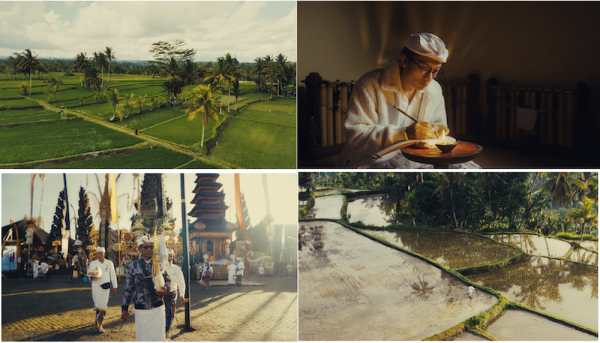
SAKA Museum at AYANA Bali has recently premiered Pasihan, a new 13-minute documentary that enriches the visitor experience of its acclaimed exhibition Subak: The Ancient Order of Bali. Developed in collaboration with Niskala Studio, the film traces the flow of water from Pura Ulun Danu Batur to the rice terraces of Subak Pulagan, revealing the communities and sacred traditions that connect Bali’s agricultural landscapes.
While the interactive exhibition introduces visitors of all ages to the centuries-old Subak system—a network of self-governing Balinese farming communities that collectively manages irrigation and rice cultivation—Pasihan brings its spiritual and social dimensions into focus. Through intimate access to temple communities and farming villages, the documentary reveals how ritual, agriculture, governance, and community come together within a system recognised by UNESCO as a World Heritage cultural landscape for its sophisticated approach to water management and enduring ecological wisdom.
The title Pasihan derives from the Balinese word sih, meaning love and dedication. It refers to the network of Subak communities whose agricultural lands are blessed by Dewi Danu, the Goddess of the Lake, with water and fertile land. Connected through Pura Ulun Danu Batur and a cycle of shared rituals, these upstream and downstream communities share a lifelong responsibility to care for this sacred gift, sustaining its flow through ceremony, cooperation, and collective stewardship. Their relationship encompasses agriculture, spirituality, gratitude, and responsibility for the natural systems on which their livelihoods depend.
Developed with anthropologist and complexity scientist Professor Dr. J. Stephen Lansing, Subak: The Ancient Order of Bali explores the history, philosophy, and ecological intelligence of the Subak. Pasihan extends this exploration, bringing visitors closer to the people and practices that continue to uphold it. Together, the exhibition and documentary present Subak as a living model of cooperation, environmental stewardship, and cultural continuity.
Through the lives of temple secretary I Ketut Eriadi Ariana and Subak Pulagan leader Sang Nyoman Astika, Pasihan follows preparations for Ngusaba Kadasa, the annual harvest ceremony at Pura Ulun Danu Batur, culminating in the Pepada Agung procession before tracing the flow of water downstream. The film also considers the pressures facing Bali’s agricultural landscape, where the conversion of rice fields threatens the physical foundations of the Subak’s rituals, relationships, and shared responsibilities.
At its heart, Pasihan presents Subak as a “civilization of water and soil,” sustained by the belief that as long as people need water and land to live, its values of solidarity and connection can endure even as its physical form changes. By focusing on the people whose daily responsibilities sustain Bali’s agricultural landscapes, the documentary shifts attention beyond the rice terraces themselves to the enduring relationships between people, nature, and the sacred.
The film reflects SAKA Museum’s commitment to preserving Bali’s cultural heritage not only by documenting its history, but by giving greater visibility to the knowledge, communities, and living traditions that continue to shape the island. With Pasihan, the museum seeks to deepen visitors’ understanding of one of Bali’s greatest cultural achievements and foster greater appreciation for the communities whose stewardship continues to shape Bali’s cultural landscape.
Pasihan will screen daily in the 50-seat SAKA Auditorium, featuring a state-of-the-art 5.1 surround sound system, as part of the museum experience. Included with general admission, the documentary is recommended as a follow-on to Subak: The Ancient Order of Bali, enriching the exhibition’s introduction. It is also presented alongside SAKA Museum’s existing introductory film on the Balinese Hindu Saka calendar and its most sacred day, Nyepi, offering visitors complementary perspectives on Bali’s cultural heritage.
Through Pasihan, SAKA Museum continues to create new ways for visitors to engage with Bali’s cultural heritage, bringing the people and practices behind one of the











