

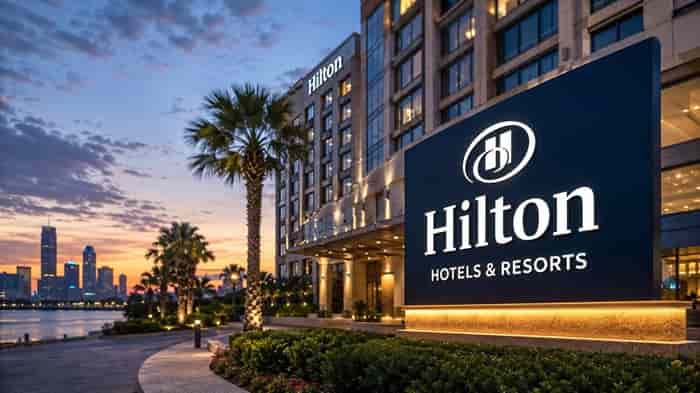
Hilton Hotels & Resorts has kept the biggest room key in global hospitality. For the 11th year in a row, it is the world’s most valuable hotel brand.
Brand Finance now values the Hilton Hotels & Resorts brand at US$19.2 billion. That is a 28 per cent rise in one year. It also gives Hilton a clear lead in the Hotels 50 2026 ranking.
The wider result is just as striking. The world’s top 50 hotel brands lifted their total value by 21 per cent. Their combined value rose from US$57.8 billion in 2025 to US$69.8 billion in 2026.
That is a US$12 billion jump in 12 months. It shows that hotel groups are no longer talking only about recovery. They are now building, buying and expanding with real confidence.
For the travel trade, the lesson is simple. Guests still pay for trust. They may admire a grand lobby, a rooftop pool or a pillow menu. Yet a known name and steady service often close the booking.
Hilton’s long reign is no accident
Brand Finance linked Hilton’s growth to higher revenue forecasts and continued global expansion. Its premium full-service business also made a larger contribution.
Hilton has kept investing across a wide range of brands. Its luxury stable includes Waldorf Astoria, Conrad Hotels & Resorts, LXR Hotels & Resorts and NoMad Hotels. That gives the group reach across key cities, resorts and high-demand luxury markets.
The model works because Hilton sells more than a room. It sells a clear promise. Guests know what they expect to find when they arrive. Owners also gain access to broad sales, loyalty and operating systems.
In a market full of near-matching rooms on a phone screen, that trust has value. It can turn a casual search into a confirmed stay.
Henry Farr, Brand Finance’s Global Sector Head of Hotels, said the sector continued to show “remarkable resilience”. He pointed to steady travel demand, firm pricing, careful growth and better digital tools.
He also stressed the role of trust, loyalty and reliable guest service. That point matters. A hotel group can add new signs at great speed. Keeping the same service standard at every front desk is much harder.
Hyatt stays second, despite a fall
Hyatt kept second place with a brand value of US$7.5 billion. However, its value fell by 6 per cent. It was the only brand in the top five to record a decline.
The fall does not erase Hyatt’s long-term growth case. Brand Finance noted that overseas markets make up a larger share of its future pipeline.
Hyatt also has a strong luxury offer. Its premium brands include Park Hyatt, Alila, Miraval and Andaz. The group has a development pipeline of 148,000 rooms. World of Hyatt has also grown to about 63 million members.
That gives Hyatt room to recover. Still, the 2026 result is a reminder that growth plans must also support brand value today.
Marriott gathers pace
Marriott ranked third after its brand value rose 23 per cent to US$4.6 billion.
Its growth followed wider global expansion and a more varied brand mix. The purchase of citizenM added a modern, technology-led hotel offer. The launch of Series by Marriott gave the group another path into the select-service market.
Marriott Bonvoy has now grown to 271 million members worldwide. That scale gives Marriott a huge direct sales and marketing base.
A loyalty program of that size is not just a points club. It is a commercial engine. It helps the group retain guests, sell across brands and reduce its reliance on outside booking channels.
Delta Hotels & Resorts was the fastest-growing hotel brand in the ranking. Its value rose 79 per cent to US$476 million.
The brand has grown through faster overseas expansion. It also plays a larger role in Marriott International’s premium full-service portfolio. Delta’s rise shows how a clear place within a major group can lift both reach and value.
Vinpearl wins the strength title
Hilton is the most valuable hotel brand. Vietnam’s Vinpearl, however, is the strongest.
Vinpearl’s brand value rose 86 per cent to US$381 million. It achieved a Brand Strength Index score of 95.4 out of 100. That result earned the highest AAA+ rating.
Brand Finance measures strength through marketing investment, customer perceptions and business results. Vinpearl’s score was helped by its Wonder Summer 2025 campaign.
The campaign offered packages across Phu Quoc, Ha Long, Nam Hoi An and Nha Trang. It linked a strong sales push with some of Vietnam’s best-known holiday spots.
Taj Hotels remained the second-strongest hotel brand. It scored 93.5 and kept an AAA+ rating. Its brand value also rose 32 per cent to US$878 million.
Brand Finance named Taj as a brand to watch. Its mix of Indian heritage, warm service and global luxury growth gives it a clear point of difference.
Scandic Hotels ranked third for brand strength. It scored 91.3 and also gained an AAA+ rating. Its focus on simple digital tools, smooth stays and long-term loyalty has helped the Nordic group stand out.
Booking.com keeps the platform crown
The report also examined the wider leisure and tourism market.
Booking.com remained the world’s most valuable leisure and tourism brand for the sixth year in a row. Its value rose 16 per cent to US$12.1 billion.
Its strength comes from wide demand and its connected-trip strategy. The aim is to keep more parts of a journey inside one system, from rooms to flights and other travel services.
Tokyo Disney Resort was named the strongest leisure and tourism brand. Its value fell 11 per cent to US$2.8 billion, but its strength remained high.
It scored 94.3 out of 100 and kept an AAA+ rating. Strong consumer views of service, quality and immersive entertainment helped protect its standing.
Luxury is still a rich battleground
Hilton also remained the world’s most valuable luxury hotel brand. Taj kept the title of strongest luxury hotel brand.
The two measures are not the same. Brand value estimates the worth of the name as a business asset. Brand strength tests how well the brand performs with guests and in the market.
One measures the size of the safe. The other checks the lock, the key and whether anyone trusts the person holding it.
Luxury guests are also changing. Many now want local character, personal service and real experiences. Gold taps alone will not save a dull stay.
Hilton’s investment in Waldorf Astoria, Conrad, LXR and NoMad gives it a strong hand. Taj’s heritage-led style gives it a different, more emotional edge.
What the 2026 ranking means
The hotel sector is growing, but it is also becoming smarter.
Large loyalty programs, digital sales, premium brands and asset-light growth are shaping value. Yet none of them can cover poor service for long.
Hilton’s 11-year reign shows the reward for scale, trust and a clear guest promise. Vinpearl, Taj, Delta and Booking.com show that rivals can still move fast.
For travel advisers, owners and investors, this is more than a league table. Strong brands can lift buyer confidence, improve sales and bring guests back.
Hilton remains on top. But the rest of the field has checked in, unpacked and ordered room service. It will not be leaving quietly.
By: Maysa Punchanit – © 2026.
Read Time: 6 minutes.
Author Bio:
 Maysa Punchanit has never waited for life to become easy. She’s far too practical for that. Instead, she’s built her path the way many strong women do, step by step, job by job, learning something useful everywhere she’s been.
Her working life has taken her through hospitality, sales, beauty therapy and the fast-moving world of social media, where she partnered with some of Thailand’s best-known companies. Along the way, she discovered a steady voice for blogging, warm, direct and grounded in real experience rather than marketing spin.
Being a single mother sharpened her resolve rather than slowing her stride. If anything, it gave her purpose.
Now with Destination Thailand News and Global Travel Media, Maysa arrives not as a newcomer, but as someone quietly battle-tested, resilient, capable and ready for the next chapter.











