

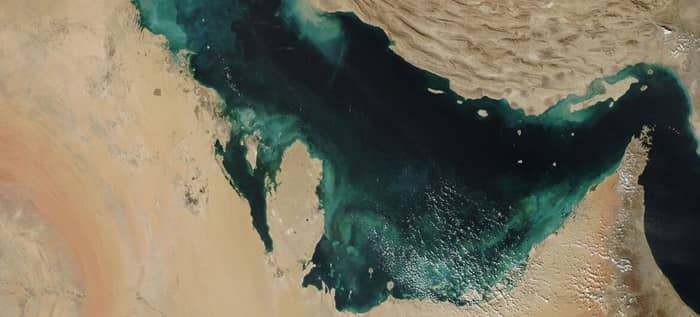
Renewed fighting between the United States and Iran has pushed the Strait of Hormuz back into the danger zone. Once again, the world’s shipping trade is staring at a narrow strip of sea with very wide costs.
The latest flare-up has slowed tanker traffic to a crawl and left hundreds of ships inside the Persian Gulf. The International Maritime Organisation says about 6,000 seafarers remain stranded on ships that cannot safely leave. That is not just a shipping number. It is a floating workforce, stuck at sea while leaders on land try, or fail, to make peace work.
For the travel trade, Hormuz may seem far from the front counter. It is not. This is one of the world’s key energy routes. When it tightens, pressure moves quickly through fuel prices, freight costs, airfares, cruise routes, port calls, insurance terms, and safety advice. In the end, it can reach the traveller’s hip pocket. That is where world affairs often become very real indeed.
IMO Secretary-General Arsenio Dominguez condemned the latest attacks on commercial ships. He urged flag states, shipowners and authorities not to send crews into danger while safety cannot be assured. His sharpest line was also the plainest: “No seafarer should have to risk their life simply for doing their job.”
Reuters reported that only two tankers crossed the Strait in the early hours of Thursday. Some ships have also been switching off public AIS tracking, which makes their movements harder to follow. That is not a small footnote. In modern shipping, when silence looks safer than being seen, the risk gauge is no longer in the green.
The new violence follows reported attacks on three tankers in the Strait, renewed US strikes on Iran, and Iranian strikes aimed at US military sites in nearby Gulf states. Iran has accused the United States and Israel of aggression. Several IMO Council members have condemned what they call Iranian threats and attacks affecting Gulf waters. The claims differ, as they always do. The result is harder to argue with: ships are slowing, insurers are wary, and crews are stuck.
Before the war, Reuters said the Strait carried about one-fifth of global oil supplies. The US Energy Information Administration has also called the Strait of Hormuz the world’s most important oil chokepoint. In plain English, it is a small gap with a giant job. When it works, most people barely notice it. When it fails, everyone learns they had been relying on it all along.
Oil prices have eased from their spike, but this is no time for a victory lap. The heads of the International Energy Agency, the International Monetary Fund, the World Bank Group, and the World Trade Organisation said the global economy has been broadly resilient. They also warned that uncertainty remains high and called for freedom of navigation to be upheld.
For airlines, that means watching fuel costs. For cruise lines, it means checking routes and ports. For travel insurers, it means reading the fine print with both eyes open. For corporate travel managers, it means Gulf trips need current advice, not yesterday’s brave face in a clean shirt.
The human cost should stay at the heart of the story. Seafarers are not “capacity”. They are people doing hard, skilled work in a dangerous place. Many are far from home, waiting for safe passage through waters that should be a highway, not a hostage note.
The wider economy may still be standing, but standing is not the same as strolling. Hormuz has again shown that one narrow sea lane can rattle boardrooms, oil markets, ports and travel desks from Melbourne to Marseille.
The answer is old-fashioned, which is often the best kind: stop the shooting, protect the crews, reopen the lane and let ships sail. Until that happens, the travel industry should stay alert, check official advice and resist treating calmer oil prices as proof that the storm has passed.
By: Bridget Gomez – © 2026.
Read Time: 3 minutes.
Author Bio:
 Bridget has never been built for stillness. Of Portuguese heritage, she began as a nurse, tending veterans at the Repatriation Hospital, listening to stories as colourful as the life she was yet to live. It was worthy, steady work, but wanderlust, as always, proved louder than routine.
So, she traded starch for a backpack and disappeared for a year, chasing trains, sunsets and the occasional regrettable glass of wine. She wrote everything down: the dust, the laughter, the missteps, the magic. Those notebooks became a travel blog, then a habit, then a calling.
Eventually, she found Global Travel Media, or perhaps it found her.
Today, Bridget writes with heart, humour and a dash of mischief, still travelling, just now with words.











