

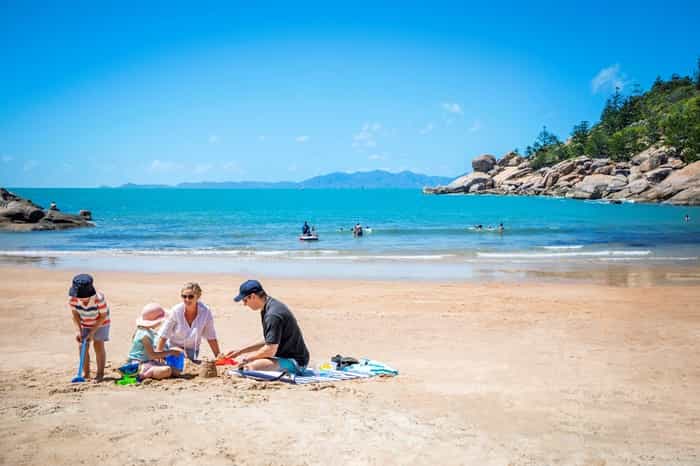
Australia has been handed the travel equivalent of a gold medal, a standing ovation and first pick of the window seats, with new global research naming it the destination international travellers most want to visit for wildlife experiences.
The study by adventure travel company Explore Worldwide surveyed 2,400 people across 12 countries. Australia secured 38 per cent of the vote, comfortably outpacing South Africa on 11 per cent, Kenya on 9 per cent, Canada on 7 per cent and China on 6 per cent.
That is not merely a win. It is a thumping.
For Australia’s visitor economy, the finding is more than flattering postcard material. It points to the enduring commercial power of nature-based tourism, particularly when wildlife is packaged with islands, Indigenous culture, coastal scenery, food, adventure and accessible transport.
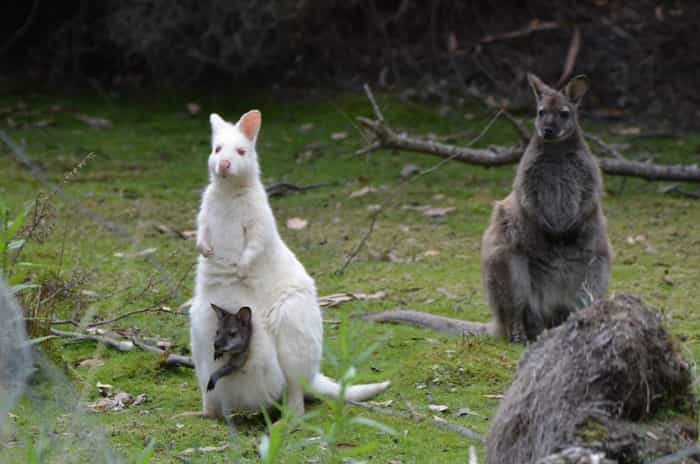
White Wallaby
Australia’s fauna has long done sterling work in the national sales department. Kangaroos and koalas require no introduction, quokkas have become social-media naturals, and whales continue to draw winter crowds to the coast.
Tourism Australia notes that much of the country’s wildlife is endemic, giving international visitors encounters they cannot readily replicate elsewhere. Its official Australian wildlife guide offers further information about the nation’s iconic species and where travellers can find them.
The research found giant pandas led travellers’ global wildlife wish lists, followed by elephants, kangaroos, koalas and whales. Australia can offer four of those five encounters, although anyone waiting for a wild panda to wander into the Outback may wish to pack a very substantial lunch.
The broader prize lies in what surrounds the animals. Australia’s wildlife experiences are often the opening act for a much larger journey through ancient landscapes, tropical reefs, harbour cities, island communities and living Aboriginal cultures.
SeaLink Tourism Acting Chief Operating Officer Anthony Haworth said the findings reinforced Australia’s standing as one of the world’s most remarkable destinations.
“Australia has an incredible ability to surprise people,” Mr Haworth said.
“Travellers might arrive hoping to spot a kangaroo or koala, but they leave having discovered stunning island destinations, the Great Barrier Reef, ancient landscapes, world-class beaches, rich Aboriginal culture and unforgettable experiences that simply can’t be found anywhere else.
“SeaLink is proud to help visitors connect with some of the country’s most extraordinary places, making it easy to access and experience the very best Australia has to offer.”
Wildlife Opens the Door to a Bigger Australian Journey
SeaLink’s national network links travellers with Kangaroo Island, K’gari, Magnetic Island, North Stradbroke Island, the Whitsundays, Rottnest Island, Bruny Island and the Tiwi Islands, among other destinations.
The company’s official destination platform brings those journeys together through one national planning and booking network.
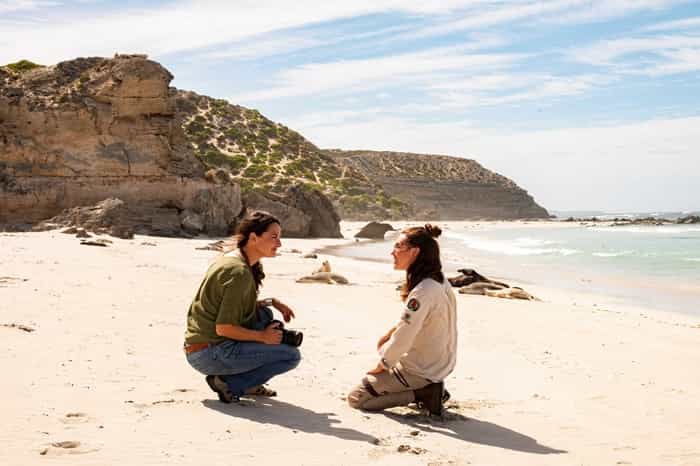
Seal Bay guided tour guide woman
In New South Wales, Sydney Harbour remains a formidable front door.
A cruise past the Sydney Opera House, Harbour Bridge and glittering foreshore delivers the sort of arrival sequence other cities would happily pinch. Visitors can combine the harbour with Taronga Zoo, SEA LIFE Sydney Aquarium, waterfront dining and the city’s cultural precincts through Captain Cook Cruises.
South Australia offers a particularly persuasive wildlife double act.
Adelaide Zoo provides the panda encounter, while Kangaroo Island supplies sea lions, fur seals, kangaroos, koalas, echidnas and birdlife against a backdrop of Remarkable Rocks, Admirals Arch and handsome beaches.
The state’s appeal then stretches inland.
Travellers can cruise the Murray beneath ochre cliffs aboard the Murray Princess, explore the Flinders Ranges or attach one of South Australia’s celebrated wine regions to the itinerary.
Wildlife may get people through the door. Lunch and a decent glass of South Australian red have been known to persuade them to stay.
Queensland Turns Wildlife Into a Blockbuster
Queensland, naturally, does not enter this contest quietly.
The Whitsundays combine Whitehaven Beach, Hill Inlet and access to the Great Barrier Reef, where marine encounters can include turtles, manta rays, colourful reef fish and seasonal humpback whales.
Tourism Australia identifies environmentally sensitive encounters with whales, dolphins, sea lions and other marine species as an important part of the country’s wildlife offering.
Those seeking more throttle can explore the islands with Whitsunday Jetski Tours.
Travellers preferring their excitement at koala pace can take the short ferry journey from Townsville to Magnetic Island.
The island is known for wild koalas, rock wallabies, fringing reefs, walking trails and Coral Sea sunsets. Tourism Australia also identifies Magnetic Island as one of the country’s leading destinations for seeing koalas in the wild.
Further south, North Stradbroke Island, or Minjerribah, offers humpback whale watching during the annual migration, as well as
Seal Bay guided tour guide woman
dolphins, turtles, manta rays, surf beaches, freshwater lakes, and Quandamooka cultural experiences.
Then there is K’gari, the world’s largest sand island and one of Australia’s most singular landscapes.
Freshwater lakes, rainforests growing from sand, sweeping beaches and dingoes turn the island into a natural history lesson with considerably better scenery.
UNESCO recognises K’gari as a World Heritage property, while SeaLink positions the island among its flagship Australian nature destinations.
After dark, visitors can also experience Illumina, the island’s permanent light-and-sound production that presents stories connected to K’gari’s natural and cultural heritage.
Quokkas, Wallabies and a Very Good Afternoon Tea
Western Australia’s Rottnest Island, or Wadjemup, has the quokka, more than enough turquoise water and a long-established ability to make Perth residents abandon the mainland for the day.
Cycling, snorkelling and beach-hopping complement the wildlife experience, proving once again that the best animal encounters rarely exist in isolation.
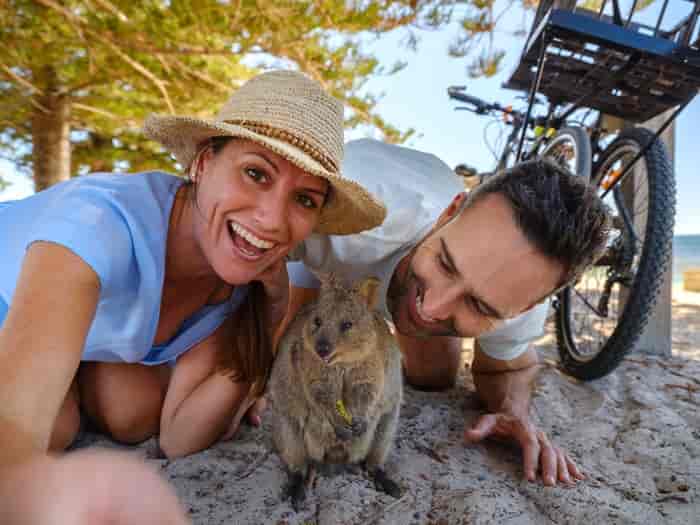
Couple with Quokka
Tasmania answers with Bruny Island, where sea cliffs, forests and coastlines support seals, dolphins, migrating whales, endemic birdlife and the elusive white Bennett’s wallaby.
There is also an excellent supporting cast of oysters, artisan cheese, whisky and chocolate, because even committed birdwatchers must eventually stop for afternoon tea.
In the Northern Territory, the Tiwi Islands bring cultural depth to the national proposition.
Aboriginal art, storytelling and community traditions sit alongside marine turtles, abundant birdlife, saltwater crocodiles and Top End wilderness.
The result is not simply wildlife tourism, but a richer encounter with Country, culture and place.
Australia’s Diversity Remains Its Winning Hand
Mr Haworth said Australia’s variety remained its decisive advantage.
“Australia’s greatest strength is its incredible diversity,” Mr Haworth said.
“Visitors come to experience iconic animals, but they leave with so much more, from spectacular island destinations, ancient landscapes, to breathtaking natural wonders and the world’s oldest living culture. It’s that combination of experiences that makes Australia unlike anywhere else.”
“SeaLink is proud to help visitors discover these extraordinary places, creating brilliant journeys that showcase the very best of Australia.”
That is the business lesson behind the survey.
Wildlife may be the headline attraction, but Australia’s real competitive strength lies in its ability to turn a single anticipated encounter into a layered, high-value journey.
A traveller may book for the koala, the whale or the quokka.
The country’s job is to ensure they also discover the reef, the island, the community, the story and, ideally, another reason to return.
For destination information and bookings, visit SeaLink Marine & Tourism.
By: Prae Lee – © 2026.
Read Time: 5 minutes.
Author Bio:
 You can tell a great deal about a person by how they meet a Bangkok morning. Prae Lee doesn’t charge into it; she glides, unhurried, as if time itself has agreed to behave. There is a calm assurance about her, the sort earned by knowing both your roots and your destination.
A graduate of Chulalongkorn University, she earned her business degree with quiet pride, then further honed it in Singapore and Australia. Travel didn’t change her. It refined what was already there: curiosity, discipline, grace.
Back in Bangkok, she slipped modern life into the family business, mastering social media with an instinct for listening and selling with Thai gentleness.
Prae never seeks attention, yet everything she touches grows brighter.
Now with Global Travel Media, she writes with authenticity, drawing on culture, travel and a rare, steady confidence.











