

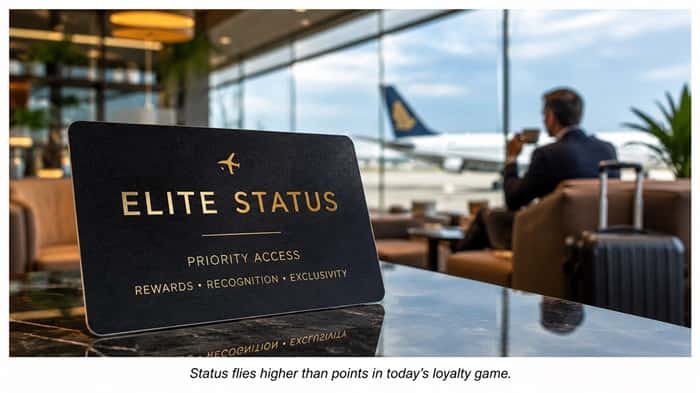
Airlines may have found their next handsome side hustle. This time, it is not another bag fee, a pre-paid sandwich, or a seat with six extra centimetres of mercy. The new prize is elite status.
For decades, airline loyalty has been built around points and miles. Fly, earn, redeem, repeat. Simple enough, at least until a “free” ticket arrives with a bill for taxes, charges and a small moral education. Yet loyalty experts now say the bigger opportunity is not the currency members earn. It is the tier they hold, defend and quietly show off.
The latest Travel Trends podcast with Loyalty Status Co. executives Mark Ross-Smith and Stuart Melim puts the matter plainly. In 2026, price still matters. But elite status is winning a different fight. It is emotional. It is personal. It gives travellers a sense of belonging before they even reach the gate.
Ross-Smith, CEO of Loyalty Status Co., summed up the opportunity with the sort of line that makes airline revenue teams sit up straight. “I think a lot of brands have focused on the currency for a long time. That’s the points and the miles… Status might be the greatest untapped ancillary revenue opportunity that currently exists in travel today.”
That is a large claim. It is also a sensible one. Points are maths. Status is theatre. A points balance sits in an app. The status changes at the airport daily. It can mean the shorter queue, the better boarding lane, the lounge, the extra bag, the hope of an upgrade, and the small but powerful pleasure of being recognised.
Ross-Smith made the contrast neatly: “Points and miles are very transactional. Status is very emotional.”
Airlines understand emotion when it produces margin. Melim argues that elite members typically account for only 3% to 7% of an airline’s customer base yet generate 20% to 30% of total revenue. That is not a niche. That is a golden goose with a boarding pass.
The commercial logic is hard to miss. Occasional travellers may choose the cheapest fare and disappear until next Christmas. Elite travellers behave differently. They value recognition, speed and comfort. They will often stay with a preferred airline even when another carrier is a few dollars cheaper. A lounge visit, priority security, a better seat or a more forgiving baggage allowance can matter more than the headline fare.
This is why status is moving from reward to product. Airlines are no longer just handing out elite tiers as a thank-you note for past flying. They are looking at ways to help travellers earn, keep or improve that status. The tools include status accelerators, paid tier-retention offers, intermediate tiers, choice benefits and personalised elite perks.
Ross-Smith put it directly: “Airlines are commercializing status in new ways they would never have dreamed of.”
The shift is already visible beyond the aircraft door. Star Alliance says Gold members and one companion can receive a complimentary upgrade to Business First on Heathrow Express after buying an Express Class ticket. Heathrow Express also states that Star Alliance Gold cardholders are entitled to a complimentary Business First upgrade with a full-fare Standard Class ticket. That is a status stretching into the ground journey. Very tidy. Very clever.
Flying Blue offers another useful signpost. Air France-KLM’s programme lists Ultimate benefits such as SkyPriority, lounge access with guests, a dedicated Ultimate Assistant, complimentary upgrade vouchers, a Flying Blue Platinum card for a travel companion and Hertz Platinum status. The message is clear. The airline is not just selling travel. It is selling a membership in a better travel day.
This matters because ancillary revenue has become part of the airline bloodstream. Bags, seats, upgrades and partner products have helped carriers protect margin in a high-cost industry. Status may be the more elegant version of the same idea. It can increase revenue, deepen retention, and keep high-value customers within the airline ecosystem.
Artificial intelligence may add more pressure. As AI search tools make fare comparison faster, travellers will find cheaper options more easily. Price gaps will be exposed in seconds. But a machine cannot fully copy the feeling of being known at check-in, waved through priority lanes or welcomed into a lounge when the terminal is doing its best impression of a shearing shed at peak hour.
That is the point. If fares become more transparent, status may become more important. It gives airlines something harder to copy. It is not only a perk. It is a relationship.
For travel agents and corporate travel managers, the lesson is practical. Elite status can shape booking behaviour, traveller satisfaction and programme compliance. The cheapest fare is not always the best value when the traveller is delayed, disgruntled or forced through a less efficient journey. Recognition can save time. Time, as every road warrior knows, is the one currency no airline has yet managed to sell in a neat bundle with priority boarding.
There is a warning, of course. Airlines must not cheapen the crown. If status becomes too easy to buy, it loses shine. If every priority lane is crowded, nobody feels very prioritised. If every benefit is carved into a fee, loyal travellers will notice. They always do.
The winning airlines will be those that protect the magic while improving the economics. They will make status feel earned, useful and special. They will also make it work harder as a commercial asset.
So yes, airlines may well have found their next ancillary revenue stream. Not in the overhead locker. Not on the snack trolley. Not buried in the fare rules. It has been sitting there all along, printed on the frequent flyer card.
Status is no longer just a reward for loyalty. It is becoming the product. And, handled with care, it may be one of the smartest airline revenue plays of the decade.
By: Soo James – © 2026.
Read Time: 4 minutes.
Author Bio:
 There’s nothing rehearsed about Soo James, and that’s precisely the point. Malaysian by heritage, Sydney-schooled, she arrived at UNSW to study Arts, then took a left turn into IT, not out of ambition but out of curiosity. Somewhere among systems and schedules, she worked out what really held her attention: people, language, and the quiet spaces between them.
Writing followed naturally. Travel and lifestyle gave her room to observe, to listen, to notice the details others rush past. Soo writes the way good travellers move, watching the room before admiring the view, catching the gesture before chasing the headline.
At Global Travel Media, her stories don’t shout or sell. They linger. They slow you down, open a door, and gently suggest there’s more to see if you’re willing to look.











