

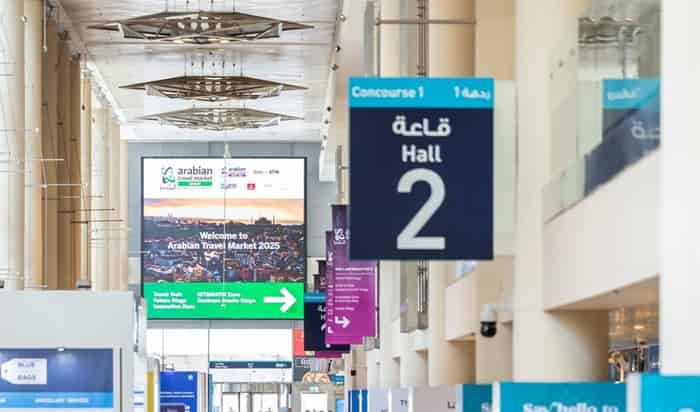
If the global travel industry has learned anything over the past few years, it’s this: never underestimate Dubai.
The city that built ski slopes in the desert, turned stopovers into holidays, and somehow convinced half the world that 45 degrees is “pleasantly warm” has once again shown it doesn’t rattle easily.
So, it comes as little surprise that Arabian Travel Market (ATM) 2026 is not only going ahead, but is doing so with a hefty dose of confidence and a clear message to the global travel trade: business is very much open.
The Middle East’s biggest travel showcase will take place from 14 to 17 September 2026 at Dubai World Trade Centre, bringing together airlines, tourism boards, hoteliers, technology providers, tour operators and the travel industry’s usual collection of deal-makers, networkers and coffee-powered optimists.
The revised September dates may have prompted a few diary reshuffles and the odd groan from travel executives already juggling packed calendars. But organisers insist the move is designed to maximise attendance and provide greater certainty for exhibitors and buyers.
And, frankly, few destinations are better equipped to host a major global gathering at short notice than Dubai.
The emirate has spent decades perfecting the art of keeping the show on the road. Whether facing global economic shocks, pandemics or regional uncertainty, Dubai has built a reputation for staying calm while others are still searching for the emergency exits.
Danielle Curtis, Regional Portfolio Director – UAE at RX Global, acknowledged that the date change would require some adjustments across the industry.
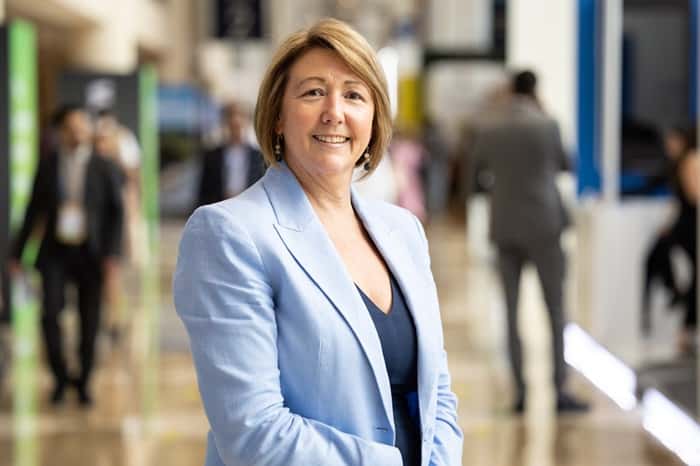
Danielle Curtis, Regional Portfolio Director – UAE at RX Global
“We appreciate the move to September means change for everyone; however, ATM’s role as a vital platform for the travel and tourism community to reconnect, strengthen partnerships and drive meaningful dialogue at a time when industry collaboration is needed most, is a key priority,” Curtis said.
“Supported by Dubai’s world-class infrastructure, operational resilience and strong public-private sector coordination, ATM 2026 remains firmly positioned to bring the tourism industry together and support long-term recovery and future growth.”
Behind that confidence sits a considerable amount of planning and more than a little investment.
Dubai has introduced a series of measures aimed at supporting economic stability, including AED2.5 billion in stimulus initiatives, tourism support programs and enhanced public safety measures.
More importantly for the travel trade, the city has kept its aviation, tourism and events sectors operating.
The region’s air links are also steadily returning.
The UAE resumed full air traffic operations on 2 May, while neighbouring Gulf states, including Qatar, Bahrain and Kuwait, have reopened their airspace. Emirates has already restored 96 per cent of its global network, serving 138 destinations across 73 countries and operating more than 1,300 weekly frequencies.
Etihad Airways, flydubai and Qatar Airways continue restoring services as demand rebounds.
For many travel advisors and wholesalers, government travel advice often provides the clearest indication of confidence. That’s improving too.

Hoor Al Khaja, Senior VP International Operations, DCTCM
The United Kingdom has removed its travel warning for the UAE, while Australia has eased travel advice for several Middle Eastern destinations, including the UAE, reflecting improving regional stability.
According to Hoor Al Khaja, Senior Vice President, International Operations at Dubai Corporation for Tourism and Commerce Marketing, the city’s approach has long centred on preparation rather than reaction.
“Dubai’s approach, guided by the city’s visionary leadership, has always been rooted in long-term planning, agility and strong collaboration across government and industry stakeholders,” Al Khaja said.
“Throughout recent regional developments, the city has remained open, operational and welcoming, reinforcing the trust placed in Dubai by travellers, businesses and international partners worldwide.”
Research suggests travellers have responded positively.
Data from STR, ATM’s official research partner, indicate that hotel occupancy levels across major Gulf markets have continued to recover in recent weeks, buoyed by domestic demand and uninterrupted tourism infrastructure.
Dubai’s hotels, in particular, have remained remarkably stable, proving that diversified source markets and strong connectivity continue to pay dividends.
Of course, ATM has always been about more than filling hotel rooms.
The 2026 conference program, built around the theme Travel 2040: Driving New Frontiers Through Innovation and Technology, will tackle some of the industry’s biggest questions.
How do destinations prepare for future crises? What happens when geopolitical uncertainty becomes the norm? How can technology improve traveller confidence? And perhaps the biggest question of all, what does the traveller of 2040 actually look like?
Across the Global Stage, Future Stage, and Experience Hub, tourism leaders, researchers, policymakers, and technology experts will attempt to provide answers.
One of the most anticipated sessions is Euromonitor International’s keynote presentation, The State of Travel: Inflation, Polycrisis & the New Travel Reality.
Stephen Dutton, Global Insight Manager – Travel at Euromonitor International, believes the appetite for travel remains extraordinarily strong.
“Travel spending surged to record levels in 2025, outpacing GDP growth in many markets. This is a powerful testament to the enduring demand for meaningful cross-border experiences,” Dutton said.
“This resilience is not incidental – travel has repositioned itself as an attainable luxury that consumers actively protect, even amid mounting economic and geopolitical pressures.”
The message for the travel industry appears straightforward.
Travellers still want to travel.
And Dubai still intends to welcome them.
Given the city’s track record, few in the industry would bet against it.
By: Stephen Morton – © 2026.
Read Time: 4 minutes.
Author Bio:
 Stephen Morton has spent nearly fifty years shaping how the travel industry thinks, speaks and sells itself. From a family agency in 1976 to today’s digital frontier, he’s rarely followed the crowd; more often, he’s been waiting at the front long before anyone noticed the line forming.
In the mid-nineties, he pushed Agents Support Systems online while the industry still clung lovingly to the fax machine. In 2001, e-Travel Blackboard, a daily bulletin that grew into Australia’s most read industry newsletter, expanded across New Zealand, Asia, the Americas, and MICE.
Global Travel Media followed in 2009, earning international awards and spawning new titles, from Destination Thailand News to Global Cruise News and now GTM Holidays and the forthcoming GTM Mall.
Lecturer, founder, agitator Morton has always turned instinct into impact.











