

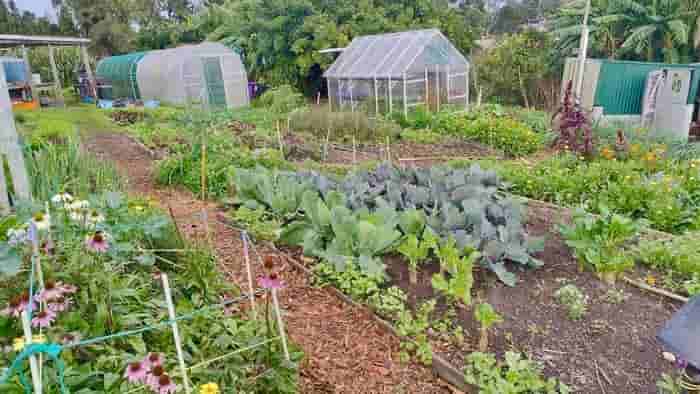
Visitors to Tāmaki Makaurau Auckland are often surprised to find that New Zealand’s biggest city offers pastoral and agricultural experiences to soothe the soul.
One of the best known is Auckland’s Cornwall Park, where cows graze contentedly and visitors passing them – and sometimes patting them – feel like they are on a rural farm. Another lesser-known, rewarding Auckland experience is visiting the Kelmarna Community Farm in the suburb of Grey Lynn, near Ponsonby.
Media delegates to MEETINGS in Auckland yesterday were delighted by Kelmarna, one of Auckland’s leading urban regeneration initiatives.
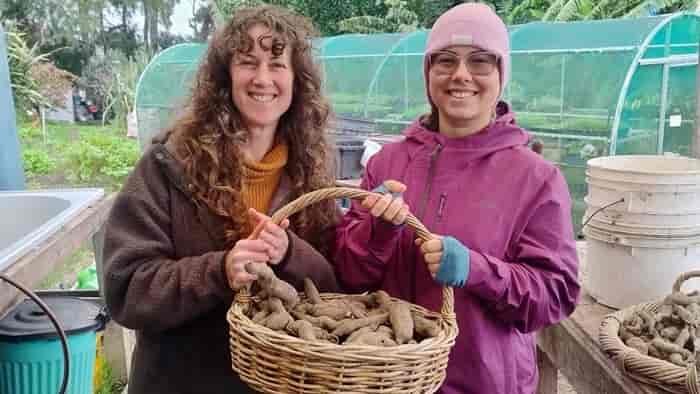
Kelmarna
In partnership with Auckland Convention Bureau, Kelmarna supports long-term soil regeneration and community food resilience across the region. Every contribution helps grow local food systems, with thousands of seedlings each year finding homes in Auckland gardens and communities.
This highlights Auckland’s growing focus on sustainability, regeneration and community-led initiatives.
Kelmarna’s dedicated team grow all sorts of crops, from leafy greens to the extraordinary rocoto chilli (Capsicum pubescens), which looks almost like an apple until you begin to eat it, when it tastes rather like a bell pepper and then gradually increases in heat until it’s very hot. The plants can grow two metres tall.
Kelmarna’s journey began in 1981 when Paul Lagerstedt secured the lease from the Auckland Council, giving rise to the Kelmarna Community Gardens Trust. The initial endeavour was to showcase self-sufficiency through organic growing practices.
Kelmarna
For 20 years, Kelmarna focused on supporting people who had experienced mental illness through providing pre-vocational training. In 2015, Kelmarna set out to champion and demonstrate a regenerative local food model that supports climate change mitigation, urban resilience and community wellbeing.
Kelmarna can now organise tours for interested parties. It offers just over 700 square metres of vegetable gardens, most of which are managed communally by the enterprise’s own staff team and volunteers. Produce is sold directly to the local community, giving them access to super fresh, seasonal, nutrient-dense food.
There’s also a “food forest” grouping a wide variety of fruit trees, perennial herbs and companion plants, as well as annual crops like pumpkins and potatoes that form the staple foods of Kelmarna’s volunteer lunches.
By: Peter Needham at MEETINGS in Tāmaki Makaurau, Auckland – © 2026.
Read Time: 2 Minutes.
About the Author.
 With more than 35 years in travel journalism, Peter Needham has filed stories from Fleet Street to Fiji, and just about everywhere in between. As Managing Editor (Australasia) for Global Travel Media, he shapes industry coverage with the steady hand of someone who’s seen fashions come and go and knows what lasts.
Since going freelance in 1993, his byline has appeared in the Sydney Morning Herald, the Australian Financial Review, Reader’s Digest, and Qantas’ in-flight magazines. He edited Inside Tourism for seven years, wrote the long-running Travel Tales column for Vacations & Travel, and even crafted copy for Tourism Australia ahead of the Sydney 2000 Olympics.
A Reuters, Guardian and AAP veteran, Peter has travelled widely from South American backpacking trails to a Saudi military hospital, gathering stories the old-fashioned way: by being there.











