

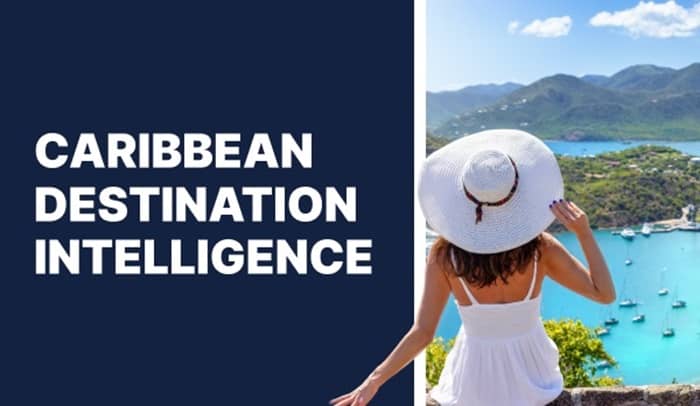
For years, the Caribbean has been tourism’s golden child.
When the world stopped travelling, the region bounced back faster than almost anyone expected. When airlines struggled to fill aircraft elsewhere, travellers flocked to Caribbean beaches. When hotels in other parts of the world worried about occupancy, Caribbean resorts were happily charging premium rates while guests queued for sunset cocktails and ocean-view suites.
On the surface, it is a success story that would make any tourism minister beam with pride.
Which is precisely why industry leaders should be worried.
A fascinating new Caribbean Destination Intelligence report from Skift Research and Skift Advisory suggests the region may be facing a challenge far more dangerous than storms, recessions or airline disruptions.
Success itself.
That may sound odd for a region enjoying record visitor numbers, booming cruise traffic and billions of dollars in new hotel investment. Yet, the report delivers a warning that cuts straight through the celebratory mood currently sweeping the Caribbean tourism sector.
The destinations that win today may not necessarily be the ones winning tomorrow.
And in an era increasingly shaped by artificial intelligence, that future may arrive much sooner than many tourism boards realise.
The figures certainly look healthy enough.
The Caribbean welcomed an estimated 35 million international stayover visitors during 2025, comfortably surpassing pre-pandemic levels. Cruise tourism surged to approximately 36 million passenger visits, while airlines poured more than 50 million inbound seats into the region. Hotels continued to enjoy strong rates, and travellers spent roughly 30 per cent more per trip than they did before Covid turned the tourism world upside down.
Not bad for a region that only a few years ago was fighting for survival.
Yet beneath those impressive numbers sits a problem that travel leaders are increasingly reluctant to discuss.
The Caribbean has become a victim of its own formula.
For decades, marketing campaigns across the region sold a remarkably similar dream. White-sand beaches. Turquoise water. Palm trees swaying in the breeze. Rum cocktails served against spectacular sunsets.
It worked brilliantly.
Unfortunately, so did everyone else’s.
Today, destinations across the Caribbean are competing not only with one another but also with luxury destinations in Southeast Asia, the Indian Ocean, the Middle East, and beyond. The Maldives offers exclusivity. Phuket offers luxury. Bali offers wellness. Mexico offers scale.
The uncomfortable question now confronting Caribbean tourism leaders is simple.
What exactly makes their destination impossible to replace?
That question matters because travellers are no longer planning holidays the way they once did.
Search engines are gradually giving way to AI assistants.
Instead of spending hours comparing websites, many travellers now ask an AI platform a simple question:
“Where should I go for a luxury beach holiday?”
The answer may come back as three recommendations.
Not thirty.
Three.
That dramatically changes the rules of destination marketing.
According to the report, 63 per cent of global travellers already use artificial intelligence as part of their travel planning process. Among affluent travellers, the figure climbs to a staggering 81 per cent.
In other words, the very travellers Caribbean destinations most want are increasingly relying on technology to narrow their choices.
That means being visible is no longer enough.
Being distinctive becomes everything.
If every destination sounds the same, looks the same and promises the same experiences, artificial intelligence has very little reason to recommend one over another.
The Caribbean’s biggest battle may no longer be for market share.
It may be for relevance.
Then there is the second challenge.
America.
For generations, the United States has been the Caribbean’s tourism lifeblood. Roughly half of all visitors to the region are from the US, while several destinations rely on the US for more than 80 per cent of arrivals.
That relationship has delivered extraordinary benefits.
American travellers spend well.
They travel frequently.
They understand the Caribbean product.
Furthermore, they return repeatedly.
Yet dependence always carries risk.
An economic slowdown in the United States can quickly become a tourism slowdown across multiple Caribbean destinations. A shift in consumer confidence, political uncertainty or major weather events affecting key gateway markets could have immediate consequences.
The report’s demand vulnerability analysis highlights how exposed some destinations remain to a single source market.
Jamaica, Aruba, and Saint Lucia have built relatively diversified air networks while maintaining strong demand from the United States. Others continue to rely heavily on US visitation despite more limited route diversity.
The lesson is not that America matters less.
Quite the opposite.
The lesson is that diversification matters more.
Meanwhile, investors appear convinced the region’s growth story has years left to run.
Nearly 37,000 hotel rooms are currently in the Caribbean development pipeline.
The Dominican Republic alone accounts for more than 18,000 rooms, making it the undisputed heavyweight of regional tourism development. Jamaica follows with almost 5,000 planned rooms, while destinations such as Turks & Caicos continue attracting ultra-luxury investment at a remarkable pace.
Luxury brands are arriving faster than tourists can unpack their luggage.
Waldorf Astoria.
Six Senses.
Banyan Tree.
Anantara.
MGallery.
Pullman.
The list keeps growing.
And that is both encouraging and problematic.
Because building rooms is relatively easy.
Filling them profitably is much harder.
The report argues that the Caribbean cannot simply luxury-build its way out of commoditisation. Every new resort offering the same formula risks making destinations appear even more interchangeable.
Luxury alone is no longer a differentiator.
Everybody is luxurious.
The destinations that succeed will be those that offer something more memorable than thread counts and infinity pools.
Which brings us neatly to Jamaica.
If there is one destination that emerges from the report looking particularly strong, it is the island nation that has spent decades turning culture into a competitive advantage.
Jamaica topped the Caribbean Brand Health Index, outperforming every other destination measured.
Interestingly, it achieved that feat without being the region’s biggest tourism market.
That honour still belongs to the Dominican Republic.
What Jamaica demonstrates is that visitor volume and brand strength are not the same thing.
One fills hotel rooms.
The other creates desire.
And desire is increasingly becoming tourism’s most valuable currency.
Jamaica Tourist Board Director of Tourism Donovan White perhaps captured the challenge best when discussing competition.
“The Caribbean does not compete on like-for-like terms,” he said.
“We compete on identity.”
That single sentence may ultimately be the most important observation in the entire report.
Identity.
Not inventory.
Identity.
Because travellers can find beaches almost anywhere.
What they cannot find everywhere is culture, personality, music, cuisine, heritage and experiences that genuinely feel unique.
The Caribbean’s future will not be decided by how many hotel rooms it builds.
Nor will it be determined solely by how many flights arrive each week.
The winners will be the destinations capable of convincing both humans and algorithms that they deserve a place on tomorrow’s shortlist.
For an industry accustomed to measuring success in arrivals, occupancy and spending, that represents a profound shift.
The Caribbean remains one of the world’s great tourism success stories.
But as this report makes abundantly clear, yesterday’s playbook will not carry the region into the next decade.
Paradise, it seems, has entered the age of artificial intelligence.
And paradise is about to discover that even heaven has competition.
By Jason Smith – © 2026.
Read Time: 8 Minutes
About the Author.
 Jason Smith didn’t learn travel from textbooks. He learned it in airports, taxis and hotel lobbies, watching the business unfold long before he played his own part. Half American, half Asian, he grew up around the quiet workings of tourism, where people come and go, and stories rarely stand still.
Bangkok came first, then formal study, then a career that carried him through Singapore, Malaysia and Vietnam. Each place left something behind. In the end, Thailand felt like home, and I took on a senior role in hotel sales.
Then everything stopped. Borders shut, planes grounded, and Jason found himself back in America with time to reflect.
Now at Global Travel Media, he writes travel as it really is, not polished, not perfect, but human, and all the better for it.











