

There’s a quiet shift underway in the corridors of power in Thailand, and for the millions who pass through its airports each year, it may soon feel anything but subtle.
The Thai Cabinet has approved a revision to the country’s 60-day visa-exemption scheme, a policy that only came into effect in July 2024 and was widely seen as a shot in the arm for post-pandemic tourism. Now, in a move that signals a recalibration rather than a retreat, authorities are tightening the framework, with new entry conditions set to take effect 15 days after formal publication in the Royal Gazette.
Until then, it’s business as usual. But once the ink dries, the generous 60-day blanket arrangement will be rolled back, and travellers from 93 countries and territories will find themselves navigating a more segmented system, one that looks rather more like the pre-2024 playbook.
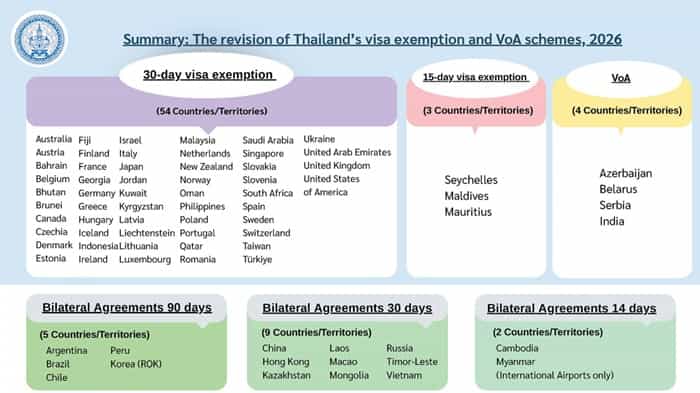
Under the revised structure, each country will sit neatly within a single visa exemption category. Nationals from 54 countries will be granted a 30-day visa-free stay, while a smaller cohort from just three countries will be eligible for a 15-day visa-free stay. Meanwhile, longstanding bilateral agreements remain untouched, continuing to offer exemptions of 14, 30, or even 90 days depending on the diplomatic handshake behind them.
For those accustomed to the flexibility of the current scheme, the change may feel like a tightening of the screws. But from a policy perspective, it’s a return to a more controlled and arguably sustainable model, one that balances tourism growth with security and economic oversight.
The Tourism Authority of Thailand (TAT) has been quick to reassure travellers that clarity will be paramount. Officials are urging visitors to keep a close eye on updates from the Ministry of Foreign Affairs and local Thai embassies or consulates, as the finer details, particularly around nationality-specific requirements, come into sharper focus.
Behind the scenes, the newly empowered Visa Policy Committee, chaired by the Deputy Prime Minister and Minister of Foreign Affairs, will take a more granular approach. Visa settings will now be reviewed country by country, factoring in not just tourism demand but broader considerations such as security and economic impact.
Importantly, those already in Thailand or arriving before the new rules take hold will not be caught out mid-holiday. Existing permissions will be honoured, allowing visitors to stay for the duration originally granted.
It’s a measured move, but one with clear intent. Thailand is not closing its doors far from it. Rather, it is refining how and to whom those doors are opened.
For an industry that thrives on predictability, the message is simple: stay informed, stay nimble, and don’t assume yesterday’s rules will carry you through tomorrow’s journey.
Further updates are expected once the revised measures are formally published. Until then, travellers would be wise to keep one eye on their passport and the other on the fine print.












