

There’s a familiar rhythm to government responses when demand outpaces supply: tweak the planning rules, loosen a few constraints, and hope the cranes follow. But as Queensland edges closer to its moment on the global stage, that old playbook is beginning to look decidedly thin.
According to KPAT Hotels, the state’s hotel shortage is not a problem that can be waved away with planning incentives alone. And if anyone needed reminding, the freshly released 2026 Queensland Hotel Outlook has done just that, underscoring what developers have been quietly (and sometimes not so quietly) saying for years.
Queensland, quite simply, does not have enough hotel rooms.
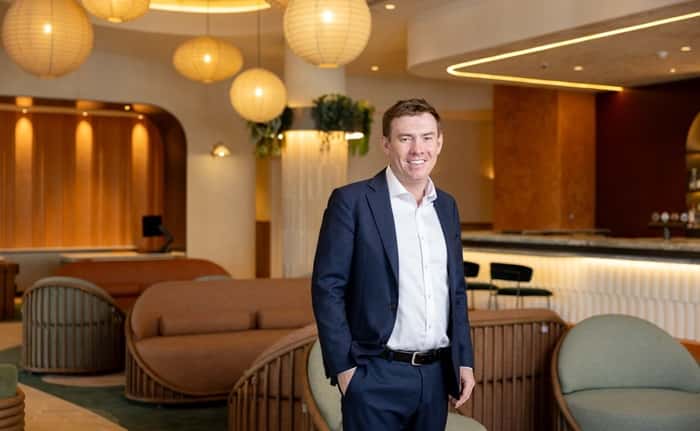
Kenneth Wagner, Managing Director of KPAT Hotels, did not mince his words. The pipeline, he suggests, is unlikely to meet demand, particularly with the 2032 Olympic and Paralympic Games looming ever larger.
“Queensland needs more hotel rooms not just for 2032, but right now,” Wagner said.
It’s the kind of statement that lands with weight, not least because KPAT has skin in the game. The company has just opened the Avani Mooloolaba Beach Hotel, the Sunshine Coast’s first full-service internationally branded hotel in four decades. A milestone, certainly, but also a reminder of how slowly meaningful supply has been arriving.
The Economics Few Want to Talk About
The difficulty, as Wagner points out, is not desire. It’s economics.
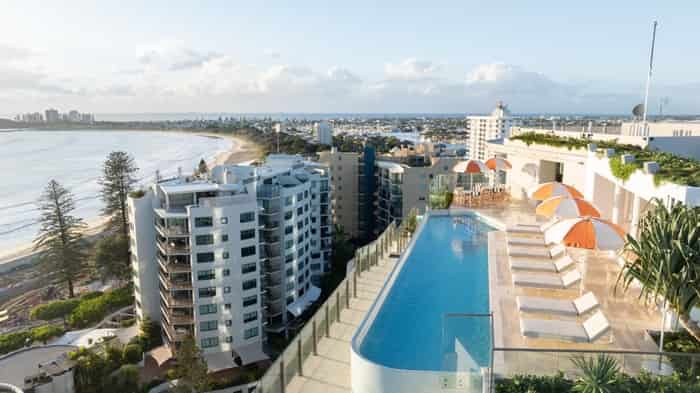
Avani Mooloolaba Beach Hotel opened on 11 May with 180 rooms on the Sunshine Coast
Hotels are, by their nature, long-haul investments. Unlike residential developments, where returns can be realised swiftly upon completion, hotels take time to realise returns. Three to five years, in many cases, before they become profitable. That’s a long wait in a market conditioned to expect quicker wins.
And therein lies the rub.
Developers are being asked to shoulder higher risk, longer timelines, and tighter margins. Construction costs remain elevated. Financing isn’t getting any cheaper. Operational ramp-up takes patience. It’s not a model for the faint-hearted or the short-sighted.
“Hotel developments are fundamentally more difficult to make commercially viable than residential apartments,” Wagner noted, in what might be the understatement of the year.
The result? A feasibility gap. Projects that look promising on paper often falter when the numbers are tested in earnest.
Incentives Are Not Enough
To their credit, councils and governments have not been idle. Faster approvals, increased height allowances, and zoning adjustments have all been implemented to encourage development.
But here’s the uncomfortable truth: these measures help, but they do not solve the problem.
“They are not enough to close the feasibility gap,” Wagner said plainly.
It’s a point that cuts through the usual optimism. Planning reform may grease the wheels, but it does not fundamentally change the economics of hotel development. And without addressing that core issue, supply will continue to lag.
A Model Worth Watching
There is, however, a glimmer of practical progress.
The Sunshine Coast Council took a notably strategic approach with the Avani Mooloolaba site, protecting it specifically for hotel use rather than allowing it to drift into residential development. It’s a small but significant shift in thinking: prioritising long-term tourism infrastructure over short-term gains.
It worked.
The 12-storey hotel now stands as a tangible addition to the region’s accommodation stock, delivering 180 rooms alongside dining, conference, and wellness facilities. In a market crying out for supply, that’s no small contribution.
Wagner believes this model deserves closer attention.
Other regions, he suggests, would do well to examine how targeted policy, rather than broad incentives, can shape outcomes more effectively.
Demand Isn’t Waiting
If there is one constant in this story, it is demand.
Queensland’s appeal, particularly across regional and coastal destinations, continues to strengthen. Visitors are arriving. Events are growing. The state’s tourism engine is humming.
But supply is not keeping pace.
KPAT’s portfolio spanning Townsville, Toowoomba, and beyond offers a snapshot of both opportunity and constraint. Across five locations, the group operates 600 rooms and holds eight commercial hotel licences. It’s a solid footprint, yet still a fraction of what’s needed.
“There’s strong demand for branded hotel accommodation across Queensland,” Wagner said.
And that demand is unlikely to soften anytime soon.
The Conversation Queensland Needs to Have
What emerges from all this is not just a supply problem, but a strategic one.
If Queensland is serious about meeting future tourism and event demand, including the Olympics, it must look beyond incremental fixes. That means confronting the financial realities of hotel development and considering more substantive interventions.
Tax settings. Investment incentives. Public-private partnerships. Perhaps even direct support mechanisms.
None of these is simple. All of them require political will.
But without them, the risk is clear: a state ready to welcome the world, yet short on the rooms to host it.
Wagner’s closing observation carries a quiet urgency.
“Unless there are material interventions that improve project feasibility, the pace of new hotel delivery will remain challenging.”
In other words, the clock is ticking, and the cranes won’t rise on goodwill alone.
by Sandra Jones – (c) 2026.
Read Time: 3 minutes.
About the Author.
 Sandra has spent a working lifetime quietly rescuing journeys, one itinerary, one anxious caller, one impossible connection at a time. Years in Australia’s finest travel agencies taught her the art of calm, how to find a flight in a fog of cancellations, how to soothe a traveller when luggage wanders, how to turn nine frantic days in Europe into something resembling sense. Qualified, seasoned, endlessly patient, she learned that good travel advice is part logistics, part listening.
But the storyteller in her was always waiting its turn. Writing offered a new map, a way to turn experience into reflection, detail into delight. At Global Travel Media, Sandra now writes the truths only insiders know: the mishaps, the laughter, the grace found between gates and goodbyes. She reminds us that travel, for all its fuss, is still one of life’s better ideas.











