There was a time not so long ago when corporate travel meant a predictable march toward the nearest five-star tower, a crisp shirt, and an eye-watering minibar tab. Those days, it seems, are being politely but firmly shown the door.
New research from Corporate Traveller, the SME-focused arm of Flight Centre Travel Group, reveals a decisive shift in how Australia’s small and mid-sized business travellers are choosing where to lay their heads. And it’s not about marble lobbies or rooftop cocktails, it’s about practicality, value, and getting the job done with minimal fuss.
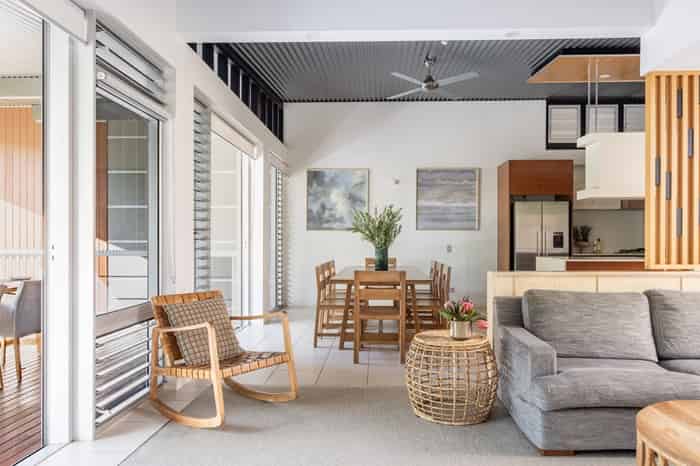
At the centre of this evolution is the rise of apartment-style accommodation. A notable 44 per cent of business travellers now favour properties that offer kitchenettes, extra space and, perhaps most importantly, a sense of control over their routine. In parallel, a striking 83 per cent rank proximity as the single most important factor when booking accommodation, proving that proximity now trumps prestige.

Tom Walley, Corporate Traveller Global MD
Tom Walley, Global Managing Director at Corporate Traveller, puts it plainly: business travel isn’t discretionary, it’s essential. But the thinking behind each booking has sharpened considerably.
“The question isn’t whether people are travelling, they are,” Walley said. “But the decision-making has fundamentally changed. A hotel three blocks from your meeting with a good workspace and free breakfast will beat a five-star property across town every time.”
It’s a telling observation. Today’s traveller is not chasing Instagram moments; they’re chasing outcomes.
The rise of sensible luxury
Globally, hotel bookings have ticked up by 6.3 per cent, yet behind that growth lies a tightening grip on budgets. In this environment, 58 per cent of booking decisions are now influenced by pricing, savings opportunities and loyalty programs, a clear signal that every dollar must justify its existence.
Still, the traditional hotel model is far from obsolete. Some 55 per cent of respondents continue to value full-service properties, particularly when trips demand meeting facilities, varied dining options or a touch of wellness indulgence. In other words, the modern traveller is not abandoning hotels; they’re simply choosing more carefully, matching the property to the purpose.
This duality is reflected in the expanding portfolios of major operators such as Accor. Across the Pacific, Accor has leaned into the extended-stay market with brands including Peppers, The Sebel and Mantra, each catering to travellers who prefer a little more elbow room and a little less rigidity.
Adrian Williams, Chief Operating Officer for Accor in the Pacific, sees apartment-style accommodation not as a disruption, but as a natural progression.
“For corporate travellers, this sits as a complementary alternative to traditional hotel stays,” Williams said. “Apartments, branded residences and extended-stay living are becoming central to how people want to travel, stay and live today.”
There’s a quiet logic to it. The modern traveller wants the independence of a home, paired with the reliability of a hotel and, crucially, the reassurance of professional management.
Breakfast, bandwidth and breathing room
If the accommodation itself is evolving, so too are the non-negotiables that seal the deal. Three features now stand head and shoulders above the rest:
- Complimentary breakfast (72 per cent)
- Free cancellation up to 24 hours before arrival (58 per cent)
- High-speed Wi-Fi (50 per cent)
It’s a list that reads less like luxury and more like common sense.
“Complimentary breakfast removes friction from the travel day,” Walley noted. “You’re not hunting for a café at 6am, you’re not expensing meals, and if your travel management company has done its job well, you’re still earning loyalty points while getting that inclusion.”
Flexibility, meanwhile, has become the quiet hero of corporate travel. With business conditions shifting quickly, the ability to cancel or amend bookings without penalty is no longer a perk; it’s a necessity.
The blurred edges of business travel
Perhaps the most telling trend is the rise of ‘bleisure’, that once-awkward hybrid of business and leisure that has now settled comfortably into the mainstream. Three in four Australian business travellers are blending work trips with personal time, extending stays or adding remote workdays in new locations.
This shift has reshaped expectations of accommodation. Hotels are no longer just places to sleep; they are expected to function as offices, retreats and, occasionally, sanctuaries. Charging stations, quiet work zones and adaptable living spaces are no longer optional extras; they are baseline requirements.
Walley captures the shift with characteristic clarity.
“Someone might fly in for a two-day conference and stay through the weekend, or tack on a few remote work days in a different city,” he said. “The accommodation needs to work for both modes.”
It’s here that apartment-style properties come into their own. A kitchenette allows for a quiet meal after a long day; a separate living space offers the luxury of switching off without leaving the room. It’s not glamorous, perhaps, but it’s undeniably effective.
A return to first principles
Strip away the jargon and the trend lines, and what emerges is something rather reassuring. Business travel, for all its modern complexities, is returning to first principles: value, convenience and functionality.
For Australia’s SMEs, where every trip must justify its cost, the message is clear. Choose wisely, travel smartly, and prioritise what genuinely matters.
In 2026, the smartest booking isn’t the flashiest. It’s the one that gets you to the meeting on time, keeps you connected, feeds you before dawn and leaves enough in the budget for the next opportunity.
Not quite glamorous, perhaps. But in business, results rarely are.