

There’s an old rule in travel: the further you sail from land, the more self-reliant you’d better be.It’s a principle that has served mariners well for centuries. But every now and then, even the best-prepared vessel needs help from shore and occasionally, from the world itself.
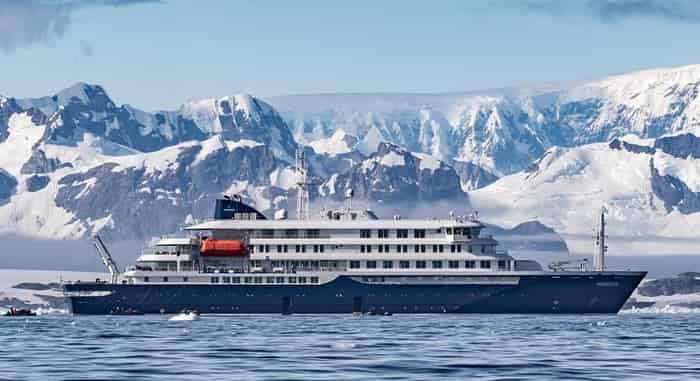
That’s where things stand this week, as the World Health Organisation quietly but decisively takes charge of a developing health situation aboard the expedition vessel Hondius, operated by Oceanwide Expeditions.
No sirens. No sweeping travel bans. Just a measured, methodical response to what is, by any sensible reading, a serious but contained medical event.
And yes, there have been deaths.
A Timeline That Raises Eyebrows, Not Panic
Let’s deal with the facts, because in situations like this, clarity matters more than conjecture.
The vessel is currently positioned off Cape Verde, carrying 149 people from 23 countries, a floating United Nations, if you like, albeit one that didn’t sign up for this particular agenda.
The timeline begins quietly enough. On 11 April, a passenger died on board. No cause could be determined at the time, a reality not uncommon at sea. The individual was later disembarked at St Helena.
Then the narrative takes a sharper turn.
By 27 April, the passenger’s wife, who had accompanied the repatriation, had also died. At this stage, authorities are at pains to stress that there is no confirmed link between those deaths and the current outbreak. Still, it’s the sort of coincidence that makes even seasoned observers sit up straighter.
That same day, another passenger became critically ill and was evacuated to Johannesburg, where a variant of hantavirus was confirmed.
A second onboard death followed on 2 May.
Two crew members have since developed respiratory symptoms, one mild, one severe. Both are under close observation.
It’s a pattern that doesn’t scream chaos, but it certainly doesn’t whisper comfort either.
WHO Steps In and Sets the Tone
Enter the WHO.
Not with alarm bells, but with a distinctly steady hand.
“This is a serious but contained event and there is no need for panic or travel restrictions at this stage,” said Mohamed Yakub Janabi, a line that does a fair bit of heavy lifting.
There’s nuance in that phrasing. Serious, yes. Contained, importantly. No need for panic, crucially.
Behind the scenes, the organisation is coordinating evacuations, overseeing risk assessments, and ensuring that national authorities are informed in accordance with international health protocols.
In short, the system is doing exactly what it was designed to do.
Hantavirus: Rare, Unpleasant, But Not Rampant
Now, let’s talk about the virus itself because context is everything.
Hantavirus isn’t new. It’s not particularly common either, and that’s part of the point.
According to WHO expert Bhanu Bhatnagar, infections are typically linked to contact with infected rodents. Human-to-human transmission? Rare.
“They can be severe in some cases, and they are not easily transmitted between people,” Bhatnagar said. “The risk to the wider public remains low at this time.”
Globally, the number of infections is in the tens of thousands annually, mostly in parts of Asia and Europe. Symptoms can take weeks to appear, starting innocently enough with fever and aches before, in some cases, escalating.
It’s not something you want on board a cruise ship, but equally, it’s not the makings of a global shutdown.
Onboard Measures: Quiet Discipline Over Drama
Back on the Hondius, life is proceeding under a new set of rules, none of which are optional.
Isolation measures are in place. Hygiene protocols have been tightened. Medical monitoring is continuous. Passengers, by all accounts, have been informed and supported.
Two people who should already be in a hospital bed are still on board, waiting for clearance that can’t come fast enough, a sobering reminder that out here, even in 2026, it’s not the medicine that slows you down… It’s the miles, the paperwork, and the unforgiving reality of distance.
There is also talk of redirecting the vessel to Las Palmas or Tenerife, where proper disembarkation and screening can occur under controlled conditions.
Nothing rushed. Nothing theatrical. Just be careful, coordinated planning.
The Industry Watches and Waits
If you’re in the cruise business, you’re watching this closely. Not nervously, but attentively.
Expedition cruising has always traded on remoteness, the promise of going where others don’t. That comes with a certain understanding: help is never just around the corner.
Oceanwide Expeditions, to its credit, has maintained a steady, factual line throughout.
No spin. No speculation.
Just updates are clear, cautious, and grounded in what is known, rather than what might be.
And in today’s information climate, that restraint is worth noting.
The Bottom Line: Perspective Matters
It would be easy, lazy, even, to frame this as a scare in the cruise industry.
It isn’t.
It’s a contained medical event being handled by the right people, with the right tools, at the right time.
Yes, there are unanswered questions. Yes, investigations are ongoing. And yes, the situation warrants close attention.
But there is, at present, no indication of broader risk to travellers, no recommendation for restrictions, and no sign of systemic failure.
As Janabi put it, the focus is on saving lives, containing risk, and supporting countries with science-based action.
Hard to argue with that.
Final Word
Travel, for all its polish and promise, still carries an element of unpredictability. Always has. Always will.
What matters isn’t the absence of risk, it’s how that risk is managed when it appears.
On that front, this story is less about crisis… and more about competence.
And that, quietly, is the headline that counts.
by Prae Lee – (c) 2026.
Read Time: 6 minutes.
About the Author.
 You can tell a great deal about a person by how they meet a Bangkok morning. Prae Lee doesn’t charge into it; she glides, unhurried, as if time itself has agreed to behave. There is a calm assurance about her, the sort earned by knowing both your roots and your destination.
A graduate of Chulalongkorn University, she earned her business degree with quiet pride, then further polished it in Singapore and Australia. Travel didn’t change her. It refined what was already there: curiosity, discipline, grace.
Back in Bangkok, she slipped modern life into the family business, mastering social media with an instinct for listening and selling with Thai gentleness.
Prae never seeks attention, yet everything she touches grows brighter.
Now with Global Travel Media, she writes with authenticity, drawing on culture, travel and a rare, steady confidence.











