

There’s always one destination that industry insiders quietly tip before the rest of the world catches on. Right now, that whisper is growing louder around Mozambique.
Not because it’s new, it isn’t, but because it has finally decided to make itself easier to reach, easier to sell, and frankly, harder to ignore.
Stretching along Africa’s south-east coast, Mozambique has long traded in understatement. No neon lights. No overcooked tourism slogans. Just a steady offering of beaches, culture and wildlife that feels, for want of a better word, genuine.
Take Maputo. It’s not polished, and that’s precisely the point. There’s a rhythm to the city, part Portuguese legacy, part African soul, where food matters, music spills into the street, and visitors quickly realise they’re not in a theme park version of Africa.
Then there’s the coast, which is where Mozambique quietly steals the show.
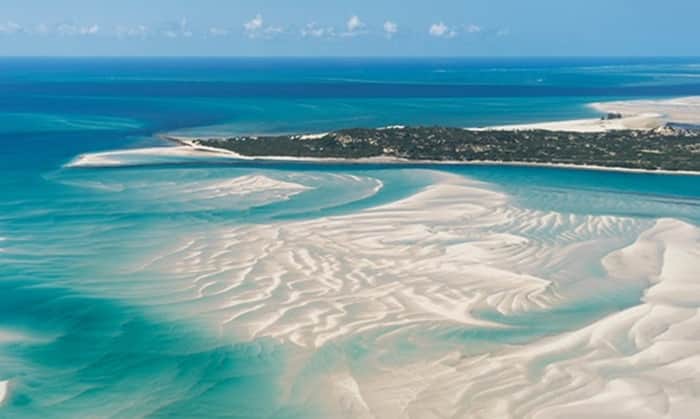
Ponta do Ouro and Inhambane deliver the sort of beach experience that’s becoming increasingly rare, uncrowded, unhurried, and refreshingly free of high-rise ambition. Further north, the Bazaruto Archipelago does what the Indian Ocean does best: clear water, soft الرمال, and marine life that keeps divers coming back.
Gateway town Vilanculos has become the jumping-off point for those island escapes, though it still retains the slightly scruffy charm of a place that hasn’t been overworked by tourism planners.
For those willing to venture further, the Quirimbas Archipelago feels like a well-kept secret. Less traffic, more history, and a cultural blend shaped by Swahili and Arab influences that gives the place real texture, not just scenery.
But Mozambique isn’t simply another beach story.
Inland, Gorongosa National Park has staged one of Africa’s more compelling conservation comebacks. It’s not perfect, but it’s purposeful wildlife recovery tied closely to local communities, which is increasingly what travellers want to see. Up in the far north, Niassa Special Reserve remains vast, remote and, importantly, uncrowded.
That balance of coast and bush, comfort and authenticity is exactly what positions Mozambique well in today’s travel market.
And then there’s the practical bit. The rollout of a digital e-visa system for travellers from 183 countries removes one of the long-standing hurdles. It’s the kind of move that doesn’t grab headlines but quietly shifts booking decisions in its favour.
Interest is already ticking up from markets like India and China, where travellers are increasingly chasing experiences over checklists. Mozambique fits that bill neatly, whale watching off Tofo, dhow sailing, and cultural immersion without feeling staged.
For the trade, this destination sells itself once you get it in front of the right client. It’s not for everyone. It doesn’t try to be. But for those chasing something less predictable, it lands well.
Mozambique won’t shout for attention. It never has.
But it doesn’t need to.
by Anne Keam – (c) 2026.
Read Time: 3 minutes.
About the Author.
 Anne Keam’s story begins in Queensland, on a grain farm in the state’s wide western reaches, where the days were long and the lessons simple: work hard, look after your own, and don’t make a fuss. Those early years left their mark.
She later studied Arts at the University of Queensland, before doing what felt natural at the time, heading back home to the family property. But the world was calling. Anne packed a backpack and went looking, spending years on the road and finding herself most alive in South America. She wrote everything down along the way. Those notebooks, full of dust, colour, and curiosity, eventually became her blog, a quiet, personal record of seeing the world and learning from it.











