

Aviation, as any seasoned traveller or industry hand will tell you, is a game of margins. Tight ones. The sort that leaves very little room for fuss, let alone failure. Which is why the recent run of emergency landings and technical diversions, while not cause for panic, has certainly raised more than a few eyebrows across the sector.
Let’s be clear: modern aircraft remain extraordinarily safe. Safer, in fact, than at any point in history. But safety in aviation has never been just about the aircraft. It’s about the machinery behind the machinery, the reporting systems, compliance frameworks, and the human choreography that keeps everything moving in quiet harmony.
And right now, that harmony is under pressure.
Take Swiss flight LX325, which declared an emergency over Belgium earlier this month due to a technical issue. The aircraft landed safely, the crew did exactly what they’re trained to do, and passengers were, by all accounts, well looked after. A textbook outcome. Yet it still made headlines, as these things increasingly do.
It’s not an isolated case. Across Europe’s winter season, there’s been a noticeable uptick in precautionary diversions and operational interruptions. Individually, they’re routine. Collectively, they begin to tell a more interesting story, one of an industry working harder than usual to keep its balance.
The International Air Transport Association’s 2025 Safety Report added a layer of discomfort to the narrative, noting an increase in fatal accidents and onboard fatalities compared to the previous year. Not a trend anyone wants to see repeated.
Clinton Cardozo, CEO and co-founder of OneReg, doesn’t mince his words, but nor does he reach for alarm bells.

Clinton Cardozo, CEO and co-founder of OneReg
“Airlines are operating in an environment where even isolated incidents attract intense scrutiny, and the recent cluster of emergency landings and technical diversions shows how quickly operational pressure can build,” he said.
That scrutiny, it must be said, is relentless. Every diversion, every technical alert, every “precautionary landing” is now dissected in real time, often before the aircraft has even reached the gate. Transparency is a fine thing until it becomes theatre.
But Cardozo’s central point is less about perception and more about infrastructure.
“What we’re seeing is a sign that the industry’s digital foundations need to evolve. Today’s incidents generate far more data, require faster analysis, and demand clearer documentation than legacy systems were ever designed to handle.”
And there it is, the crux of it.
Aviation has always been data-rich. Now it’s data-saturated. The volume of information generated by even a minor incident would have been unthinkable a decade ago. The expectation, meanwhile, is instantaneous clarity. Regulators want it. Airlines need it. Passengers assume it.
The problem? Not all systems are built for that speed.
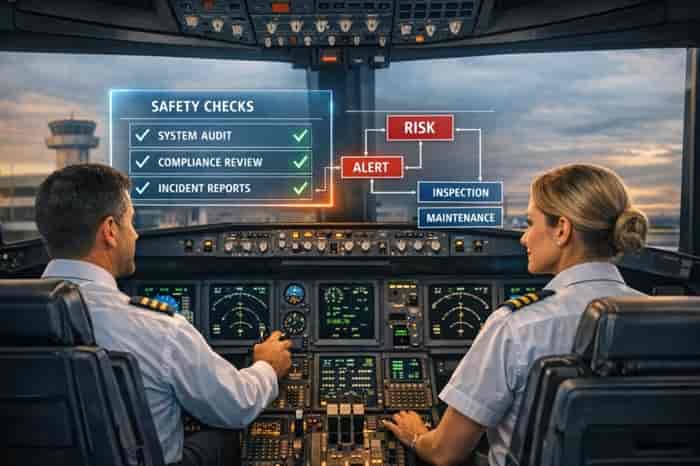
Plenty of carriers are still navigating compliance and safety oversight with tools that, while once fit for purpose, now look decidedly patchwork. Fragmented platforms, manual processes, and delayed reporting don’t sit comfortably in an environment that demands real-time insight.
“Airlines that modernise their compliance environments with connected, auditable, real time platforms will be better equipped to detect risks earlier, respond faster and maintain public confidence,” Cardozo said.
“And those relying on fragmented or outdated tools will feel the pressure most acutely.”
It’s a polite way of saying: adapt or be found wanting.
None of this suggests aviation is suddenly less safe. Far from it. What it does suggest is that the systems underpinning that safety are being asked to do more, faster, and under greater scrutiny than ever before.
“This is a pivotal moment for aviation,” Cardozo concluded. “Strengthening the digital infrastructure behind safety and compliance is not about claiming technology can eliminate every operational event; it is about giving airlines better tools to respond, learn, and reduce the likelihood of repeat issues over time.”
A fair point and one the industry would do well to heed.
Because in aviation, confidence is everything. And while passengers may never see the systems behind the scenes, they’ll certainly notice if they falter.
by My Thanh Pham – (c) 2026.
Read Time: 3 minutes.
About the Author.
 My Thanh Pham has lived more of a life of travel than most people ever do. After studying tourism, she went straight into the work of building journeys across South-East Asia, temples, beaches, night trains, and all, quietly fixing the messy bits so others could enjoy the ride.
She was never meant to stay behind a desk. Airline life followed, dividing her days between reservations and the airport floor, right where travel shows its true colours. Missed flights, tight hugs, frayed tempers, sudden joy, she saw it all, close up.
Now at Global Travel Media, My Thanh has traded ticket stubs for a keyboard. She writes the way she once worked: steady, clear-eyed and respectful of the road’s unpredictable rhythm, guiding readers through a world she knows from the inside.











