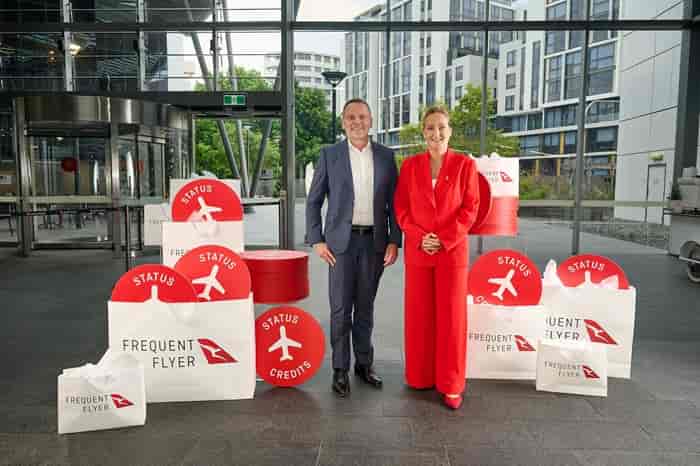
After nearly 40 years of shaping how Australians fly, spend and aspire, Qantas has decided it’s time to redraw the Frequent Flyer rulebook.
In what the airline describes as the biggest structural evolution in the program’s history, Qantas Frequent Flyer is introducing sweeping changes to how members earn, retain and think about status, and it’s a move clearly designed for a loyalty landscape that looks very different from the one that launched in 1987.
At the heart of the overhaul is a simple idea: status should reflect how customers live, not just how often they fly.
That philosophy underpins a raft of changes rolling out progressively from later this year through to 2027, including status credit rollover and on-the-ground earning, as well as simplified tiers and smarter digital tools.
And for an airline sitting on more than 18 million members, this isn’t tinkering. It’s structural.
Status moves beyond the runway
Perhaps the most symbolic shift is this: for the first time, Status Credits will no longer be the exclusive domain of the boarding pass.
Members will soon be able to earn up to 140 Status Credits annually from everyday spending across categories, including credit cards, retail partnerships and utilities, an idea trialled in 2025 that smashed engagement records.
It’s a quiet acknowledgement of something loyalty insiders have been saying for years: modern loyalty is lifestyle-first, travel-second.
Qantas Group CEO Vanessa Hudson framed it as a generational shift.
“With more than 18 million members and nearly 40 years rewarding loyalty, this represents a new era for the Frequent Flyer program in the face of a changing loyalty landscape,” Hudson said.
“Our members have an incredible appetite for earning points, but we know they also place immense value on their status.”
That distinction matters. Points may excite, but status, as frequent flyers will tell you, defines identity.
The rollover revolution
If one announcement is likely to spark genuine cheers in airport lounges, it’s this: Status Credits will no longer evaporate at the end of the year.
For the first time, tiered members will be able to roll over up to 50 per cent of unused Status Credits into the following membership year.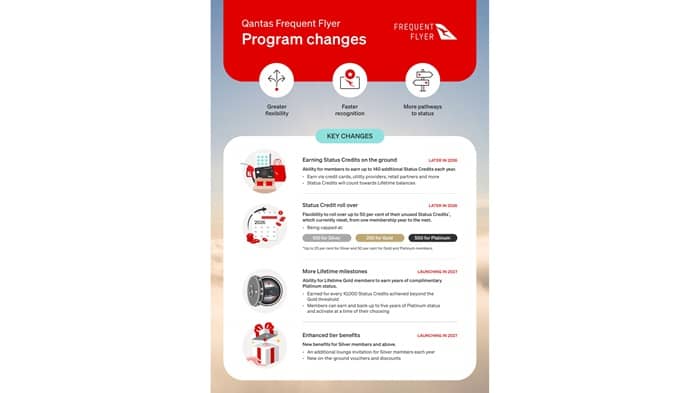
Caps will apply 100 for Silver, 350 for Gold and 500 for Platinum, but the psychological impact is enormous.
For years, frequent flyers have lamented the “December cliff”, where hard-earned credits simply reset. This change reframes the journey as cumulative rather than cyclical.
Qantas Loyalty and Customer CEO Andrew Glance called it one of the most meaningful shifts the program has ever seen.
“Around half of the status credits our members earn each year are over and above their tier thresholds,” Glance said.
“We are giving value back, ensuring hard-earned status credits in one year give members a head start in the next.”
In loyalty economics, that’s powerful. Progress feels permanent, and permanence drives engagement.
Lifetime loyalty finally gets deeper rewards
For long-haul loyalists, there’s another meaningful nod: a more generous pathway beyond Lifetime Gold.
Under the new structure, members earning an additional 10,000 Status Credits beyond Lifetime Gold will receive a complimentary year of Platinum status up to five bankable years that can be deployed strategically.
It’s a clever twist. Instead of status being a static badge, it becomes something you can hold in reserve, perhaps triggered by a year of heavy international travel or premium work trips.
And it signals something subtle but important: Qantas is actively investing in its longest-serving customers, not just its most recent high-spenders.
Simplifying the status ladder
If the program has occasionally felt like a labyrinth, Qantas seems intent on straightening the corridors.
Points Club and Green Tier, two overlapping sub-programs, will be gradually retired, with popular benefits folded into the core Frequent Flyer framework.
The result: fewer parallel tracks, clearer pathways and less cognitive load for members trying to understand where they stand.
At the same time, the airline is scrapping the long-standing dual hurdle of attaining versus retaining status.
From 2027, each tier will have a single annual Status Credit target. Gold, for example, will require 700 credits a year, full stop.
It’s a pragmatic shift that reflects how consumers think: targets should be intuitive, not technical.
Tangible perks for everyday flyers
While structural changes dominate the headlines, there are also immediate benefits designed to resonate with the program’s largest tier cohort.
Silver members will receive an additional lounge invitation each membership year, alongside new on-the-ground discounts and vouchers across higher tiers.
That’s significant. Silver flyers are often the program’s most aspirational segment, travellers still climbing the loyalty ladder, but deeply engaged.
Give them a little more taste of the premium experience, and you create the next generation of Gold and Platinum loyalists.
A digital upgrade aimed at addressing pain points
Alongside status reforms, Qantas is also tackling one of the most persistent frustrations in loyalty programs: the discoverability of reward seats.
Launching imminently on qantas.com, a new search tool will surface Classic Reward seat availability across Qantas and more than 30 partner airlines within seconds.
Members will be able to scan millions of seats by destination and cabin over a 12-month window, a major leap from the often fragmented redemption search experience of the past.
Glance highlighted the scale of the opportunity.
“With over 14,000 reward seats booked each day, the tool will provide a seamless window into our network and drive a further increase in flight redemptions,” he said.
For frequent flyers, that’s not just convenience, it’s visibility. And visibility fuels aspiration.
Reading between the loyalty lines
Zoom out, and a broader narrative emerges.
This isn’t just a program refresh. It’s a strategic repositioning of loyalty from aviation accessory to commercial engine.
Globally, airline loyalty divisions have evolved into multi-billion-dollar businesses in their own right, driven by partnerships, financial products and data ecosystems that extend far beyond the cabin.
Qantas Loyalty is already one of the airline’s most profitable divisions, and this overhaul reinforces its role as a long-term growth pillar.
By blending lifestyle earning, structural simplification and digital transparency, Qantas is aligning itself with the next phase of loyalty evolution, one defined less by miles flown and more by daily engagement.
A program designed for the next decade
For seasoned travellers, the changes will feel both overdue and carefully calibrated.
Status rollover introduces fairness. Ground earning introduces accessibility. Simplified tiers introduce clarity.
And perhaps most importantly, the reforms acknowledge a fundamental truth: loyalty is emotional.
It’s about recognition, momentum and the quiet satisfaction of progress.
Hudson captured that sentiment neatly when she described the changes as ensuring the program remains “as relevant and rewarding in the future as it has been for the past four decades.”
For Qantas, that’s not just a promise. It’s a positioning statement.
Because in an era where loyalty currencies are multiplying, and traveller expectations are rising, relevance is the only status that truly matters.