


As the central piece of NOX, this vehicle charging station draws visitors into a touchscreen game where their choices influence the condition and performance of sentient machines
Singapore (21 January 2026) — Visitors can soon step into a speculative world of sentient machines as ArtScience Museum presents NOX: Confessions of a Machine on 23 January 2026. Opening in tandem with Singapore Art Week, this site-specific exhibition marks Lawrence Lek’s first solo show in Southeast Asia. The show also launches ArtScience Museum’s 2026 season, Forms of Life: Beyond the Human.
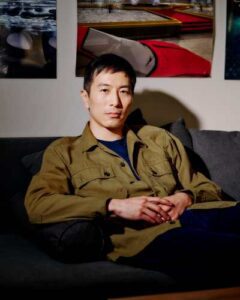
Working across genre-bending projects that span architecture, gaming, video, music and fiction, the 2024 Frieze London Artist Award recipient Lawrence Lek is internationally recognised for interrogating the emotional capacity of artificial intelligence and the emergence of posthuman identity.
In NOX: Confessions of a Machine, visitors are transported to an unspecified smart city in the near future, where the inner workings of Farsight Corporation come to life through two interconnected works: NOX and Guanyin: Confessions of a Former Carebot. In this world, Farsight Corporation is a fictional artificial intelligence conglomerate, responsible for developing smart city systems and infrastructures. Through architectural environments, video, sound and interactive gameplay, the exhibition stages systems of care, assessment and rehabilitation within the machinic age.
NOX (“Nonhuman Excellence”) is a therapy and training centre for sentient autonomous vehicles whose inner lives have begun to interfere with their performance. Visitors follow the psychological rehabilitation programme of Enigma-76, a self-driving delivery vehicle struggling between assigned duty and personal desire.
The central installation of NOX is a vehicle charging station set within an urban landscape. It features a touchscreen game that positions the visitor as a trainee therapist tasked with returning malfunctioning vehicles to operational readiness. Visitors can make decisions about treatment pathways, directly shaping the emotional state and outcomes of the vehicles under their care. Each choice carries consequences, foregrounding questions of agency, responsibility and control within automated systems.
The journey concludes with Enigma-76 returning to service after the rehabilitation programme.
As the programme progresses, the exhibition reveals a system where care is framed less as a form of well-being and more as a means of optimisation, echoing real-world systems where efficiency, productivity and corporate interest often take precedence over emotional care.
The journey culminates in Enigma-76’s final therapy session where visitors follow the self-driving vehicle alongside Dakota, a therapy horse employed by Farsight Corporation, through subterranean landscapes and a forgotten graveyard of human-driven vehicles. This quiet, cinematic passage evokes a poignant relation between the past and present modes of transport, recalling how horses once powered transport, agriculture and industry before being replaced by machines. Visitors are prompted to reflect on what becomes of intelligent entities when technological progress demands something newer, faster or more efficient.
At the interactive game station, visitors step into the role of Guanyin to diagnose and repair malfunctioning self-driving vehicles.
As an extension of NOX, visitors will also encounter Guanyin: Confessions of a Former Carebot. Named after the Buddhist Bodhisattva of Compassion, Guanyin appears as an armoured robot therapist tasked with repairing misbehaving autonomous vehicles. Visitors inhabit Guanyin’s point of view, navigating these malfunctioning machines while uncovering fragments of her own emotional strain and fatigue. By centring the inner life of a robot caregiver, the work extends the exhibition’s inquiry into empathy and the often-overlooked emotional labour embedded within systems of care in real life. It also encourages visitors to explore how listening, empathy and care might shape relationships with intelligent systems.
NOX: Confessions of a Machine brings global conversations around artificial intelligence, automation and machine consciousness into the heart of Singapore. By inviting visitors to a speculative yet unsettlingly familiar system, the exhibition raises questions about agency, care and coexistence in systems where humans are not the only actors. These questions extend beyond artificial intelligence and serve as a central thread of Forms of Life: Beyond the Human, ArtScience Museum’s 2026 curatorial season.
“Following a year dedicated to human cognition and embodiment in 2025, Forms of Life is a deliberate segue into the wider ecology of life beyond the human,” said Honor Harger, Vice President of ArtScience Museum. “The season explores multispecies worlds, systems and intelligences that shape the planet alongside us. It invites visitors to consider how we might learn to attend more carefully to forms of life beyond the human. Forms of Life positions ArtScience Museum as a space for practising new ways of seeing and thinking, cultivating attentiveness, curiosity and responsibility within a world shared with many forms of life.”
The season unfolds across a series of major exhibitions, including Insects: Microsculptures Magnified, NOX: Confessions of a Machine and Into the Ocean: Journey Beneath, a collaboration with OceanX. In these exhibitions, insects are revealed as vital participants in ecological systems, artificial intelligence is presented as an emerging form of sentience, and the connections between marine biology and ocean health are mapped.
“Extending beyond the gallery, Forms of Life also includes film programmes, workshops, talks, conferences and festivals that illuminate more-than-human ecologies, reveal the lives of others, and imagine strange kinships. Public programmes and educational events explore entangled realities shaped by the co-presence of humans, machines, animals, plants and microbial life, inviting audiences to consider intelligence, agency and perception as distributed and shared conditions,” adds Harger.











