

When the whistle blows, the chequebooks come out and not timidly.
Fresh research to be unveiled at Arabian Travel Market (ATM) 2026 suggests sports-mad travellers are doing far more than filling stadium seats. They are fuelling hotel occupancy, restaurant takings and destination reputations at a rate that should make tourism ministers sit up straighter in their chairs.
According to new findings from global sports and tourism insights agency GSIQ, sports event-driven travellers, those who cross borders and stay overnight to attend live sporting events, are spending significantly more per trip than traditional leisure travellers. Frequent sports tourists, in particular, are shelling out up to twice as much per journey, and they’re not shy about paying for quality.
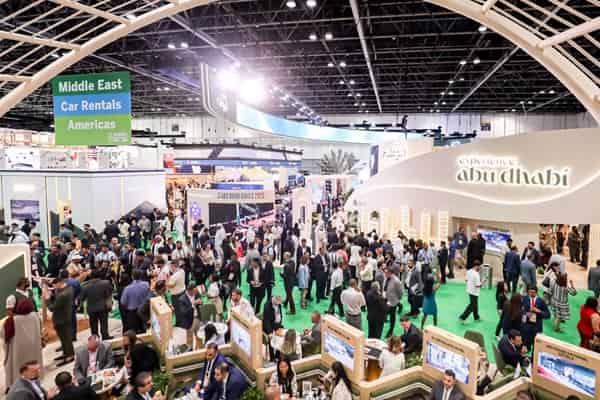
These insights will take centre stage when ATM returns to the Dubai World Trade Centre from 4–7 May 2026, with sports tourism firmly in the spotlight across the conference agenda.
A lucrative crowd with stamina and standards
GSIQ’s white paper, Sports Tourists: Travelling with Passion, reads less like a niche market report and more like a blueprint for future-proofing destinations. Sports travellers aren’t accidental tourists. They plan ahead, travel often, and, crucially, come back.
They are motivated first and foremost by passion: the team, the tournament, the once-in-a-lifetime fixture. But passion doesn’t mean recklessness. Their decisions are shaped by accessibility, affordability, quality and value, a quartet that destination marketers ignore at their peril.
Value, in particular, remains decisive. The research shows 63 per cent of respondents prioritise fair ticket and package pricing, especially newer sports travellers testing the waters. Interestingly, only 36 per cent insist the destination already appeals to them. A larger 41 per cent are open to stretching a sports trip into a longer leisure stay, the kind of extension that turns a weekend fixture into a week-long economic windfall.
This is where the real magic happens. Major sporting events don’t just deliver a spike; they plant a flag. Around 80 per cent of sports event attendees either return as leisure tourists or recommend the destination to others. First impressions, it seems, travel fast and far.
From the sidelines to centre field
The broader numbers are eye-watering. GSIQ projects a 63 per cent increase in people intending to take a sports-related trip in the coming years. For the Middle East, where ambition is rarely modest, the opportunity is particularly ripe.
Professional services firm PwC values the Middle East sports tourism market at approximately US$600 billion, while globally the sector is forecast to exceed US$2 trillion by 2030. That’s not a sideshow. That’s a structural shift in how and why people travel.
Danielle Curtis, Exhibition Director ME at Arabian Travel Market, says the industry now has the data to move beyond guesswork.
“By understanding the mechanics of sports tourism, destinations and tour operators can develop strategies to drive repeat visits, and attract new audiences,” Curtis said. “Ultimately, knowing what motivates sports fans to travel will determine how stakeholders meet evolving consumer expectations, to ensure sustained engagement and growth in this potentially lucrative market.”
It’s a refreshingly pragmatic view. This isn’t about chasing every event with a scoreboard. It’s about designing experiences that work before and after the final siren.
Premium expectations, premium returns
Eva Stewart, Global Managing Partner at GSIQ, is even more direct.
“Sports tourism is no longer a niche segment; it is one of the fastest-growing drivers of global travel demand,” Stewart said. “Our research shows that sports travellers spend more, stay longer and return more often, making them one of the most valuable audiences for destinations worldwide.”
With the Middle East investing heavily in world-class sporting infrastructure, Stewart says the region is “exceptionally well positioned” to capitalise not just during marquee events, but long after the crowds have gone home.
That infrastructure story matters. The success of Expo 2020 Dubai and the Qatar 2022 World Cup didn’t just deliver short-term visitation; they recalibrated perceptions of what the region can host and how well it can host it.
Momentum is building again as Saudi Arabia prepares for the 2034 FIFA World Cup, a tournament that will likely redraw the Gulf’s tourism map for a generation.
ATM 2026: more than talk
ATM 2026 won’t just talk about opportunity; it will dissect it. GSIQ experts will present their white paper on the Global Stage in a session titled The Power of Sport Tourism: New Audiences & New Revenue, offering practical insights into how destinations and travel companies can convert enthusiasm into sustainable income.
Elsewhere, panels will examine how hospitality is adapting to multi-motivated travellers, while the Experience Stage will look ahead to what will make events irresistible by 2030 with creativity, immersion and technology firmly in focus.
Curtis notes that the return of the expanded IBTM @ ATM in 2026, alongside a dedicated Experience Stage, signals a deeper commitment to business events, corporate travel and experiential design.
“From mega sporting tournaments to world-class cultural events, these experiences are helping destinations reach new audiences, extend length of stay and accelerate progress towards long-term tourism growth targets,” she said.
The data backs her up. According to the 2025 ATM Trends Report, developed with Tourism Economics, an Oxford Economics company, demand for live events across the Middle East is not just strong, it’s compounding.
A game worth playing
For destinations watching from the stands, the message is clear: sports tourism is no longer an optional extra. It’s a high-value, high-loyalty audience with expectations and spending power to match.
Get the pricing wrong, the transport clunky, or the experience thin, and they’ll notice. Get it right, and they won’t just come, they’ll come back, bring friends, and talk about it long after the final score fades.
For more information on Arabian Travel Market 2026, visit https://www.wtm.com/atm/en-gb.html.
by Stephen Morton – (c) 2026.
Read Time: 5 minutes.
About the Writer.












