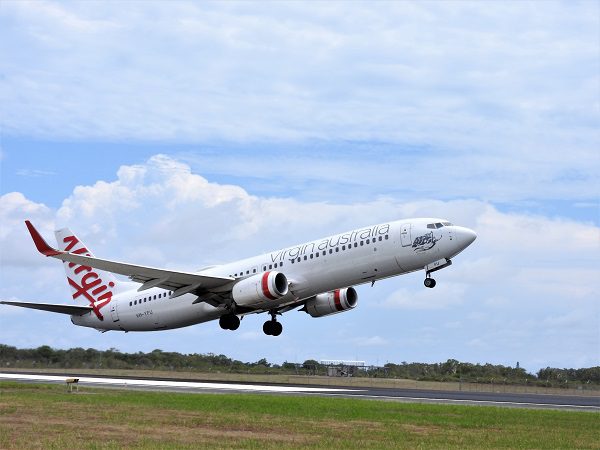
There are few crueller moments in the Australian calendar than the first morning back at work. The inbox groans, the coffee tastes weaker than remembered, and the holiday glow evaporates somewhere between the lift and the desk. Enter Virgin Australia, with a well-timed antidote: more than one million sale fares from just $49 one-way, dropped squarely into the nation’s collective post-holiday slump.
For one week only, Virgin Australia is turning the back-to-work blues into forward-planning optimism, unleashing one of its largest sales in recent memory. Domestic flights start at $49, international return fares from $419, Business Class seats from $219 one-way, and premium Economy X upgrades from a wallet-friendly $17. It is a sale that does not whisper—it declares.
And it arrives with purpose. With Australians flicking off their out-of-office replies and returning to routine, the airline is offering something far more motivating than a motivational poster: certainty. A locked-in getaway. A date on the calendar that makes Monday tolerable.
A sale that goes big and goes wide
Virgin Australia’s network-wide sale spans the full spectrum of traveller intent. Weekend escape artists, long-lunch planners, sun-chasing families and spreadsheet-wielding road warriors all find something to like. The sheer breadth of fares is striking, from sub-$70 hops up the east coast to sharp international pricing that undercuts the psychological barrier of “maybe next year”.
Domestic Economy Lite fares include Sydney–Ballina Byron from $49, Sydney–Gold Coast from $65, Melbourne–Launceston from $75 and Brisbane–Whitsunday Coast from $75. Even the heavy-hitters are priced with intent: Melbourne–Sydney from $99, Brisbane–Cairns from $99, and Sydney–Hamilton Island from $135.
Longer hauls follow suit. Melbourne–Darwin from $189. Adelaide–Perth from $199. Perth–Sydney from $249. These are not token fares sprinkled across obscure routes; they are practical prices on routes Australians actually fly.
Internationally, the sale reads like a greatest-hits album of Australasia and the Pacific. Bali returns from $419. Queenstown from $479. Fiji from $605. Samoa from $679. For travellers accustomed to watching airfares creep ever northward, the numbers feel refreshingly grounded.
Business Class without the business-case gymnastics
Perhaps the most telling signal in this sale is Virgin Australia’s aggressive Business Class pricing. One-way domestic Business fares start at $219 on routes like Sydney–Ballina and Byron, scaling to $299 on golden triangles, including Sydney–Melbourne and Brisbane–Sydney.
For travellers who once treated Business Class as a “nice idea” rather than a realistic option, this sale brings it firmly back into the conversation. At these prices, the value proposition sharpens: priority boarding, lounge access, space to breathe, and the small but significant dignity of not wrestling for overhead locker space.
Even international Business fares are pitched competitively, with Queenstown returns from $649 and South Pacific services—such as Port Vila and Apia—priced for travellers who want comfort without corporate approval processes.
Economy X: small upgrade, big difference
Virgin Australia’s premium Economy X product continues to mature, and this sale quietly underscores its growing importance. Extra legroom upgrades begin at just $17 per sector, less than the cost of airport parking—and extend across both domestic and international routes.
For taller travellers, frequent flyers or anyone who has sworn never again to endure knees-to-seatback negotiations, Economy X is an upgrade that punches above its price. The modest cost makes it an easy “yes” at booking, rather than a guilt-laden afterthought.
Holidays bundled, stress removed
The airline’s partnership with Hopper under the Virgin Australia Holidays banner adds another layer of appeal. Bundled flight-and-hotel packages start from $440 per person for a Gold Coast getaway, while Bali packages begin at $699 per person, including four nights’ accommodation.
In an era where travellers juggle multiple tabs, fluctuating prices and endless fine print, these bundles trade complexity for clarity. One price. One booking. One less thing to think about—an increasingly valuable currency.
Timing is everything
The booking window closes at 11:59 pm AEST on Monday, 19 January 2026, unless sold out earlier. Travel dates stretch from February through September 2026, neatly capturing shoulder seasons, school holiday edges and those sweet spots when crowds thin but weather holds.
Virgin Australia Chief Marketing and Customer Operations Officer Libby Minogue put it plainly:
“With many Australians back at work today and the out-of-office sadly switched off, there’s no better time to start planning and booking a 2026 holiday, because the best way to survive day one back is knowing your next getaway is locked in.”
It is a line that lands because it is recognisable. Travel, after all, has always been as much about anticipation as movement. The knowing matters.
Ms Minogue reinforced the breadth of the offer, noting that the sale spans “quick interstate weekend escapes to tropical international getaways”, adding that fares from $49 and Economy X upgrades from $17 make this “one of the best Virgin Australia sales of the year”.
Loyalty still counts
Velocity Frequent Flyer members are not sidelined in the rush. Points can be earned and redeemed on all sale fares and holiday packages, reinforcing the airline’s long-held view that loyalty should be practical, not ceremonial. Velocity remains free to join, lowering the barrier for occasional flyers who want more value from everyday travel.
The bigger picture
Beyond the headlines and sharp pricing, this sale says something broader about the state of Australian aviation. Competition is active. Capacity is confident. Airlines are not merely filling seats; they are courting sentiment.
Virgin Australia’s message is clear: travel should feel attainable again. Not aspirational in a distant sense, but bookable, sensible and worth doing now. In a market where consumers remain value-conscious yet experience-hungry, that balance matters.
For Australians staring down the long stretch between now and the next public holiday, the proposition is disarmingly simple. Spend less on the flight. Think more about the trip. And let the calendar do the rest.
by Anne Keam – (c) 2026.
Read Time: 6 minutes.
About the Writer.
 Anne Keam’s story begins in Queensland, on a grain farm in the state’s wide western reaches, where the days were long and the lessons simple: work hard, look after your own, and don’t make a fuss. Those early years left their mark.
She later studied Arts at the University of Queensland, before doing what felt natural at the time—heading back home to the family property. But the world was calling. Anne packed a backpack and went looking, spending years on the road and finding herself most alive in South America. She wrote everything down along the way. Those notebooks, full of dust, colour and curiosity, eventually became her blog, a quiet, personal record of seeing the world and learning from it.