

For years, business travel was defined by the tyranny of necessity: client meetings, supplier visits, the red-eye to close a deal and straight back home. Conferences were polite add-ons, a nice-to-have. Sometimes, even an indulgence.
Not anymore.
According to Flight Centre Corporate’s 2025 State of the Market survey, corporate events now account for 68 per cent of all global business travel, overtaking customer and supplier meetings for the first time. It is a statistical turning point that says far more about how modern companies now conduct business than any glossy strategy deck ever could.
And quietly, almost unnoticed outside procurement circles, it has shifted power inside organisations.
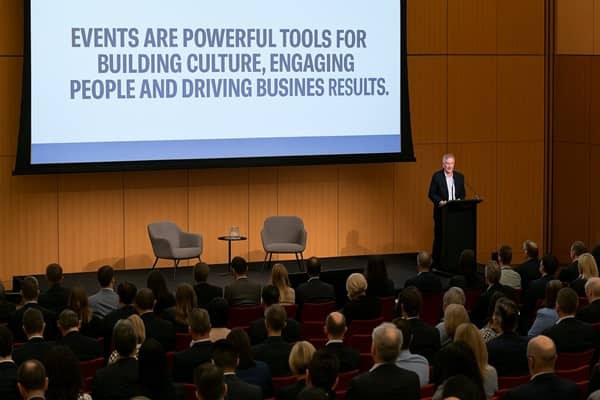
Speaking at the 2025 FACTS conference, Katie Fraser, General Manager of Customer and Operations at FCM Meetings & Events, described what many corporates are only now beginning to grasp: events have become serious economic instruments, not logistical side projects.
“Events are powerful tools for building culture, engaging people and driving business results,” Fraser told delegates. “When events make up most of your travel spend, procurement becomes the game-changer for companies that get it right.”
It is an elegant understatement. What was once a back-office function focused on shaving dollars off contracts is now sitting much closer to the engine room of corporate performance.
Procurement Steps Out of the Shadows
For decades, procurement carried a familiar reputation, dutiful, diligent and largely uncelebrated. Its role was to control costs, reduce exposure, and say “no” when enthusiasm outran the budget.
Fraser argues that the era is over.
Her presentation at FACTS traced how early-stage collaboration between procurement, account directors and event teams is now delivering stronger commercial outcomes, cleaner governance and fewer unpleasant surprises at execution.
“The companies that nail events procurement are seeing the strongest returns from their travel programs,” she said. “This is about procurement teams becoming opportunity creators, not roadblocks.”
It is a language that would have sounded fanciful to a procurement head ten years ago. Today, it is simple commercial logic that when your most significant discretionary spend is on events, you either professionalise how you buy them or bleed value through inefficiency, duplication, and risk.
Experience Has Become the Currency
FCM Meetings & Events’ 2025 Trends Report reveals a further shift that matters just as much as budget lines. The primary driver of event success is no longer price. It is experience.
Attendee experience now ranks as the most critical objective for planners, scoring 4.5 out of five, ahead of safety, security and project management. That reflects broader workforce realities: hybrid work, global teams, retention pressures and employees who now expect more than beige function rooms and uninspired programming.
The report also notes that event professionals are now “juggling multiple roles and responsibilities across different regions and functions with very different needs”, a polite way of saying the job has become vastly more complex, more visible and more politically sensitive.
Over the next five years, the research predicts that service excellence and breakthrough innovation will separate leaders from laggards. Procurement sits squarely in the middle of that contest.
The New Rules of Buying Events
Fraser distilled the shift into a series of practical rules now guiding high-performing procurement teams:
-
Every event must begin with a clearly defined purpose and measurable return, not just attendance targets.
-
Procurement must be involved at the planning table, not summoned at the contract stage.
-
Long-term supplier partnerships consistently outperform one-off buying.
-
KPIs must reward collaboration and business outcomes, not just cost containment.
-
Events must be treated as business drivers in their own right, not extensions of travel logistics.
It is less about saving money and more about spending it with intelligence.
Why This Matters Now
For Australian corporates navigating rising travel costs, fragile talent markets and heightened scrutiny of discretionary spend, the implications are immediate. Events are no longer cultural luxuries. They are strategic infrastructure.
The fact that they now drive the majority of global business travel suggests a more profound truth: in a digital world, the rare moments when people gather in the same room have become disproportionately valuable.
And that, finally, explains why procurement has moved from the margins to the centre of corporate travel decision-making. Not quietly. Not gradually. But decisively.
The spreadsheets still matter. But so does the strategy now written behind them.
By Kanda Limw – (c) 2025
Read Time: 3 minutes.
About the Writer
 Kanda Limw is a self-motivated administrative professional with a strong track record of efficiently and precisely supporting business operations. Highly organised and adaptable, she brings a wealth of skills to the table, from multitasking and prioritising competing demands to managing complex filing systems and ensuring smooth office workflows.
Her background spans professional secretarial work, customer relations, and project planning, where her critical thinking and proactive approach have consistently delivered results. Kanda is experienced in managing directors’ schedules, coordinating meetings, and streamlining administrative processes while maintaining the highest standards of professionalism.
With progressive experience in office management, she has developed a reputation for reliability and attention to detail. Colleagues value her calm under pressure, her ability to anticipate needs, and her dedication to keeping operations on track. Kanda continues to build on her diverse skill set, driving efficiency and excellence in every task she undertakes.











