

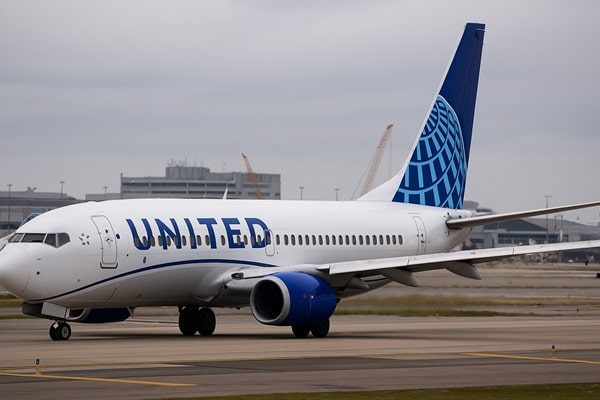
When the wheels of government grind to a halt, the skies are never far behind. United Airlines boss Scott Kirby has announced schedule cuts across 40 domestic airports after the Federal Aviation Administration (FAA) and Department of Transportation (DOT) directed airlines to scale back operations amid the ongoing US government shutdown.
In a message to United’s staff, Kirby said the FAA’s mandate was aimed squarely at keeping America’s aviation system safe and steady through the turbulence of government paralysis, a goal United shares to its core.
“The FAA’s goal is to relieve pressure on the aviation system so that we can all continue to operate safely. That is the FAA’s highest priority, and ours as well. No matter what environment we’re operating in, we will not compromise on safety,” said Kirby.
An Update on the Government Shutdown from Scott Kirby to United Employees

Safety First, Schedules Second
The reductions are slated to begin Friday, November 7, with United to roll out ongoing updates as the shutdown drags on. The plan, according to Kirby, is to give passengers as much notice as possible while sparing staff unnecessary whiplash from last-minute changes.
“United’s long-haul international flying and our hub-to-hub flying will not be impacted,” Kirby confirmed. “That’s important to maintain the integrity of our network, give impacted customers as many options as possible to resume their trip, and sustain our crew pairing systems.”
The cutbacks will instead fall mainly on regional and domestic mainline flights, the short-hops and commuter routes that connect smaller cities, rather than the airline’s primary hub corridors.
Aviation’s Unwanted Pause Button
The FAA’s decision reflects the operational strain caused by furloughed government workers and reduced oversight during the shutdown. This scenario places air traffic management and safety inspections under significant pressure.
It’s not the first time politics have grounded planes, but the scale of this directive underscores just how interwoven America’s aviation network is with its federal machinery. When one stops, the other inevitably slows.
Kirby noted that while United is scaling back, it will still operate around 4,000 flights per day, a figure impressive enough to keep the airline’s heart beating, even if it’s temporarily out of rhythm.
“Because of the early November timing,” Kirby said, “our flights have more seats available than before the summer, meaning we should be able to find seats for many customers even if their flight is cancelled.”
Customer Care Takes Centre Stage
United’s communications team will use the airline’s mobile app, website, and push notifications to keep passengers informed and rebooked with minimal fuss. The goal is to keep customers calm and confident no small feat during a nationwide shutdown.
And in a move likely to win customer goodwill, Kirby confirmed a blanket refund policy for any traveller who opts out of flying, regardless of whether their flight is affected.
“Any customer travelling during this period is eligible for a refund if they do not wish to fly even if their flight isn’t impacted. That includes non-refundable tickets and those customers with basic economy tickets,” he said.
Wings of Resilience
Even with Washington’s lights dimmed, Kirby’s message was one of resilience. His tone was steady, the kind of reassurance airline employees and passengers alike crave when uncertainty clouds the skies.
“Thank you for going above and beyond during this government shutdown to take care of our customers and one another,” Kirby wrote. “Your professionalism and care will be more important than ever in the days ahead.”
It’s the sort of leadership memo that, while hardly poetic, lands with the clarity of a captain’s voice over the intercom mid-turbulence: steady, calm, and distinctly human.
For United, the coming weeks will test not only its operational agility but also its reputation for reliability. Yet if Kirby’s note is anything to go by, the airline plans to keep its seatbelt fastened and its chin up, proving that even when government grinds to a halt, commitment to safety and service can still take flight.












