

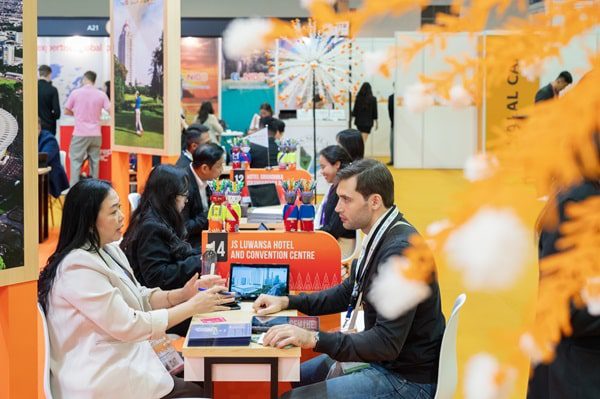
It’s not often you see 60,000 meetings conclude with such a flurry of handshakes, selfies and sighs of relief, but that’s exactly what unfolded at ITB Asia 2025. Over three packed days at Singapore’s Sands Expo and Convention Centre, Asia-Pacific’s largest travel trade fair broke every record in the book, leaving even the most seasoned industry veterans reaching for superlatives and, in many cases, their next appointment.
With a 35 per cent rise in business appointments in 2024 and 18,000 attendees from across the globe, the Berlin-organised showcase reaffirmed its place as the region’s most influential meeting ground for anyone with a stake or even a curiosity in where travel is headed.
“ITB Asia remains the meeting point where the world connects with Asia,” said Darren Seah, Executive Director of Messe Berlin Asia Pacific, the group behind the event. “This year’s record engagement demonstrates how the industry is collectively embracing innovation, sustainability and collaboration to drive future growth.”
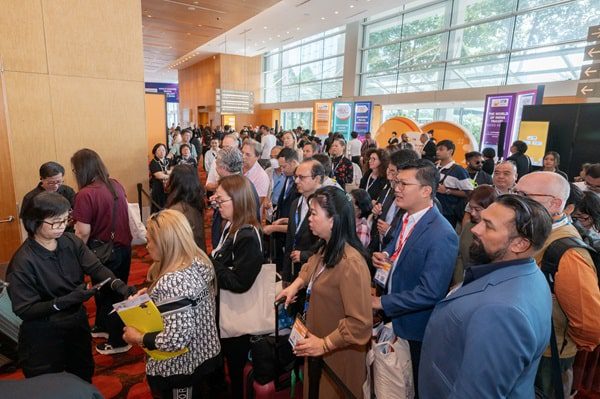
ITB Asia 2025 has officially wrapped up with 18,000 attendees. – Copyright ITB Asia 2025
It’s the sort of upbeat rhetoric trade shows are known for, except this time, the numbers backed it up.
The Exhibition Floor: Noise, Nerves and New Deals
To walk through the five halls of ITB Asia 2025 was to witness a continent reconnecting with purpose. A record turnout of national tourism boards, airlines, hotel groups and tech players filled every square metre. Central Asia made its presence felt like never before; Africa turned out in force; and India sent more state delegations than some had thought possible. Even Singapore’s own Zone expanded, proving that the host nation wasn’t about to let the spotlight wander too far.
If the day’s buzzword was “partnership”, then the buzz itself was palpable. Delegates hustled from hall to hall, pitch decks in hand, competing for the industry’s holy grail: buyer attention. By mid-morning on day two, one could see the classic signs of success: lanyards twisting, voices hoarse, but smiles stubbornly intact.
TripAdvisor Joins the Party: The Rise of Experiential Travel
The headline announcement came not from the podium but from a pen stroke: Messe Berlin Asia Pacific and Tripadvisor signed a Memorandum of Understanding to launch a new Experience Pavilion at ITB Asia 2026.
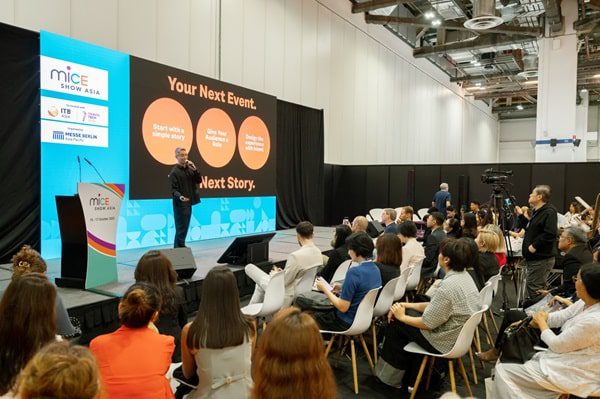
MICE Show Asia 2025 – copyright ITB Asia 2025
Under the deal, Tripadvisor will co-curate content focused on adventure, wellness, culinary tourism and culture, essentially the DNA of modern travel. At the same time, Messe Berlin will deliver its trade-fair muscle to connect buyers and suppliers. The goal is to make “experiential travel” more than a marketing slogan.
The numbers certainly support the move: Tripadvisor reported over 11 million experiences booked in the first half of 2025, a 15 per cent increase on the previous year. Not since the post-pandemic rebound has the industry seen such an appetite for immersive and authentic travel.
And there’s more to come. The Singapore Tourism Board (STB) has pledged support for ITB Asia from 2026 through 2028, bolstering content pillars and co-marketing initiatives that cement the city-state’s status as Asia’s trade-fair capital. In classic Singaporean fashion, it’s efficient, strategic, and future-proof.
Conference Floor: Brains Meet Business
If the exhibition was about handshakes, the conference was about headspace. The theme “Future Forward: Transforming Travel & Tourism in a Changing World” was more than a catchphrase. Over 4,500 minutes of sessions, spanning 100 panels and 170 speakers, delivered an MBA’s worth of insight in three days.
At the MICE Show Asia Theatre, event designers and corporate planners debated how to turn attendees into participants, not just spectators, through immersive tech and sustainability. Over in the Travel Tech Theatre, data and AI took centre stage. No longer buzzwords, these technologies are quietly reshaping how travel is booked, personalised and delivered.
Industry leaders such as Andrew Smith (Agoda), Edward Wright (Amadeus), Ng Chia Yong (Frasers Hospitality), and Brett Henry (MG Group) outlined a vision for a leaner, greener, and more digitally driven travel ecosystem. While corporate jargon flowed freely, so did some hard truths: consumers are smarter, supply chains more fragile, and profit margins ever thinner. It’s not just about selling flights and rooms anymore; it’s about selling trust.
In one of the most discussed sessions, Nick Lim, CEO (Asia) of The Travel Corporation, spoke on sustainability and community-based tourism, warning that “those who don’t embed sustainability into their business model will soon find themselves off the map.” It wasn’t hyperbole; it was a forecast.
Australia’s View: The Neighbour Next Door
For Australia, ITB Asia is no mere spectator sport. The event serves as a barometer of regional confidence and a reminder that Asia-Pacific — not Europe or the US — is now the engine of global travel. Australian operators and destinations were out in force, courting new partners and eyeing the booming Indian and Southeast Asian markets.
For those who missed the memo, Asia’s middle class will reach three billion by 2030. That’s not a market, that’s a movement. And if Australia wants to stay competitive, it must play on Asia’s field, in its time zone, and with its tempo.
Expect more Aussie brands to use Singapore as a strategic launchpad. The personal touch still rules in a region where relationships often mean more than contracts. Or, as Peter would say, the handshake isn’t dead; it’s just had a tech upgrade.
Beyond the Buzzwords
Its substance distinguishes ITB Asia 2025 from the many alphabet-soup events that fill the calendar. There was a sense that the industry had moved beyond self-congratulation and toward self-reflection. How do we travel better? How do we connect cultures without crushing them? And how do we turn technology into a tool for good rather than a barrier between people?
These questions echoed through the conference rooms and coffee corners alike. If ITB Asia 2025 had a motto, it might be “More human, less hype.” This is a refreshing shift in a world where algorithms too often replace intuition.
Save the Dates – and the Momentum
With the ink barely dry on this year’s contracts, plans are already underway for ITB Asia 2026, which will return to Singapore from 21–23 October 2026. Early-bird booth registrations and exhibitor re-bookings are open, and organisers expect an even larger turnout.
Messe Berlin Asia Pacific has promised to expand the Knowledge Theatre series and introduce a “New Offering Badge”, recognising brands with fresh concepts and trailblazing ideas. In an industry hungry for innovation, that’s a clever move and a subtle nod to the show’s evolution.
Final Word: The Handshake Still Matters
In a world increasingly run by apps, dashboards, and AI chatbots, seeing so many humans doing business the old-fashioned way: in person, was comforting, almost nostalgic. The travel industry still runs on trust for all the algorithms and analytics, and trust is built one conversation at a time.
By Bridget Gomez
BIO
 Bridget has never been one to sit still. Of Portuguese heritage, she first trained as a nurse. She threw herself into work at the Commonwealth Veteran Affairs Repatriation Hospital, tending to old soldiers with stories almost as colourful as her own would become. It was rewarding, steady work — but wanderlust has a louder voice than routine.
So, she swapped starched uniforms for a backpack and set off on a twelve-month gallop around the globe. Along the way, she scribbled in journals, capturing the dust, the laughter, the odd missed train, and the occasional glass of wine too many. Those notebooks soon became a travel blog, her way of reliving and sharing the journeys with anyone willing to read.
Eventually, Bridget stumbled across Global Travel Media and, in her words, “the rest is history.” Now she writes with the same mix of heart and mischief that fuelled her travels.











