

There was a time when mentioning Goa to a global tourism crowd brought knowing smiles and a few muttered words about beaches, trance music, and long nights that faded into even longer mornings.
Not anymore.
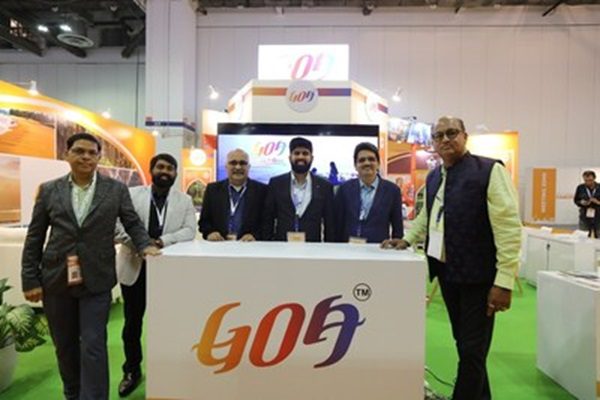
At ITB Asia 2025, held this week at Singapore’s Marina Bay Sands, Goa arrived with the confidence of a destination finally ready to talk business. Forget the palm trees and pina coladas, this was a carefully choreographed pitch for a year-round tourism economy that places regeneration at the centre of its growth story.
A new tone for an old favourite
At the Goa Tourism booth, there were fewer fairy lights and far more conversations about sustainability metrics, international linkages, and investor confidence. It was clear that the Goa Tourism Development Corporation (GTDC) had done its homework and, more importantly, its soul-searching.
Leading the charge was Tourism Minister Rohan A. Khaunte, who seems determined to move Goa beyond its easy-going stereotype. “Our participation at ITB Asia has opened new avenues for Goa to engage with global tourism leaders,” he said, sounding more like a managing director than a minister. “This engagement helps us attract quality tourism, diversify source markets, and position Goa as a year-round destination that offers meaningful experiences.”
It’s the language that might once have sounded like a brochure. At ITB, it came across as something else intended.
Substance behind the slogans
Behind the polished words sits a tangible plan. Goa’s Regenerative Tourism model is part environmental safeguard, part economic strategy. It’s designed to ensure that tourism growth doesn’t consume the very culture and coastlines that drew travellers there in the first place.
Director of Tourism Kedar Naik clarified the state’s priorities: “We’re expanding our global reach while staying true to our cultural essence. Travellers who value authenticity and heritage will find a deeper Goa waiting for them.”
It’s a measured shift away from volume and toward value, from mass appeal to meaningful connection.
Kuldeep Arolkar, Managing Director of GTDC, added that ITB Asia had been a “door-opener,” allowing Goa to “collaborate with global partners and keep sustainability at the heart of development.”
From beaches to boardrooms
For the uninitiated, Goa’s message might sound like a radical reinvention. But the truth is, this evolution has been years in the making. Two international airports, a modern cruise terminal, and improved connectivity have quietly changed the game.
Today, the state is courting film producers, wellness entrepreneurs, and MICE organisers as much as sun-seekers. The hinterland, long ignored by mainstream tourism, is now promoted for hiking, birdwatching, and yoga retreats. It’s as if Goa’s tourism mandarins have realised that its lovely beaches don’t need to do all the heavy lifting.
The broader idea is elegant in its simplicity: attract travellers who stay longer, spend more, and leave lighter footprints.
The business beneath the beauty
Tourism is serious business in Goa. Roughly 16 per cent of the GDP and one in three jobs depend on it. The push toward a regenerative model isn’t just about saving the dolphins; it’s about keeping the economy afloat when the tides of mass tourism recede.
There’s also a strategic awareness that sustainability sells. Europe’s outbound market, which Goa hopes to recapture post-pandemic, increasingly demands proof of eco-credentials. In that respect, the state’s message landed well with buyers at ITB Asia, where “responsible travel” is now as everyday as airfares.
A quieter confidence
What struck most observers wasn’t Goa’s display, though it was handsome, but its tone. Gone was the forced exuberance that once marked India’s tourism promotions. In its place was something subtler: confidence born of credibility.
This wasn’t a carnival pitch. It was a case study in how to grow up as a destination without losing the charm that made you famous in the first place.
Of course, there were still images of beaches, but they were balanced by photos of spice plantations, ancient churches, wildlife sanctuaries, and craft villages. If Goa was selling itself, it was doing so with a wink rather than a wave.
The challenge ahead
Of course, reputation is a stubborn thing. Convincing the world that Goa is more than a postcard paradise will take time and consistent storytelling. The hard part is not the strategy; it’s the follow-through.
Still, if ITB Asia 2025 is any measure, the groundwork has been laid. The state’s officials left Singapore with new partners, curiosity from long-haul markets, and perhaps a new sense of self.
Goa’s transition from carefree to considered won’t happen overnight. But judging by its poise this week, the journey has already begun — and for once, it’s not just the beaches doing the talking.
By Karuna Johnson
BIO
 Karuna Johnson has one of those rare careers that could only belong to someone who genuinely loves travel. A Thai national with dual citizenship, she’s as comfortable swapping stories over street food in Bangkok as she is discussing strategy in a Sydney boardroom.
Educated in Thailand and Australia, Karuna speaks several languages fluently, a skill that’s served her well across a career that’s taken her through the inner workings of three Destination Management Companies and a string of hotels. She’s done everything from sales to admin, always with the kind of quiet competence that keeps things moving while everyone else still finds the coffee.
Her travels have taken her far and wide across Asia, Europe, and the United States, yet she still finds joy in the details: the people, the culture, and the stories behind every journey.
She’s worldly, poised, and precisely the kind of voice Global Travel Media was made for.











