

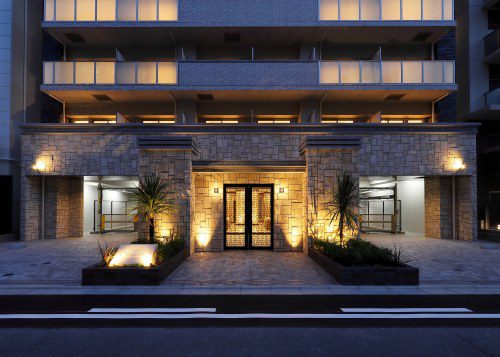
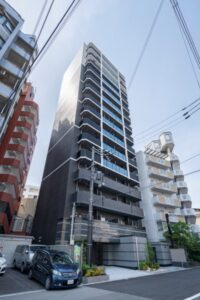
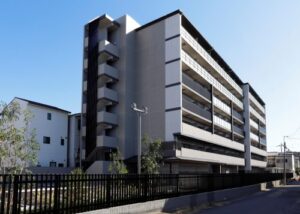
CapitaLand Ascott Trust (CLAS) has acquired three freehold rental housing properties in Japan for a total of JPY4 billion (S$34.2 million[1]). Two of the rental housing properties, Splendide Namba West and Pregio Esaka South, are in Osaka, while the third, Pre de Cort Nishikyogoku, is in Kyoto.
On a FY 2024 pro forma basis, the acquisition of the three rental housing properties has a Distribution per Stapled Security (DPS) accretion of 0.3%. In line with CLAS’ portfolio reconstitution strategy, the acquisition was funded by proceeds from CLAS’ divestment of Citadines Karasuma-Gojo Kyoto in October 2024 and JPY-denominated debt.
The expected net operating income (NOI) entry yield of the acquisition is 4% in FY 2025. This is significantly higher than the NOI exit yield of 0.4%[2] from the divestment of Citadines Karasuma-Gojo Kyoto. The three operating assets will contribute to CLAS’ distributable income immediately. On an annualised basis, the combined distributable income is expected to more than fully replace the income from the divested Citadines Karasuma-Gojo Kyoto.
Ms Serena Teo, Chief Executive Officer of CapitaLand Ascott Trust Management Limited and CapitaLand Ascott Business Trust Management Pte. Ltd. (the Managers of CLAS), said: “The acquisition demonstrates CLAS’ ability to reconstitute our portfolio by redeploying divestment proceeds into higher-yielding assets, further enhancing CLAS’ portfolio and the quality of our earnings. Built about five years ago, the three rental housing properties are located in prime areas of key gateway cities with expanding economic opportunities. With average lease terms of about two years and an average occupancy of about 97%[3], the acquisition strengthens our stable income stream and portfolio resilience. Meanwhile, our earlier acquisition of two hotels in Tokyo and Kanazawa in January 2025 positions us to benefit from the growing travel demand. This combination of stable and growth income sources is a key strength for CLAS.”
“Japan is one of our key markets. Post-acquisition, CLAS’ properties in Japan[4] accounts for 17.7% of our total portfolio value, enabling us to better capitalise on the strong lodging demand in the country, while maintaining a geographically diverse portfolio. We remain focused on our three-pronged strategy: unlocking value through divestments, investing in yield-accretive opportunities, and uplifting portfolio quality through well-timed asset enhancement initiatives (AEIs), to deliver steady long-term returns to our Stapled Securityholders,” added Ms Teo.
Post-acquisition, CLAS will have 33 assets[4] in Japan, comprising two serviced residences, four hotels, 26 rental housing properties and a student accommodation property. Its properties in the living sector such as rental housing and student accommodation account for about 17% of CLAS’ total portfolio value. In the medium term, CLAS aims to increase its allocation towards living sector assets to about 25-30%, with the remaining 70-75% to serviced residences and hotels.
Expanding economic opportunities in Osaka and Kyoto continue to attract young professionals, students and expatriates from Japan’s suburbs and outside the country. For example, Osaka’s population grew 1.8% between 2019 and 2024, despite the pandemic[5]. Rents in Osaka and Kyoto have also been trending upwards for the past decade and are expected to rise between 10% to 15%[6] over the next five years, supported by favourable demand-supply dynamics.
Centrally located assets within the gateway cities of Osaka and Kyoto
The 56-unit Splendide Namba West and 48-unit Pregio Esaka South were completed in 2021. Both properties are about a 10-minute walk to the subway station. Two of Osaka’s busiest train stations – the Umeda Station, the city’s regional transport hub for local trains, and Shin-Osaka Station, the city’s Shinkansen train station, are about 10 to 20 minutes away by the subway. The Umeda central business district (CBD) and the city’s iconic Namba dining and entertainment district are also easily accessible.
The 85-unit Pre de Cort Nishikyogoku was completed in 2020. The nearest subway station is a 10-minute walk away, offering residents a direct connection to Kyoto’s CBD. Notably, Kyoto’s well-known Kawaramachi and Shijo districts, as well as the city’s largest train terminal, the Kyoto Station, are all within a 15-minute subway ride. The Kyoto Koka Women’s University and the prestigious Kyoto University are also easily accessible.











