

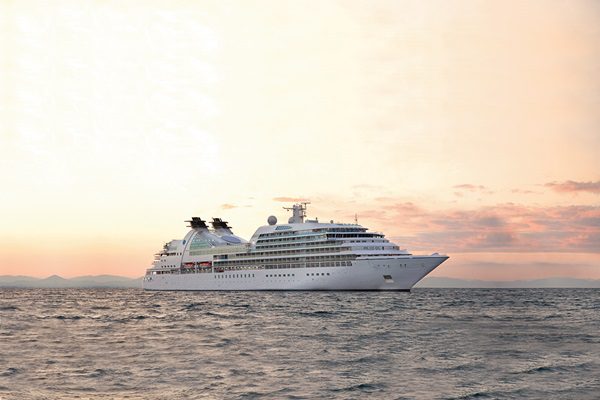
There are ship names you forget before you finish your coffee, and then there’s Mitsui Ocean Sakura. It’s a name that lingers, like the scent of spring blossoms after a Kyoto breeze. Mitsui Ocean Cruises has pulled this one out of the cultural treasure chest, a poetic nod to Japan’s beloved cherry blossom and, let’s be honest, a welcome reprieve from the endless parade of “Majestic-this” and “Enchanted-that” slapped onto other ships.
Late 2026 is when she’ll sail, and no, she won’t be one of those floating cities stuffed with laser tag arenas, bumper cars, and god help us, robot bartenders. Instead, this 32,477-ton beauty is being pitched as the maritime equivalent of a boutique hotel. Intimate. Refined. And very, very Japanese.
A Legacy with Cherry Blossoms Attached
If you’ve spent time in Japan in spring, you know the sakura isn’t just a flower. It’s an event. Entire parks explode with pink and white, picnics spring up beneath the trees, and even the most hardened salaryman stops to take photos.
To their credit, Mitsui has dipped straight into that tradition. “Sakura” isn’t new to the company. Ships like the Sakura Maru and Shin Sakura Maru carried the name decades ago, whisking travellers around the world before “fly-cruise” was a marketing catchphrase. Bringing the name back is less a branding exercise than an act of cultural reverence.
It’s also clever. International guests will swoon at the exoticism. Locals will feel a surge of pride. And unlike the word “Majesty,” which has been overworked to death by other cruise lines, sakura still has life in it.
The Small Ship That Thinks Big
Numbers first, because the ship spotters won’t forgive me otherwise: 650 feet long, 84 feet wide, 32,477 tons, 458 guests. By cruise standards, that’s practically dainty. Compare it to the Icon of the Seas, Royal Caribbean’s latest leviathan, which is more floating suburb than ship.
But that’s the point. Mitsui isn’t playing the “mine’s bigger” game. Sakura is designed to slip into the nooks and crannies of Japan’s coastline, remote islands in Okinawa, and fishing ports in Hokkaido, and it places the big ships sailing past with a sniff because they can’t fit.
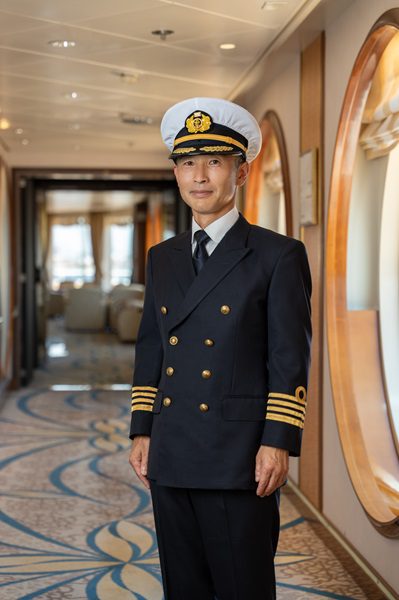
Mitsui Ocean Sakura Captain Satoshi Ninomiya
It’s cruising as it once was: slower, quieter, more personal. The kind where you don’t need a map to find your cabin.
A Captain Who’s Seen It All
Appointed to the helm is Captain Satoshi Ninomiya, a man with saltwater in his veins. He joined Mitsui in 1993 on the Fuji Maru as a junior officer, worked his way up, and by 2017 was commanding the Nippon Maru. If you’ve sailed Japanese waters in the past 30 years, chances are you’ve been under his watch.
He puts it:
“I am very honoured to be in command of a new cruise ship carrying on the history and tradition of our company … I’m honoured to take guests to beautiful destinations in Japan and around the world onboard Mitsui Ocean Sakura.”
You can hear the pride between the lines. This isn’t just another posting for him. It’s the culmination of a career, the chance to put his mark on Mitsui’s next chapter. And in Japan, where hierarchy and legacy matter, that greatly matters.
A Galley Run by a Perfectionist
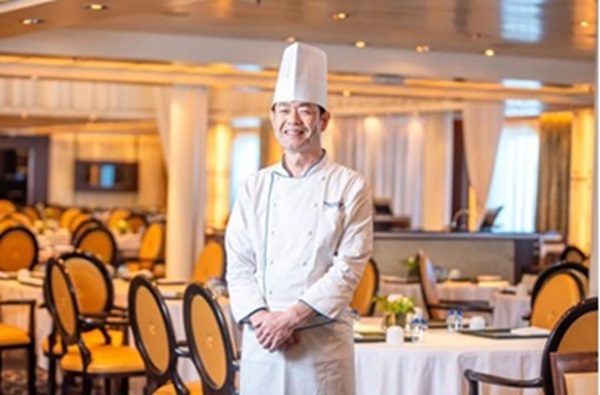
Executive Chef of MITSUI OCEAN SAKURA Katsutoshi Nakayama (なかやま かつとし)
Food is practically a religion on any Japanese cruise. Executive Chef Katsutoshi Nakayama will oversee Sakura’s kitchens. He started baking bread on the Nippon Maru in 1990, which proves two things: one, his longevity, and two, that even Japanese bread is treated with reverence.
From the bakery, he worked his way up to banquets, desserts, full menus, and eventually to the role of executive chef across multiple ships. His philosophy is simple, but deadly serious:
“When we serve meals, we are very meticulous of the process and believe we can deliver our passion to our guests through our dishes.”
Expect menus that change with the seasons, showcase regional ingredients, and are plated with the precision that makes you feel guilty taking the first bite. This is omotenashi, Japanese hospitality, translated into cuisine.
A Floating Calendar of Japan
What sets Sakura apart isn’t just the name or the size, it’s how she’ll weave herself into the rhythm of Japanese life. Cruises will be themed around festivals, fireworks, seasonal foods, and music.
Imagine sailing into port during Obon, with lanterns flickering along the shoreline. Or sipping sake on deck as summer fireworks explode over the water. Or a spring voyage where cherry blossoms frame the harbours.
This isn’t mass-market entertainment with Broadway shows in the theatre and waterslides on the deck. It’s cultural immersion, Mitsui-style.
A Sister Ship to Set the Standard
Sakura won’t be blazing the trail alone. Her sister, the Mitsui Ocean Fuji, launched in December 2024 and is already earning a reputation for this brand of intimacy and authenticity. Guests report fewer queues, more conversations, and a sense of being in Japan rather than in some floating, globalised nowhere.
Sakura will follow that lead, smaller and refined, with a crew steeped in tradition but open to international guests.
Why Mitsui Is Doing This
Behind all the cherry blossoms and poetic talk, there is a very practical reason: money. MOL’s BLUE ACTION 2035 plan keeps the company profitable even when the shipping industry hits rough seas. Cruises are part of that. They’re stable, high-margin, and less vulnerable to container rates or fuel spikes.
Mitsui has carved out its niche by leaning into heritage, something no other line can fake. Carnival and Royal Caribbean can keep their waterparks and Broadway revivals. Mitsui is selling authentic Japanese cruising. And that is worth its weight in saké.
Here’s the thing: in a world where cruise lines are trying to outdo each other with robotic waiters and skydiving simulators at sea, Mitsui has gone the other way. They’ve looked inward, into their history, Japan’s traditions, and pulled out something quietly powerful.
The Sakura doesn’t need gimmicks. She doesn’t need to scream. She’ll sail with dignity, hospitality, and blossoms on her side.
And that, frankly, is worth more than any rollercoaster strapped to a funnel.
By Soo James











