


There’s something eerily familiar about the clatter of artillery on the Thai-Cambodian border—a grim echo of history most hoped had been permanently shelved alongside the Cold War and cassette tapes. But alas, conflict has returned. And not with a whimper, but with a bang.
For five agonising days, the sleepy rice paddies and rugged borderlands between Thailand and Cambodia bore witness to a brutal skirmish that displaced over 135,000 people and reignited the world’s anxiety about the fragility of peace in Southeast Asia.
With its usual diplomatic decorum, the United Nations urged “utmost restraint.” Meanwhile, relief agencies scrambled into action, and ASEAN convened an emergency conclave. Their silk ties barely loosened before airstrikes were reported just kilometres from historic towns like Preah Vihear.
From Peace to Pandemonium
It all kicked off on 24 July with what began as cross-border tension and rapidly escalated into the region’s most serious armed confrontation in over a decade. By 25 July, reports of exchanges involving small arms, rocket fire, and artillery shells were confirmed. Thai airstrikes allegedly crossed into Cambodian territory—an incendiary move, diplomatically and literally.
The United Nations Children’s Fund (UNICEF) wasted no time urging both governments to prioritise children’s safety and respect international law. “Children must be protected at all times,” implored June Kunugi, UNICEF’s Regional Director for East Asia and the Pacific, speaking from Bangkok. “Their well-being must come before politics or power plays.”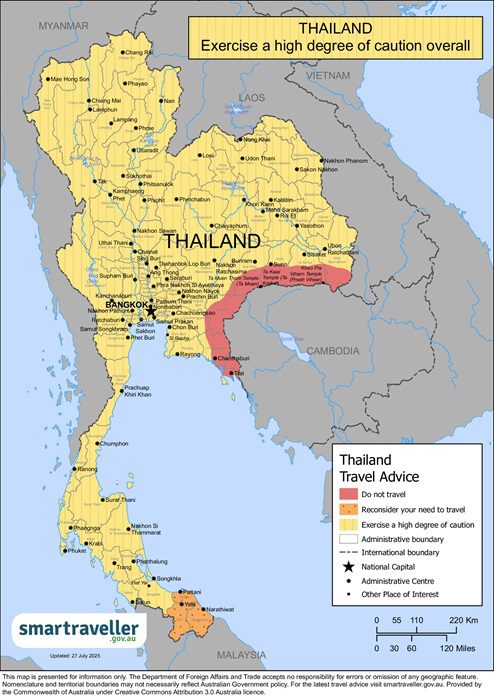
With over 4,000 Cambodians and 131,000 Thais displaced, schools and temples were hastily repurposed as emergency shelters. Already overcrowded and under-resourced, these makeshift havens now cry out for food, clean water and basic medical aid. UN spokesperson Stéphanie Tremblay confirmed the body’s readiness to respond—should an official request be made.
But requests take time. And time, as the displaced know too well, is something they no longer have.
Behind Closed Doors at the UN
Far from the border, in the steely chambers of UN Headquarters in New York, an emergency private meeting of the Security Council convened last Friday. Closed to the public—but formally recognised as official—this sombre gathering included representatives from Thailand and Cambodia.
Khaled Khiari, Assistant Secretary-General for Asia and the Pacific at the Department of Political Affairs, provided the latest intelligence to the Council. Although not publicly disclosed, diplomatic sources hint that the Council’s tone was a “deep alarm”.
It’s hard not to draw comparisons to 2011, when another Thailand-Cambodia border row—this time over the storied Preah Vihear temple—left multiple soldiers dead and the world holding its breath. Secretary-General Ban Ki-moon then called for an “immediate, verifiable ceasefire”. Fourteen years later, that phrase remains tragically relevant.
ASEAN: The Family Intervention
ASEAN, that ever-optimistic band of Southeast Asian brothers and sisters, wasted no time releasing a joint statement of concern. Delivered with polite urgency, the communiqué lamented the “increasing number of casualties on both sides”, and called for a full ceasefire, diplomatic negotiations, and “good neighbourliness”.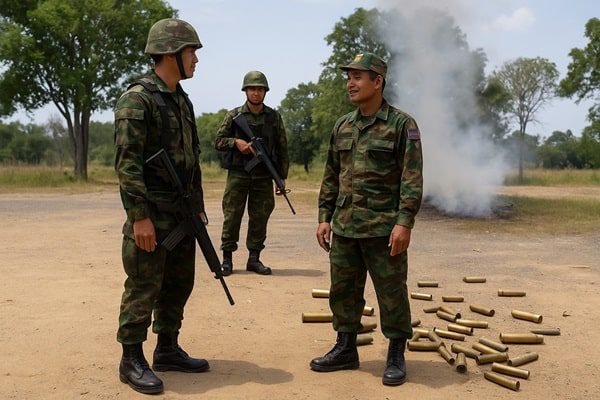
Their language was familiar—scripted from the ASEAN playbook—but their intent was serious. The Chair, Malaysian Prime Minister Anwar Ibrahim, invited Thai and Cambodian leaders to Kuala Lumpur for high-stakes emergency talks—the outcome: a fragile ceasefire set to take effect at midnight on Monday, 29 July.
Observers from the United States and China were also present. Prime Minister Hun Manet of Cambodia acknowledged both superpowers and ASEAN for their roles in “facilitating dialogue and preserving the hope of peace”.
Even former U.S. President Donald Trump made a cameo appearance in the diplomatic thank-you list, proving once again that in Southeast Asian politics, no name is too surprising.
Travel Takes the Hit
While bullets flew and politicians pontificated, the region’s tourism industry took a direct hit. Border crossings were shut down faster than you could say “e-visa”, and tour cancellations flooded in like monsoonal rain.
In Thailand, eastern provinces like Sa Kaeo, Chanthaburi, and Trat—typically buzzing with tour buses and weekenders en route to Angkor Wat—have become ghost towns. Overland tour operators from Vietnam and Thailand pulled out, and flights into Siem Reap and Battambang saw noticeable dips in passenger load.
James Thurlby, President of Skål International Bangkok and a seasoned travel professional, said, “This conflict is a slap in the face for every local business still recovering from the pandemic. Hotels can eventually rebound, but tuk-tuk drivers, food stall vendors, and border traders—they suffer first and worst.”
Smartraveller Waves the Red Flag
Australia’s Smartraveller advice has gone from “exercise caution” to a flat-out “do not travel” warning for areas within 50 kilometres of the Thailand-Cambodia border. This includes the provinces of Buriram, Si Saket, Surin, Ubon Ratchathani, and parts of Chanthaburi and Trat.
Martial law has reportedly been declared in some districts, while the threat of landmines and sporadic violence remains real. The advisory also warns of terrorism risks in popular areas like Bangkok and Phuket—a grim reminder that trouble in Thailand is rarely isolated.
A Fragile Peace, A Fervent Hope
The ceasefire—though welcomed—is built on sand. Regional analysts warn that decades-old grievances remain unresolved, including the prickly question of sovereignty surrounding ancient temples and border demarcations.
But there is hope. Discussions are underway to reopen critical transport corridors and re-establish cross-border trade. Tourism operators are pleading for joint safety campaigns, regional reassurance initiatives, and perhaps most importantly, financial relief for the SMEs caught in the crossfire.
The Road to Recovery
As any travel veteran will tell you, tourism thrives on trust. Once broken, trust takes time to rebuild.
“Tourism is Southeast Asia’s great unifier,” Thurlby noted. “It brings in money, sure—but it also builds understanding, community, and peace. Rebuilding that trust must be the top priority.”
Industry insiders suggest ASEAN should now step in with a coordinated regional tourism recovery campaign—something akin to the “Visit ASEAN” drives of the past, but updated for the social media era and aimed squarely at jittery travellers from the US, Europe, and China.
If peace holds, the region could bounce back. But if tensions flare again, the humanitarian, economic, and reputational consequences will be far more severe.
Final Word: Stay the Course
Southeast Asia has weathered worse—tsunamis, coups, pandemics—yet the spirit of its people endures, and their resilience remains unmatched. But peace is a choice. A ceasefire is not a solution; it is an invitation to talk, rebuild, and choose a path that places humanity before hostility.
Let us hope Thailand and Cambodia accept that invitation—while the guns remain silent.
By Kanda Limw











