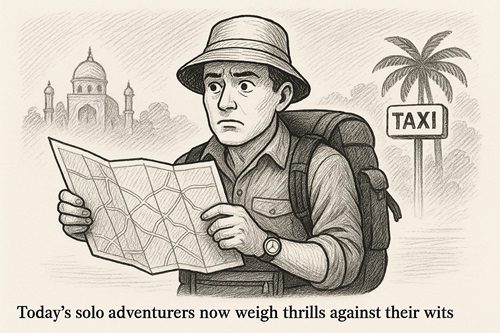
 It’s the dream. Just you, a passport, and the open road. The kind of freedom that comes with no shared itinerary, no bickering travel buddy, and no one nicking your chips at dinner. But in 2025, that fantasy now comes with a side of paranoia, according to the latest sentiment check from Global Rescue.
Solo travel might still be in vogue—but so are padded money belts and side-eye glances at sketchy tuk-tuk drivers.
In their Spring 2025 Traveller Sentiment and Safety Survey, Global Rescue—a bunch that knows more about plucking tourists out of trouble than your average embassy—found that one in three travellers has experienced the darker side of globetrotting: scams, theft, or outright criminal nastiness.
Still, ever the resilient breed, 68% of solo voyagers insist they feel safe out there. Brave? Perhaps. Naïve? Possibly. But let’s not forget that humans have walked into worse ideas more confidently, like deep-fried butter or trusting politicians.
Dan Richards, the ever-sensible CEO of Global Rescue and a voice of reason in an industry prone to wanderlust-fuelled delusion, puts it plainly: “Solo travel is on the rise, but so is traveller vigilance.” Translation? We’re going, but we’re checking under the bed first.
Nearly half of those surveyed—44%—said they now choose destinations based primarily on crime levels. The other 41% admit safety only “sometimes” sways their plans, which likely means until their third mojito in Mexico City reminds them that pickpockets don’t take holidays.
Let’s call it what it is—safety is the new currency. And it’s devaluing the usual favourites. Mexico, Egypt, Turkey, and China? Once exotic, now considered “exotic, but maybe later.” A whopping 42% of respondents say they’ve scratched entire countries off the list due to safety concerns. That’s not a ripple—it’s a reroute.
Richards isn’t mincing words. “These results aren’t just interesting—they’re instructional. Destinations need to invest in safety like they invest in brochures.” In other words, there will be fewer glittering temples and more visible security guards.
Today’s solo traveller has traded in devil-may-care for devil-may-not. Ninety percent say situational awareness is their top strategy. That’s right—Gen Z and Boomers are scanning rooms like secret agents. Meanwhile, 77% reckon modest dress is essential, because nothing screams “I’m a target” like a bum bag and a loud Hawaiian shirt.
Transport is another hot zone. Sixty-two percent only hop into vetted taxis. And when it comes to hotels, 41% won’t touch a lobby without 24-hour security, and 28% insist on elevators that demand a keycard—because who wants a midnight lift ride with a stranger who smells like regret?
Their war chest of anti-theft tricks is impressive too: zippered pockets (62%), valuables split like a smuggler’s cargo (61%), RFID-blocking wallets (49%), and the good ol’ money belt (48%), which is just a glorified jockstrap for your passport.
But the most poignant part? They still want to go. Even after the pickpocketing, dodgy drivers, and airport dramas. Solo travel isn’t dying—it’s growing up.
So, where does that leave the tourism industry? If you’re a destination with a PR problem and a crime rate to match, the time for glossy Instagram campaigns has passed. It’s time to build trust, not just temples. Because these days, the most attractive thing a country can offer isn’t a sunset or a surf break—it’s a well-lit footpath and a driver who knows how to use Google Maps.
As always, the road calls. But now, solo travellers answer with one eye open, a zippered jacket, and a location-sharing app set to “mum.”
By Sandra Jones