


 Changi Airport Group (CAG) has announced a groundbreaking S$3 billion investment over the next six years to revolutionise Singapore’s Changi Airport. This ambitious expansion plan, encompassing upgrades across Terminals 1 to 4, aims to bolster Changi’s role as a world-leading air hub by enhancing passenger experience, optimizing operational efficiency, and preparing the airport for the anticipated surge in Asia-Pacific air travel demand. By implementing cutting-edge technologies, expanding infrastructure, and setting the stage for a more resilient and efficient airport, Changi is set to redefine air travel standards for the region and beyond.
Driving Growth in the Asia-Pacific: A Strategic Vision for the Future The Asia-Pacific region is projected to lead global growth in air travel, with passenger volumes expected to double over the next 20 years, according to the International Air Transport Association and Airports Council International. Changi Airport’s expansion, led by CAG, aligns with these projections, positioning Singapore as a critical node in the global aviation network. CAG’s recent investments, especially during the COVID-19 pandemic, showcase its commitment to future-proofing Singapore’s aviation sector, ensuring it remains at the forefront of innovation, connectivity, and passenger satisfaction.
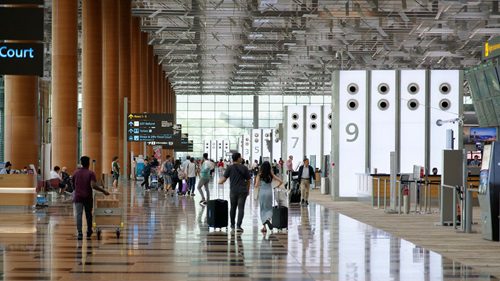
Airport charges are to be progressively raised to finance investments, recover costs for investments during COVID-19, and accommodate higher operating costs; rebates will help airlines with the transition.
Comprehensive Infrastructure Upgrades to Elevate Passenger Experience The extensive upgrades at Changi include enhancements to critical passenger services, such as baggage handling, check-in processes, and inter-terminal connections. Significant projects within the $3 billion investment portfolio aim to rejuvenate end-of-life systems and incorporate advanced technology, creating smoother, more seamless travel for passengers.
- Skytrain System Renewal
CAG will rejuvenate Changi’s Skytrain subsystems to accommodate increasing passenger demand, upgrading signalling and communication frameworks while expanding capacity with additional cars. This will alleviate congestion and boost reliability across terminals, ensuring efficient transfers for millions of annual travellers. - Revamped Baggage Handling Systems
A state-of-the-art baggage handling system in Terminal 3, alongside a new rooftop Inter-Terminal Baggage Conveyance System between Terminals 1 and 3, is set to streamline baggage transfers. These updates will increase capacity by 65%, reduce manpower needs, and support Changi’s sustainability and efficiency goals. - Expanded Check-In and Immigration Facilities
Terminal 4 will see a new check-in row integrated with automated self-service kiosks, enhancing check-in capacity by 15%. Terminal 1’s Arrival Immigration Halls will also undergo an expansion to manage peak period demands and ensure a smooth arrival experience for passengers. - Future-Proofing for Next-Gen Aircraft
In preparation for Boeing’s B779 fleet, expected in 2026, Changi Airport will upgrade select taxiways and contact stands to handle the increased wheel load of these aircraft. The airport will have 39 stands designed to accommodate this new generation of planes, reinforcing its capability to support advanced aviation technology.
Addressing Financial Sustainability: Progressive Airport Charge Increases To support these infrastructure upgrades, Changi Airport will implement a series of passenger and airline charge increases from 2025 to 2030. These incremental adjustments are designed to fund the airport’s growing operational expenses, including workforce expansion and energy costs, in line with Singapore’s Progressive Wage Model.
- Passenger Service and Security Fees for departing passengers will remain steady until March 2027, after which they will see a controlled annual increase of S$3.
- Transfer and Transit Fees will also rise in stages beginning in 2025, keeping fees manageable for passengers while generating the necessary revenue to cover operational costs.
CAG has also engaged major airlines in discussions to manage this transition smoothly. To ease the impact of these adjustments, airlines will receive a 50% rebate on landing, parking, and aerobridge (LPA) charge increases for the first six months of the revised fees in 2025.
Championing Workforce and Sustainability Initiatives Changi Airport’s expansion is not solely focused on passenger services but prioritizes improving conditions for its extensive workforce. New amenities, such as heat-relief pods and enhanced lightning shelters, will be implemented to support employee well-being, while staff lounges and rest areas will see significant upgrades.
Aligned with Singapore’s green initiatives, Changi Airport is trialling artificial intelligence (AI) to enhance security screenings, aiming to reduce the need for manual checks while maintaining stringent safety standards. AI-driven automation in ground handling and the adoption of autonomous vehicles are among the forward-thinking solutions CAG is testing to enhance productivity and operational efficiency.
Maintaining Changi’s Competitive Edge The Civil Aviation Authority of Singapore (CAAS) and CAG are committed to keeping Changi Airport at the forefront of global air hubs. In addition to expanding its city links from the current 160 to over 200 by the mid-2030s, Changi is deepening collaborations with over 100 partner airlines to ensure a robust, resilient network catering to regional and global travel needs.
To remain adaptable in a dynamic industry, CAAS and CAG will continue to evaluate infrastructure and policy adjustments to reinforce Changi’s standing in the global aviation landscape. Strategic investment in sustainability, cybersecurity, and manpower development reflects Changi’s dedication to future readiness and resilience.
Projected Impact and Economic Contribution The planned enhancements at Changi Airport are expected to create thousands of new jobs, stimulate economic growth, and solidify Singapore’s status as a prime aviation gateway for Asia and the world. As an essential driver of Singapore’s economy, the airport’s expansion will generate opportunities across diverse sectors, from hospitality to logistics, underscoring its central role in its economic strategy.
Conclusion: A Vision for Singapore’s Aviation Future Changi Airport Group’s $3 billion investment marks a transformative chapter in Singapore’s aviation history. By prioritizing passenger experience, operational efficiency, and future-ready infrastructure, CAG is setting a new benchmark for global air hubs. These comprehensive upgrades are poised to accommodate a significant rise in Asia-Pacific air travel demand, reinforcing Singapore’s role as a critical global trade and tourism connector. Through strategic foresight, a commitment to innovation, and a focus on workforce welfare, Changi Airport will continue to soar as a model of excellence, reliability, and resilience in aviation.
Written by: Charmaine Lu











