


 In the heart of Chiang Mai, a revolution in luxury tourism is unfolding at the 137 Pillars House, where sustainability and luxury intertwine to set new benchmarks in the hospitality industry. This exquisite property, nestled in Northern Thailand’s cultural hub, has become a beacon of environmental responsibility and social conscience.
Anne Arrowsmith, the general manager of 137 Pillars House, encapsulates the ethos of the establishment with her profound statement, “We have a duty of care to our community and the wider world; a duty to assume the role of custodians of our local culture, architecture, waterways, forests, animals, and environment and ensure that the generations that follow inherit a world that we would recognize and want to live in.”
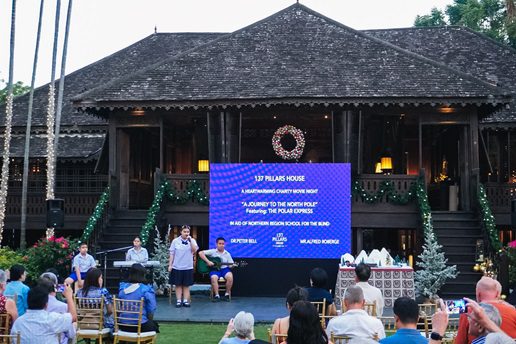
School for the Blind.
Commitment to Local Procurement and Artisanship
137 Pillars House’s dedication to local procurement is a cornerstone of its operational philosophy. The hotel proudly sources food items from local producers, significantly reducing its carbon footprint and supporting the regional economy. This commitment extends to its partnership with companies delivering fresh produce in reusable bags or containers, eschewing plastic to stand against environmental degradation.
Further enriching its local ties, the hotel’s boutique in the old house offers an exquisite range of hand-woven textiles and handmade decor items. These treasures are sourced from Sop Moei Arts, a non-profit organization dedicated to supporting weavers from the Karen tribe in Mae Hong Son province. This collaboration not only preserves traditional craft skills but also provides a sustainable source of income to local artisans.
Pioneering Environmental Initiatives
The hotel’s environmental responsibility is evident in its myriad green practices. A notable example is its plastic-free laundry service, which supports the local economy and the environment. Laundry is presented in tissue paper and wicker baskets, exemplifying a mindful approach to sustainability.
In a bold move to eliminate single-use plastic, in-suite water is supplied in glass bottles, a practice extended to meetings and events. This eco-conscious choice underlines the hotel’s commitment to reducing environmental impact while offering a luxurious guest experience.
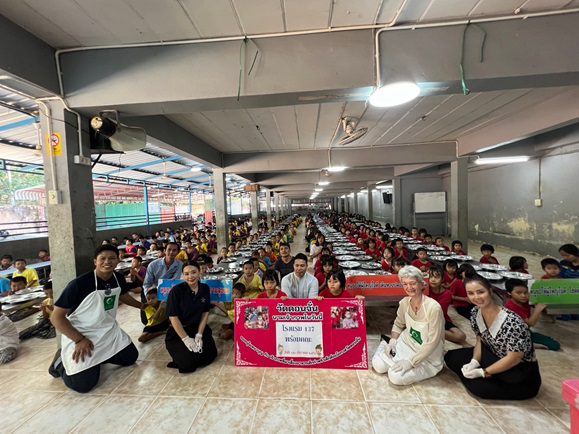
Wat Don Chan Orphanage.
Energy conservation is another area where 137 Pillars House shines. The air conditioning in the suites is maintained at an eco-friendly 24-25 degrees, and the system automatically switches off if doors are left open, balancing guest comfort with environmental considerations.
The hotel’s waste management strategy involves meticulous sorting and recycling, encompassing plastic, aluminium, paper, and glass. This initiative reinforces its dedication to sustainable practices, even in day-to-day operations.
Innovative Practices and Community Engagement
One of the hotel’s innovative sustainability practices includes composting leaves and branches into Biochar, a natural mosquito repellent. This not only aids in waste reduction but also fosters a harmonious and green environment for guests.
To offer a zero-carbon-emission travel experience, the hotel promotes using traditional Samlor or rickshaws for exploring Chiang Mai’s cultural landmarks. This initiative aligns with the hotel’s commitment to environmental stewardship while providing guests an authentic and immersive local experience.
Upholding Social Responsibility
137 Pillars House’s social responsibility initiatives are as impressive as its environmental efforts. The hotel has partnered with the Elephant Nature Park (ENP) to raise funds for elephant conservation and reforestation in Chiang Mai. Additionally, the hotel supports the local Wat Don Chan Temple by donating meals and essentials to over 700 orphans, reflecting a deep commitment to community welfare.
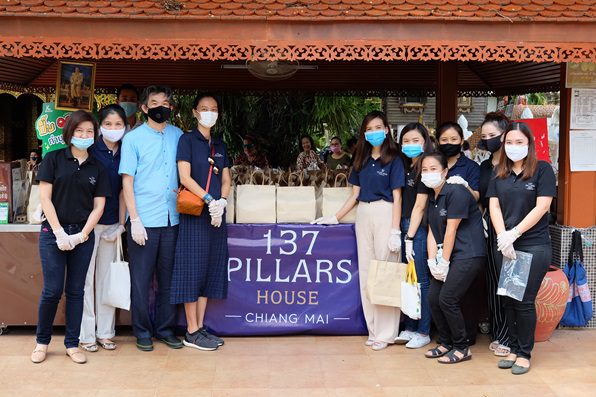
Wat Gate Temple.
Collaboration with The Foundation for the Education of Rural Children (FERC) is another facet of the hotel’s social initiatives. This partnership focuses on raising funds for students from low-income families, ensuring access to education and training.
The hotel’s commitment to the local community also includes supporting the School for the Blind. The hotel raises funds through events like ‘A Heartwarming Charity Movie Night’ to provide essential learning tools for students with residual vision.
Furthermore, 137 Pillars House contributes to preserving local culture by supporting Wat Ket Temple. The hotel actively contributes to restoring and maintaining the temple’s museum, safeguarding the region’s cultural heritage. This effort is part of a larger vision to maintain the vibrancy and legacy of local traditions for future generations.
Unveiling the 137 Pillars House Museum
In a landmark initiative to preserve and showcase the region’s rich history, the 137 Pillars House opened its museum in December 2023. The museum, nestled within the historic teak homestead’s 137 pillars, invites guests to explore over a century’s history related to teak, teak wallahs, and the Borneo Company. This initiative highlights the significance of the teak tree in industries like shipbuilding and railways and sheds light on the personal stories of European overseers who led isolated lives in forest camps, shaping the region’s ecology and forming personal connections with the locals. The museum is a testament to the intertwined narratives of commerce, culture, and individual sacrifices that have left an enduring legacy in the region.
Contact Information for 137 Pillars House
For those interested in experiencing this unique blend of luxury, sustainability, and cultural immersion, 137 Pillars House can be contacted via:
- Telephone: +66 53 249 339
- Email: [email protected]
- Website:www.137pillarshotels.com
The 137 Pillars House in Chiang Mai sets a new standard in luxury tourism, seamlessly blending environmental sustainability with a deep commitment to social responsibility. This establishment offers a luxurious escape and a model for how the hospitality industry can positively impact the world. Through its innovative practices, community engagement, and dedication to preserving local culture and heritage, 137 Pillars House is not just a hotel but a beacon of hope for a sustainable and socially responsible future in tourism.
Written by: Yves Thomas











