For years, luxury travel had a neat formula. Add marble. Pour champagne. Put a famous name above the door. Then charge a rate that might make the average guest check their pulse.
That formula is losing its shine. A new Skift Studio report on luxury travel trends finds that leading hotel and travel firms now place more weight on time, privacy, local access and good service. The room can still be grand. It just needs to offer more than a grand bill.
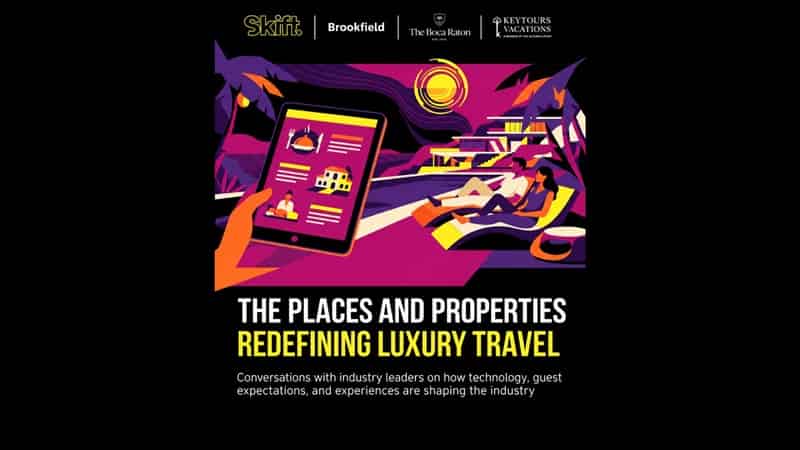
Published on 17 November 2026, The Places and Properties Redefining Luxury Travel draws on talks with seven senior figures from hotels, tours, rail, finance and travel tech. The report is sponsored content, not a survey of guests. But it shows where these firms say they will spend, build and compete.
Big families want space, not chores
For Accor’s Maud Bailly, one trend is hard to miss. Whole families want to travel together, with grandparents, parents and children under one roof. They want the space of a private home, but none of its chores.
Bailly, who heads Sofitel, Sofitel Legend, MGallery and Emblems, says six-bedroom units at Sofitel Al Hamra in the UAE are the first to sell out. Accor is adding more suites and large rooms. At its Emblems Collection, rooms must span at least 40 square metres. Suites must make up at least 30 per cent of the stock.
Guests also want peace, fresh air and room to switch off. After Europe’s heatwaves, Bailly sees demand for mountain breaks, or ‘coolcations’. The French Alps, Japan’s mountain towns and Canada’s Rockies are part of the growth plan. A cool breeze may now beat a hot beach.
Her warning to hotels in a crowded market is blunt: “Dilution is luxury’s worst enemy.”
A famous name is no longer enough
Brookfield’s Shai Zelering sees the same shift from the investor side. Guests want rare places and trips that feel their own. A brand name helps, but a hotel with no clear sense of place can soon look much like the next one.
That is why Brookfield favours landmark hotels and resorts with strong local roots. They may cost more to buy and run. Yet a grand setting and a real story are hard for rivals to copy.
At The Boca Raton in Florida, chief executive Daniel Hostettler says close to US$500 million has gone into the site since 2019. Plans include work on the old Cloister rooms and a US$25 million golf course renewal. The resort first opened in 1926. Its aim is to keep its past alive, not chase each new fad.
There is a lesson here for Australia. The Kimberley, Tasmania’s wild coast and the Great Barrier Reef need no borrowed glamour. Their appeal lies in the land, the sea and the people who know them. Good design and great staff can make that appeal pay, without making it feel staged.
On luxury rail, the journey is the prize
Raffaele Breschi, head of Arsenale’s work outside Italy, believes the trip can be as prized as the place at the end of it.
On 22 October 2026, La Dolce Vita Orient Express set off on its first trip abroad, from Rome to Istanbul. The five-day route went via Venice, Budapest and Transylvania. Breschi says the first run sold out, with Australians among the guests.
There is some irony in that. For years, the travel trade has sold speed. Here, guests pay a premium to take their time. The train is not just a way to get there. It is the point of going.
Arsenale’s Dream of the Desert project in Saudi Arabia takes the same tack. It pairs a rail route north of Riyadh with tales, guides and visits to places far from the usual tourist trail.
“High-end travelers want slowness and meaning,” Breschi tells Skift Studio. It may be the most useful line in the whole report.
A fresh role for the travel adviser
Kensington Tours president Helen Giontsis says the rich have not tired of Italy, Japan or Egypt. They want a fresh way to see them. That can mean time with local artists, a private food tour or a less-known part of a famous country.
The key is access without fuss. A good travel adviser can open doors, join up flights and stays, and fix a plan when it goes astray. The web has plenty of tips. But fewer people will answer the phone when trouble strikes.
Tina Edmundson, who leads Marriott International’s luxury brands, also sees growth in yachts, resorts and guided trips. The test is whether the trip feels smooth from start to end. Guests want freedom, not a second job as their own tour manager.
AI belongs backstage, not at the welcome desk
Artificial intelligence plays a major role in this new model. Yet few of the leaders want it to take over the warm side of a guest’s stay. They would rather use it to catch errors, cut waste and keep the service on track.
Bailly says AI tools cut food waste by 60 per cent in some Accor hotels during trials in the Middle East. That is the firm’s reported result for those sites, not a claim for the whole group. It is also using AI to find hidden water leaks.
At Keytours Vacations, founder Koray Edemen is building KeyBrain to link trip plans, prices and bookings. It aims to flag missed items, late replies from firms, and timing clashes before a guest is left stranded. Staff would check the alerts and choose what to do.
Brookfield’s Zelering puts the tech challenge neatly: “The issue is adoption, not invention.”
Hostettler and Edmundson make much the same case. Let software do the dull work. Leave the welcome, tact and split-second calls to people. A system may know your favourite pillow. It cannot truly care that you have had a rotten day.
Australia’s chance to get ahead
For local hotels, cruise lines, rail firms and travel advisers, the message is clear. Sell what makes a place special. Give guests room, choice and skilled help. Use tech to solve problems before they spoil a holiday.
The Skift Studio report does not show how much extra guests will pay, or prove that all wealthy travellers want the same things. It does show how seven major industry voices plan to respond to change.
The next winner in luxury travel may not have the largest suite or the longest wine list. It may be the one that hands guests back the one thing no fortune can buy more of: time.
By: Michelle Warner – © 2026.
Read Time: 5 minutes.
Author Bio:
 Michelle Warner has always carried stories the way others carry passports lightly, faithfully, and with purpose. She learned her craft in newsrooms, shaping sentences with care, before swapping deadlines for departures as a flight attendant with some of the world’s great airlines. Years aloft sharpened her eye for character and deepened her fondness for the small, dignified rituals of travel, the quiet kindness of strangers, the poetry of arrival, the patience learned between time zones.
Now grounded by choice, Michelle has come home to writing with the same calm authority she once brought to turbulent cabins. Her prose blends an editor’s discipline with a traveller’s wonder, tinged with humour and reverence for the golden age of travel. Each piece feels like a handwritten boarding pass, gracious, observant, and unmistakably alive.