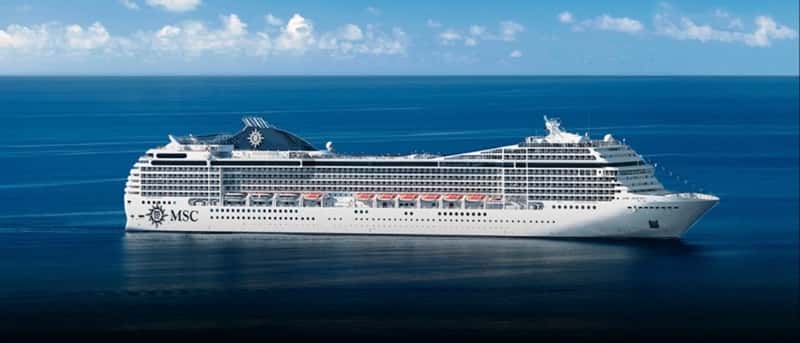
MSC Poesia is back at sea, but the questions surrounding her 11-day detention in Miami are proving unwilling to sail away.
The ship left PortMiami on Thursday, 12 November 2026, for a 10-night Caribbean cruise after US Coast Guard inspectors cleared her to depart. Seatrade Cruise News reported 2,333 passengers aboard, compared with the vessel’s stated capacity of 3,223. MSC Cruises said the ship would continue her scheduled sailings.
That might have been the end of an awkward episode. Unfortunately for the cruise line, another chapter has opened.
On 13 November, CBS News reported that the Coast Guard had launched a criminal investigation into suspected illegal oily-waste discharges involving a so-called ‘magic pipe’. The report cited an unnamed US official familiar with the investigation, who said oily waste may have been diverted into the ship’s greywater system.
There is an essential distinction here: CBS reported the existence and alleged subject of the criminal inquiry, while the Coast Guard’s public statements have not specified the suspected arrangement. No charges or findings of criminal wrongdoing had been publicly announced as of 15 November.
Cleared to Sail, But Questions Remain
The Coast Guard detained MSC Poesia at PortMiami on 1 November after identifying deficiencies during an inspection. The scheduled 11-night cruise was subsequently cancelled, with MSC arranging refunds and assistance for affected passengers.
Captain Frank Florio, Commander of Coast Guard Sector Miami, said inspectors had ‘identified deficiencies with systems on board the vessel’ and were addressing them with MSC. The cruise line described the problem as a ‘regulatory matter’ and said it was cooperating with the authorities.
On 12 November, inspectors confirmed that the deficiencies responsible for the detention had been corrected and cleared the vessel to depart.
Being permitted to sail, however, does not constitute an acquittal, nor does it establish that a criminal offence took place.
There has been another development. In its 14 November report, Seatrade Cruise News said sources indicated the ship departed without several crew members who were being questioned in Miami. Authorities have not publicly identified those individuals or announced charges against them. Their reported questioning must not be taken as evidence of guilt.
What Exactly Is a ‘Magic Pipe’?
It sounds like something a conjurer might produce at the end of a particularly energetic performance. In maritime engineering, the term is considerably less entertaining.
A ‘magic pipe’ usually refers to an unauthorised hose or piping arrangement used to bypass a vessel’s pollution-control equipment. It can allow oil-contaminated machinery-space wastewater to be discharged without passing through the required oily-water separator and monitoring system.
The International Maritime Organization’s MARPOL Annex I sets stringent conditions for discharging treated oily bilge water, including an oil-content limit of 15 parts per million and the use of approved equipment. Waste that cannot legally be discharged must be retained aboard or transferred to an appropriate shore facility.
It is worth separating three types of wastewater. Greywater comes mainly from showers, sinks, laundries and galleys. Blackwater is sewage from toilets and similar facilities. Oily bilge water collects in machinery spaces and can contain fuel, lubricants and other contaminants.
Different rules apply to each. Greywater is not simply free to be pumped overboard anywhere; location, treatment and applicable regulations matter. Nor is every discharge of treated oily bilge water unlawful. The issue is whether mandatory safeguards were bypassed.
According to the CBS report, the MSC inquiry concerns a possible diversion of oily waste into a greywater system. That alleged arrangement has not been established in court or detailed publicly by the Coast Guard.
Princess Cruises: A Costly Precedent
The potential stakes are illustrated by a previous case involving Princess Cruise Lines, part of Carnival Corporation. It is a precedent, not proof of anything against MSC.
In December 2016, Princess agreed to plead guilty to seven felony charges arising from deliberate pollution and attempts to conceal illegal discharges. In April 2017, a US court imposed a US$40 million penalty: US$30 million in criminal fines and US$10 million for environmental community-service projects.
Investigators established that Caribbean Princess had used bypass equipment to discharge oil-contaminated waste. According to the US Department of Justice, illegal discharges through such arrangements dated back to 2005.
The scheme began to unravel when a British engineer raised the alarm in August 2013. Evidence passed from the UK’s Maritime and Coastguard Agency to US authorities included photographs of bypass equipment.
One discharge involved approximately 4,227 US gallons of oily waste about 23 miles off the English coast. Investigators also found that clean seawater had been run through monitoring equipment to create misleading records, while crew members were instructed to conceal what had happened.
The investigation identified improper practices involving five Princess ships: Caribbean Princess, Star Princess, Grand Princess, Coral Princess and Golden Princess.
Princess was placed on five years’ court-supervised probation under an environmental compliance programme with independent audits and monitoring. The whistleblower engineer received a US$1 million award.
And the bill did not stop there.
In June 2019, Princess and Carnival were ordered to pay a further US$20 million after admitting six probation violations. Then, in January 2022, Princess received another US$1 million fine for failing to establish and maintain the independent internal investigative office required by its compliance arrangements.
The 2022 agreement also introduced potential daily penalties, starting at US$100,000 and increasing to US$500,000 after ten days if specified deadlines were missed.
What Happens Next?
The MSC inquiry could examine shipboard systems, discharge records and the actions of individuals or organisations, but the scope and outcome remain unconfirmed in public statements.
MSC Cruises has not, in the reporting reviewed for this article, publicly addressed the specific ‘magic pipe’ allegation. That leaves an important gap between what investigators are reportedly examining and what can presently be established.
For passengers, MSC Poesia is cruising again and is scheduled to return to Miami on 22 November.
For the cruise industry, the case is a reminder that correcting an inspection deficiency and resolving an alleged criminal offence are two very different matters.
The ship has left port. The questions have not.
By: John Alwyn-Jones – © 2026.
Read Time: 5 minutes.
Author Bio:
 John Alwyn-Jones is one of those rare figures who can make the business of travel sound positively adventurous.
A lifelong communicator with the polish of a broadcaster and the curiosity of a journalist, he’s spent decades shaping stories and strategies across tourism, aviation, and the cruise world. He’s led from the front as CEO, director, mentor, and advisor, and still brings warmth and wit to every boardroom and microphone.
Known for his sharp insight into global cruise lines and destinations, John has an old-school belief in professionalism, tempered with the sparkle of someone who’s genuinely seen the world. He’s not just in the travel business; he’s made it an art form.