For many travellers, Japan’s northern Hokkaido region brings to mind snowy mountains, ski fields, and winter adventures. The prefecture’s capital, Sapporo, has also earned a reputation as a snow sports destination, but another side of the city awaits. With its rich history and food culture, striking blend of art and nature, and mountains and hot springs just beyond the city, Sapporo offers the perfect opportunity to add a diverse urban escape to your next winter trip to Japan’s north. With seasonal direct Qantas flights connecting Sydney and Sapporo, it’s easier than ever for Australians to discover another side of Hokkaido.
Moerenuma Park: where art and nature meet
At Moerenuma Park, art and nature come together across an approximately 189-hectare landscape designed by world-renowned sculptor Isamu Noguchi. Open year-round, the park offers sweeping green spaces, sculptural landmarks and outdoor activities, including cross-country skiing and sledding in winter. The park’s most recognisable landmark is the Glass Pyramid “HIDAMARI,” a striking geometric structure housing an information centre and a gallery dedicated to Noguchi. Its design is thought to pay homage to Noguchi’s close friend, legendary architect I.M. Pei, who designed the famous glass pyramid at the Louvre Museum in Paris.
Other places of interest inside the park include the Cherry Blossom Forest, which houses 1,600 trees and seven hidden play areas, the sculptural Play Mountain, and the Sea Fountain, which shoots 1,800 tonnes of water up to 25 metres high. For hikers, the 62-metre-high Moere Hill is worth scaling for its 360-degree view of Sapporo from the summit.
Jingisukan: a barbecue with a Hokkaido twist
One of the best ways to discover a destination is through its food, and when it comes to quality Japanese cuisine, Sapporo is right up there. Hokkaido’s cold, nutrient-rich seas and vast, fertile farmland provide an abundance of fresh ingredients, including seafood, vegetables, meat, and dairy, which form the foundation of the region’s celebrated food culture.
One of the region’s best-known local specialities is Jingisukan, a sizzling grilled mutton dish named after the fearsome Mongolian conqueror Genghis Khan. Like our own backyard barbecue, the dome-shaped iron skillet used for this Hokkaido comfort food brings people together around the table. It’s hands-on, social, and satisfyingly smoky, with the meat cooked right at the table and enjoyed as soon as it’s ready. As the juices from the sliced meat melts down the grill, it sizzles into the cabbage, bean sprouts and onions cooking around the base.
The Hokkaido Museum: step into the prefecture’s past
The Hokkaido Museum offers a chance to dig a little deeper into the prefecture’s history. Located within Nopporo Forest Park, just outside central Sapporo, it offers a crash course in Hokkaido’s people and culture. The museum’s main exhibition is organised around five themes, taking visitors on a journey back 1.2 million years ago to the present day. Exhibits explore the island’s changing landscapes, wildlife, and communities, offering a fascinating introduction to how Hokkaido came to be what it is today.
One of the most significant sections explores Ainu culture and the modern history of the Ainu, Hokkaido’s Indigenous people. The story also has a connection to Australia, with institutions including Museums Victoria and the National Museum of Australia having been involved in the repatriation of ancestral Ainu remains to Japan. The museum also explores Hokkaido’s transformation during the modern era, including the arrival of settlers and the development of the island in the 19th century. Visitors can continue this story at the nearby Historical Village of Hokkaido, an open-air museum that brings the pioneering era to life.
Jozankei Onsen: time to slow down
Located within Shikotsu-Toya National Park, just outside Sapporo, Jozankei Onsen is a hot spring resort stretching along the Toyohira River, where the hot spring waters were first discovered in 1866. For those drawn to the prefecture’s famous powder snow, Jozankei offers a welcome chance to relax after a day on the slopes. Its natural hot springs are primarily sodium chloride springs, with a natural salt content that leaves the skin feeling warm and refreshed, making a winter soak particularly inviting in Hokkaido’s freezing temperatures.
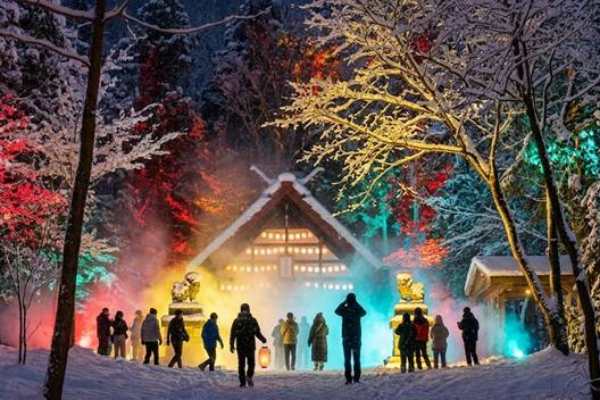
There is plenty to explore beyond the baths, too. The nearby Futami Suspension Bridge offers views over the surrounding gorge, particularly striking when autumn brings vivid colour to the valley. In warmer months, visitors can also enjoy canoeing, trekking and hiking. In winter, meanwhile, visitors can experience the atmospheric Yukitouro at Jozankei Shrine, Jozankei Gensen Park, and Tsukimi Bridge. The illuminations create a soft, magical glow that feels straight out of a fairy tale. The special nighttime viewing event is available from January 20 to February 28, 2027.