


For travellers looking to go beyond the expected, Sri Lanka offers an itinerary that is anything but conventional.
From ancient cities and wildlife-rich national parks to mist-covered tea country tropical coastlines and vibrant local food, this small island packs extraordinary diversity into a compact destination and even its most iconic attractions can be discovered in unexpected ways.
Chairman of Sri Lanka Tourism Promotion Bureau, Mr Buddhika Hewawasam said, “Sri Lanka welcomed a record 2.36 million visitors in 2025 and an additional 1.5 million visitors in the first eight months of 2026. Sri Lanka delivers an unconventional itinerary. You don’t have to choose between a cultural holiday, a beach escape, wildlife or a food journey because you can combine them all within one relatively compact country. Diversity is one of our greatest strengths, and my advice is to go now, before everyone finds out!”
One of Sri Lanka’s most recognisable landmarks, Sigiriya Rock Fortress, welcomed more than one million visitors in 2025, making it one of the island’s most visited cultural sites. It’s easy to see why; visitors who come to climb the ancient Lion Rock encounter frescoes, water gardens and sweeping views across the surrounding jungle from the summit. For travellers increasingly looking beyond the standard itinerary, the opportunity lies not in skipping Sri Lanka’s icons but seeing them from a different perspective.
The SmartFlyer’s 2027 Travel Trend Report1 points to a growing interest in original, personalised travel that moves beyond the expected itinerary, and towards more authentic experiences. For Sri Lanka this means discovering the island’s unique and lesser-known landmarks, wildlife and cultural attractions while also uncovering a different side of the destination.
Sri Lanka caters to this appetite for more individualised travel. Travellers can explore its best-known sites from a different perspective – from cycling through ancient sites and visiting iconic landmarks outside peak hours, to pairing headline attractions with lesser-known villages, trails, food experiences and wildlife encounters.
Sri Lanka’s two monsoon systems also give travellers greater flexibility when planning an itinerary. Rather than planning around a single peak season, visitors can choose different regions at different times of the year depending on whether wildlife, beaches, hiking, culture or wellness are the priority.
Wildlife is another major draw, with more than 2.6 million visits recorded across the country’s national parks and wildlife attractions in 2025, including more than 1.1 million international visitors2. While Yala National Park is renowned for its leopard sightings, Sri Lanka’s wildlife offerings extend well beyond Yala, from elephant encounters and birdlife to whale watching and the island’s diverse network of national parks.
The result is a destination where travellers don’t have to choose between Sri Lanka’s iconic sites and a more individual itinerary. From ancient cultural sites and wildlife to food, wellness and nature, the opportunity is to combine the highlights with lesser-known places and local encounters, creating a Sri Lankan journey that feels distinctly more their own.
10 Iconic Sri Lanka Experiences, Some With a Twist
- Sigiriya Rock Fortress – climb the iconic rock then explore the Cultural Triangle
Sigiriya sits within Sri Lanka’s Cultural Triangle, a geographic region containing a concentration of the country’s most important ancient cultural sites. Don’t arrive mid-morning, go early instead. Sunrise is a particularly rewarding time to climb, before the head of the day and the busiest period. The UNESCO World Heritage Site dates to the 5th century and includes the remains of a palace, elaborate water gardens and defensive structures built into and around the rock. But don’t just climb the rock, explore the wider cultural landscape around Sigiriya including Dambulla Cave Temple, Polonnaruwa and Anuradhapura.
- Dambulla Cave Temple – 150 statues of Buddha
Dambulla Cave Temple, in Sri Lanka’s Central Province is one of the country’s most important and best-preserved cave temple complexes. The UNESCO World Heritage Site comprises five natural caves, dating back over 2,000 years with more than 150 Buddha statues alongside vividly painted ceiling and wall murals depicting Buddhist stories and Sri Lankan history.
- Anuradhapura – ancient ruins, royal places and monasteries
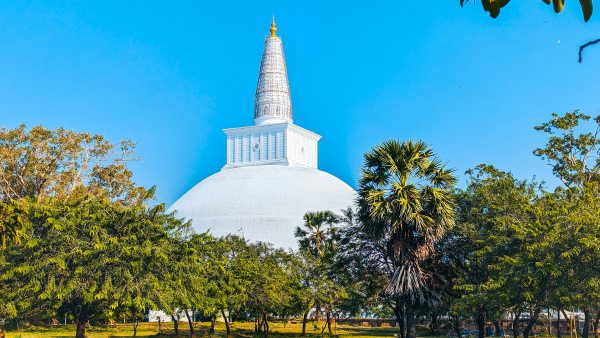
Anuradhapura was Sri Lanka’s ancient capital, established more than 2,000 years ago, and remains an important centre of Buddhist pilgrimage. It is this combination of ancient ruins and living religious traditions that sets Anuradhapura apart. The UNESCO World Heritage Site stretches across a vast area of forested parkland, with ancient ruins, royal palaces, monasteries and reservoirs best explored by bike, tuk-tuk or car rather than foot. It is also home to the Sri Maha Bodhi, a sacred fig tree grown from a cutting of the original Bodhi tree in India under which Buddha is believed to have attained enlightenment, and one of the world’s oldest historically documented trees. Anuradhapura is also famous for its enormous ancient stupas (called dagobas in Sri Lanka), large dome-shaped Buddhist monuments built to house relics of the Buddha.
- Polonnaruwa – archaeological park best explored by bike
Polonnaruwa, Sri Lanka’s second ancient capital, is a UNESCO World Heritage Site known for its well-preserved royal palaces, Buddhist stupas and intricately carved temples. Its extensive, relatively flat archaeological park is best explored by bike. Among its highlights is Gal Vihara, a group of four Buddha images carved into a single granite rock face, renowned for their intricate detail and serenity.
- Yala National Park – largest concentration of leopards
Yala National Park is Sri Lanka’s best-known safari destinations, particularly for leopard sightings, but it is far from the only place to experience the island’s wildlife. Udawalawe is renowned for its elephants, Minneriya is famous for its large elephant gatherings, while Wilpattu offers a different safari experience and the chance to see Sri Lankan leopards with fewer visitors. Yala in southeastern Sri Lanka, is also home to elephants, sloth bears, crocodiles, spotted deer and over 200 species of birds, alongside a number of historical and religious sites.
- Galle – coastal history and colonial architecture
Galle’s most famous landmark, aside from one of the most scenic cricket grounds, Galle International Stadium, is the UNESCO World Heritage-listed Galle Fort, a beautifully preserved fortified old town overlooking the Indian Ocean. This fort was founded by the Portuguese in the 16th century and later extensively developed by the Dutch. Wander its narrow cobblestone streets lined with colonial-era mansions, churches, mosques and boutiques and cafes. The fort’s ramparts offer some of the best sunset views in Sri Lanka. Jaffna in the north is less touristed but shares a similar colonial history of Dutch and Portuguese plus a strong Tamil culture. Go for the food, temples and a more local experience.
- Ella – walkable town in the tea plantations, Nine Arch Bridge and the Blue Train
Ella is a small, hill town in central Sri Lanka’s central highlands. Surrounded by Ceylon tea plantations, misty mountains and dramatic valley views, its cooler climate makes Ella one of the country’s most scenic inland destinations. The famous blue train journey into Ella is one of Sri Lanka’s signature travel experiences. The journey passes Ella’s landmark Nine Arch Bridge, a colonial-era railway viaduct. The walkable town is loved by backpackers with cafes and guesthouses and it’s a great place for hiking, check out Little Adams Peak or Ella Rock.
- Kandy – cultural heart of Sri Lanka’s hill country
Kandy is considered the cultural heart of Sri Lanka’s hill country, a lakeside city blending history, religion and mountain scenery. It is also a centre for traditional crafts, including batik and woodcarving, and home to the largest and oldest Royal Botanic Gardens in Asia. It is probably most famous for a UNESCO World Heritage temple believed to house a tooth relic of the Buddha. Its central location makes is natural stop between Colombo, the Cultural Triangle and Ella.
- Mirissa – laid back beach town for surfing and whale watching
Mirissa is a laid-back south coast beach town known for whale watching, surfing and its relaxed beach scene. The nearby breaks attract beginner and intermediate surfers, while the beach is lined with casual bars and restaurants. Coconut Tree Hill is a small headland covered in wind-bend coconut palms that has become one of the most photographed spots on the south coast at sunrise or sunset.
- Nuwara Eliya – ‘Little England’ in the tea plantations
Known as ‘Little England’ for its colonial architecture and Tudor-style buildings, Nuwara Eliya is a cool-climate hill station surrounded by tea estates and close to Horton Plains National Park. Its most famous feature is World’s End, a dramatic escarpment where the plateau drops almost 900 meters, offering sweeping views over the lowlands on a clear day.
Sri Lanka may be a relatively small island, but its extraordinary concentration of culture, wildlife, beaches and mountains makes it easy to experience several different sides of the country in a single trip. Roughly the size of Tasmania, the island makes it possible to go from safari to surf, tea country to ancient cities all within the same holiday. Getting there from Australia is also easier with Jetstar now operating a year-round direct Melbourne-Colombo service three times a week.











