

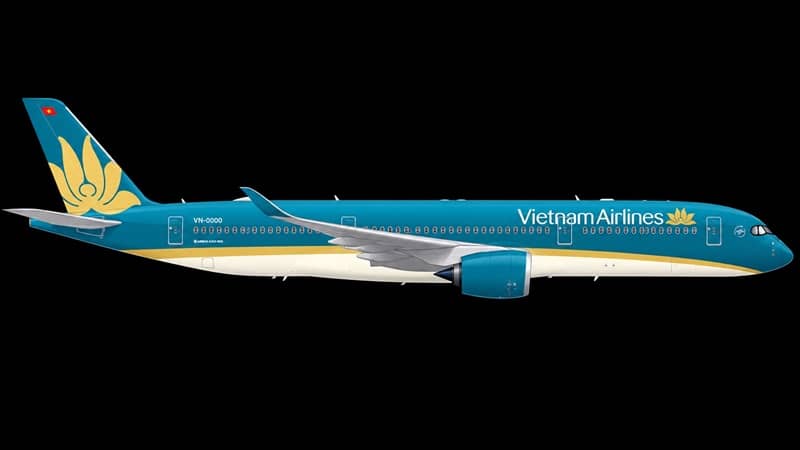
Vietnam Airlines is putting artificial intelligence, smarter payments and a much broader loyalty ecosystem firmly on its flight plan after signing new cooperation agreements with Visa and Amazon Web Services (AWS).
The national carrier exchanged Memoranda of Understanding with the two global companies during General Secretary and President To Lam’s September 2026 visit to the United States, signalling a sizeable push to connect aviation more closely with finance, tourism, data and technology.
For passengers, the ambition is straightforward, even if the technology behind it is anything but: make the journey feel less like a collection of unrelated transactions and more like one connected experience.
That means bringing booking, payment, loyalty rewards, airport services, inflight connectivity and destination experiences closer together.
In airline language, it is digital transformation. In passenger language, it means fewer bumps between buying the ticket and collecting the baggage.
Le Truong Giang, Member of the Board of Directors of Vietnam Airlines, said:
“Passengers today expect a seamless experience that extends well beyond the flight itself. Our partnerships with Visa and AWS bring together expertise in payments, technology and data, enabling Vietnam Airlines to develop more connected and personalized services while strengthening operational capabilities. These partnerships are an important step in our broader digital transformation and our ambition to deliver greater value to our customers.”
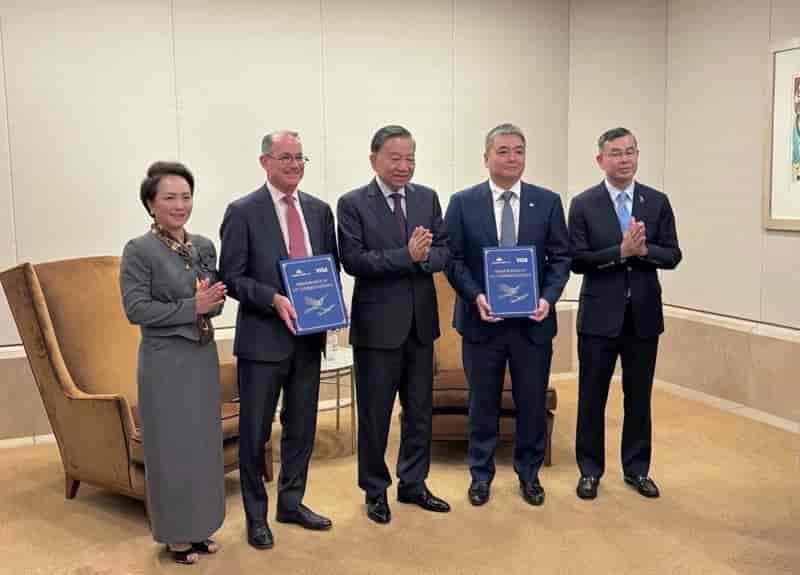
Mr. Le Truong Giang, Member of the BOD of Vietnam Airlines (second from right), and Robert B. Thomson, Senior Vice President and Global Head of Government Affairs at Visa Inc. (second from left), exchange the Memorandum of Understanding
Lotusmiles looks beyond the boarding gate
The Visa agreement could prove particularly interesting to frequent flyers and travel advisers because Vietnam Airlines plans to explore transforming Lotusmiles from a conventional frequent-flyer program into a broader travel and lifestyle loyalty platform.
The proposed expansion includes co-branded cards for domestic and international markets, with potential benefits stretching across airport services, lounges, priority check-in, dining, accommodation, shopping and travel.
That matters because airline loyalty has moved well beyond the old formula of fly, earn and redeem.
The more useful a loyalty currency becomes on the ground, the greater the opportunity for an airline to remain relevant between journeys. A member who can earn or enjoy benefits while dining, staying in a hotel or shopping is potentially far more engaged than one whose relationship with an airline begins at check-in and ends at baggage claim.
Vietnam Airlines and Visa will also explore digital payment solutions across commercial operations, agency networks and supply-chain activities.
The cooperation extends to promoting Vietnam and selected air routes in strategic markets, bringing payments, aviation and destination marketing into the same commercial conversation.
Dang Tuyet Dung, Visa Country Manager for Vietnam and Laos, said:
“Visa looks forward to working with Vietnam Airlines to explore payment and service solutions that respond to the increasingly diverse needs of today’s customers. This collaboration also creates opportunities to bring together the strengths of aviation, payments and tourism in Vietnam and international markets.”
For travel advisers, the longer-term implications are worth watching.
A broader loyalty ecosystem could give clients more reasons to select an airline beyond schedule and airfare alone, particularly higher-value travellers who increasingly expect lounge access, priority treatment and benefits that remain useful after the aircraft door opens.
AWS brings AI aboard figuratively, at least
The AWS agreement tackles the other half of the transformation: the technology underpinning the airline itself.
Vietnam Airlines and AWS intend to explore artificial intelligence and generative AI across passenger services, commercial functions, flight operations, aircraft maintenance, corporate management and data analytics.
The stated objective is not simply to install the latest fashionable technology, but to improve efficiency, decision-making and service quality.
That distinction is important.
Airlines produce enormous quantities of operational and customer data every day. Used intelligently, that data can support maintenance planning, disruption management, customer personalisation, staff support, and sharper commercial decisions.
Used poorly, of course, they merely produce a very expensive digital filing cabinet.
The partnership also covers cloud computing, enterprise data platforms, IT modernisation and cybersecurity. Inflight connectivity and digital cabin services form part of the proposed agenda, alongside digital tools designed to assist flight crews and strengthen operational capability both in the air and on the ground.
Tedd Evers, Global Partner Leader, Travel and Hospitality, said:
“Our collaboration with Vietnam Airlines aims to accelerate digital transformation, personalize the passenger experience, and enhance service excellence, supporting the airline’s ambition to become a 5-star carrier. AWS will bring its capabilities in cloud computing, advanced artificial intelligence, and data analytics, together with extensive experience working with leading airlines worldwide, to support Vietnam Airlines across three key dimensions: people, culture, and technology.”
Vietnam Airlines’ broader digital push
The latest agreements do not arrive in isolation.
Vietnam Airlines has been steadily building its digital infrastructure. In 2024, the carrier implemented the Amadeus Altéa Passenger Service System, providing technology for areas including reservations, ticketing, inventory and departure control.
In 2025, Vietnam Airlines also moved to integrate biometric identification through Vietnam’s VNeID platform for domestic passenger processing, allowing eligible travellers to complete parts of the airport journey using electronic identification and facial recognition.
The digital momentum continued in 2026.
Vietnam Airlines reported that it had brought its private-cloud platform into operation and launched a redesigned website incorporating an AI chatbot. Its wider strategy includes cloud technology, big data, customer-data platforms, AI and automation across operational and management functions.
Taken together, the Visa and AWS agreements therefore look less like a sudden technology shopping spree and more like another layer of a longer-term transformation.
Commercially, the logic is easy to spot.
Vietnam Airlines is competing in one of the world’s most dynamic aviation regions, where digital convenience, loyalty sophistication and service quality can influence customer choice almost as much as the seat itself.
From airline to travel ecosystem
There is, naturally, considerable distance between signing a Memorandum of Understanding and delivering a finished passenger product.
Co-branded cards must be developed. Technology has to be integrated. Data must be governed. Systems need to be secured. Staff need training, and customer-facing benefits need to prove useful, not just clever.
AI, in particular, is only as valuable as the data, safeguards and operational discipline sitting behind it.
But the direction is unmistakable.
Vietnam Airlines is trying to move beyond being simply an airline that sells flights and toward becoming a travel platform that stays connected with customers before departure, throughout the journey, and after arrival.
Visa brings the opportunity to broaden payments and loyalty. AWS brings cloud, data and AI capability. Lotusmiles potentially becomes the bridge connecting them to the passenger.
If those elements come together, the result could make Vietnam Airlines a more formidable competitor for travellers across Asia and beyond.
And perhaps the cleverest technology will ultimately be the technology passengers barely notice.
The booking works. The payment clears. The lounge benefit appears. The connection stays on. The disruption is handled intelligently.
No fireworks. No computer-science degree required.
In aviation, that may be the smartest digital trick of all: making a highly complicated airline feel remarkably simple.
Further information: Vietnam Airlines official website.
By: Christine Nguyen – © 2026.
Read Time: 5 minutes.
Author Bio:
 Christine’s story is one of quiet courage, told without fuss and lived with remarkable grace. She arrived in Australia as a young refugee from Vietnam, carrying little more than hope, family, and a curiosity that refused to be extinguished. Sydney became home, built patiently, brick by careful brick.
She studied Tourism at TAFE and soon found her place in inbound travel, working with one of the city’s leading destination companies. Christine loved showing visitors the Australia that lives beyond postcards, warmer, truer, and far more interesting.
When the sea began to whisper, and life asked for a gentler rhythm, she listened. Designing brochures, writing blogs, she discovered storytelling waiting quietly inside her.
Today, at Global Travel Media, Christine writes with warmth and wisdom, reminding us, softly and persuasively, why travel still matters.











