

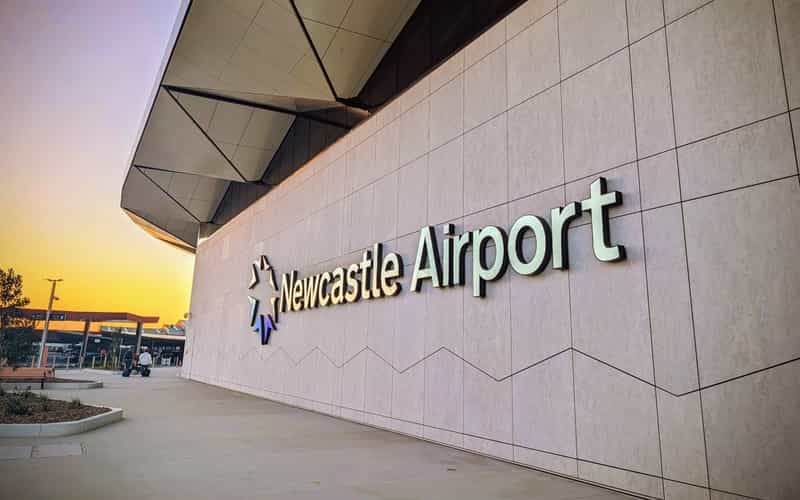
The Hunter is going to Singapore with more than a glossy sales pitch. It is taking a regional economy worth more than $95 billion. It also brings a new international terminal and a clear aim. Win more trade, investment, visitors and air links.
Newcastle Airport will lead a 20-member Hunter group from 27 September to 2 October 2026. The group brings together business and government leaders. Tourism, education and industry are also on board. Newcastle Airport’s latest release confirms both the 20-strong delegation and those travel dates.
The message is simple. The Hunter wants to be seen as one strong region. It wants Asian firms and investors to look beyond Sydney. The case is a large, skilled market with room to grow.
A $95bn region goes looking for growth
The trip comes at a useful time for Newcastle Airport.
Its expanded international terminal opened in 2025. Runway works also raised the airport’s capacity. It can now handle larger Code E aircraft, opening the door to bigger long-haul services. Australian Government figures say the terminal and runway investment is expected to help generate $12.7 billion in Hunter economic activity over 20 years.
Newcastle Airport says the Hunter has more than $95.6 billion in annual gross regional product. It is also home to more than 59,500 businesses.
That gives the delegation plenty to talk about before anyone opens a PowerPoint deck.
Airport CEO Linc Horton said the mission followed talks with Hunter firms about Singapore. The airport asked about current links and growth plans. It also asked what holds firms back.
“We already knew the importance businesses place on improved international air connectivity from Newcastle but we also found considerable interest in deeper trade, investment and business relationships with Singapore and other Asian markets,” Horton said.
The air link question will get close attention.
Newcastle already has four Jetstar services a week to Singapore via Bali. The trip is sold as one booking. There is a stop in Bali. Passengers stay on the same aircraft.
It is a useful option for Hunter travellers. It also avoids the long road trip to Sydney Airport.
But it is not a non-stop Newcastle–Singapore flight.
That point matters. Newcastle now has the airport base for larger overseas aircraft. The next job is to build demand for more routes. In time, that may support a non-stop link to a major Asian hub.
Newcastle Airport currently lists the Jetstar Singapore service as operating four times weekly, with an approximately 90-minute stop in Bali and passengers remaining aboard the same aircraft.
Horton said using Sydney or another Australian gateway adds “time, cost and complexity” for firms doing business overseas.
Singapore is more than an airline pitch
Singapore is a logical place to make the case.
The Department of Foreign Affairs and Trade describes Singapore as Australia’s largest two-way trading partner in Southeast Asia and its largest investor from Southeast Asia. Two-way trade was worth $47.4 billion in 2024, according to DFAT. The two nations also have an expanded Comprehensive Strategic Partnership covering 2025 to 2035.
So this is not just an airline sales call.
Business Hunter CEO Bob Hawes said local firms had shown interest in joint ventures, new partners, investment and export growth.
Work done before the trip found Hunter firms already linked to Singapore. Those links include food and drink, wine, logistics, environmental technology and biotechnology.
“We will arrive in Singapore ready to showcase the Hunter’s capability, pursue genuine commercial opportunities and help open the right doors,” Hawes said.
The Melt, a Hunter innovation and advanced manufacturing hub, is also making the case for better links.
Its co-owner and chief operations officer Brett Thomas said better air access could help local firms reach Asian markets and investors faster.
“Establishing direct flight paths between Newcastle and Singapore would be a game-changer for our innovation ecosystem,” Thomas said.
The group includes Horton and Hawes. Port Stephens Mayor Leah Anderson and Newcastle Lord Mayor Gavin Morris will also attend. Committee for the Hunter CEO Alice Thompson will also take part. So is Dantia CEO Tim Browne. The University of Newcastle will also be represented.
What it means for travel and tourism
Tourism is firmly on the agenda.
Port Stephens is one of the Hunter’s best-known visitor areas. Anderson said the mission would promote tourism growth, property projects, key infrastructure and eco-tourism.
For the travel trade, that is where the story gets wider.
A new air route does more than help an airport. It can lift hotel stays, touring, events and visitor spend. It can also make it easier for local people and firms to reach Asia.
Travel advisors may see benefits on both sides.
Better links could help sell the Hunter to Asian visitors. They could also make Newcastle a stronger starting point for trips out of Australia.
Morris said the goal was to present Singapore with one clear regional voice.
“Singaporean leaders have told us they want to deal with the Hunter as a region, with one strong, coordinated voice,” Morris said. “So our mission is simple: we’re going there to sell the Hunter, together.”
Newcastle City Council had already endorsed Morris’s participation in the inaugural mission at its August meeting.
The NSW Government has also tied the trip to jobs, trade and new capital.
Minister for Industry and Trade Anoulack Chanthivong said the visit would promote the Hunter. It would also seek new business links. Minister for the Hunter Yasmin Catley pointed to the region’s size and broad industry base.
The wider trade setting also helps.
In July 2026, Australia and Singapore signed a new Protocol on Economic Resilience and Essential Supplies under the Singapore-Australia Free Trade Agreement. It is designed to improve cooperation when vital supply chains are disrupted.
That adds to a long trade link between the two nations.
Now comes the hard part
Trade missions are easy to photograph. Their value takes longer to prove.
For the Hunter, the real test will be deals, new capital, export growth, visitors and better air links.
Newcastle Airport has already done much of the heavy lifting on the ground. The terminal is open. The runway can take larger aircraft. Jetstar already offers a same-plane service to Singapore via Bali.
The next step is to turn that base into stronger demand.
That is the pitch going to Singapore.
It is not just an airport asking for another route.
It is a $95 billion-plus regional economy asking Asia to take a closer look.
By: Christine Nguyen – © 2026.
Read Time: 4 minutes.
Author Bio:
 Christine’s story is one of quiet courage, told without fuss and lived with remarkable grace. She arrived in Australia as a young refugee from Vietnam, carrying little more than hope, family, and a curiosity that refused to be extinguished. Sydney became home, built patiently, brick by careful brick.
She studied Tourism at TAFE and soon found her place in inbound travel, working with one of the city’s leading destination companies. Christine loved showing visitors the Australia that lives beyond postcards, warmer, truer, and far more interesting.
When the sea began to whisper, and life asked for a gentler rhythm, she listened. Designing brochures, writing blogs, she discovered storytelling waiting quietly inside her.
Today, at Global Travel Media, Christine writes with warmth and wisdom, reminding us, softly and persuasively, why travel still matters.











