

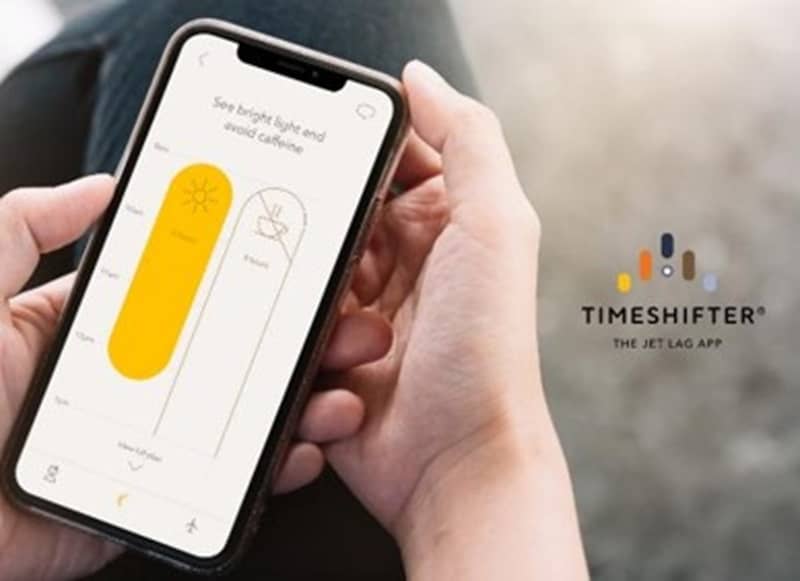
oneworld® has announced it is helping customers adjust to new time zones faster and lose fewer days to jet lag on Round the World journeys through a new partnership with Timeshifter, described as the world’s most-downloaded jet lag app, with more than 1.7 million users.
Effective immediately, customers who purchase Round the World trips on oneworld.com will receive a complimentary Timeshifter subscription that covers their entire itinerary, including every flight and time zone shift from departure to final return.
Roger Blackburn, vice president of Loyalty and Commercial for oneworld, in remarks from the stage at the oneworld Loyalty Summit in Dallas/Ft. Worth, said, “Our partnership with Timeshifter will help Round the World customers arrive ready to enjoy each new destination by supporting better sleep and faster adjustment to new time zones,” adding, “Jet lag has a significant impact on health and wellbeing”, and “This new partnership provides oneworld an opportunity to do what we do best: deliver a premium, elevated experience at every opportunity along the journey.”
Timeshifter is reported to be based on the latest circadian science, and advice is personalised to each customer’s flight itinerary, typical sleep pattern, chronotype and personal preferences.
Mickey Beyer-Clausen, CEO of Timeshifter, said, “Timeshifter is trusted by astronauts, Formula One teams and professional athletes, and we are excited to be working with oneworld to provide this same circadian science to oneworld ‘s customers, improving their health and enjoyment when they cross time zones,” adding, “Air travel has optimised nearly every part of flying except for what crossing multiple time zones can do to the traveller – a gap our partnership with oneworld will help to close.”
What is jet lag?
Jet lag is not a sleep problem but a temporary misalignment between a person’s internal circadian clock and local time at their destination.
The circadian clock keeps sleep, alertness, digestion, immune function, and dozens of other systems synchronised to a 24-hour day, using light and darkness as cues.
When travellers cross several time zones, the light-dark cycle shifts by hours, while the circadian clock moves only about an hour a day on its own.
The only way to adjust to new time zones quickly is by timing light exposure and light avoidance precisely. If the timing is wrong, it will make jet lag worse.
By: John Alwyn-Jones – © 2026.
Read Time: 3 minutes.
Author Bio:
 John Alwyn-Jones is one of those rare figures who can make the business of travel sound positively adventurous.
A lifelong communicator with the polish of a broadcaster and the curiosity of a journalist, he’s spent decades shaping stories and strategies across tourism, aviation, and the cruise world. He’s led from the front as CEO, director, mentor and advisor and still manages to bring warmth and wit to every boardroom and microphone.
Known for his sharp insight into global cruise lines and destinations, John has an old-school belief in professionalism, tempered with the sparkle of someone who’s genuinely seen the world. He’s not just in the business of travel; he’s made it an art form.











