

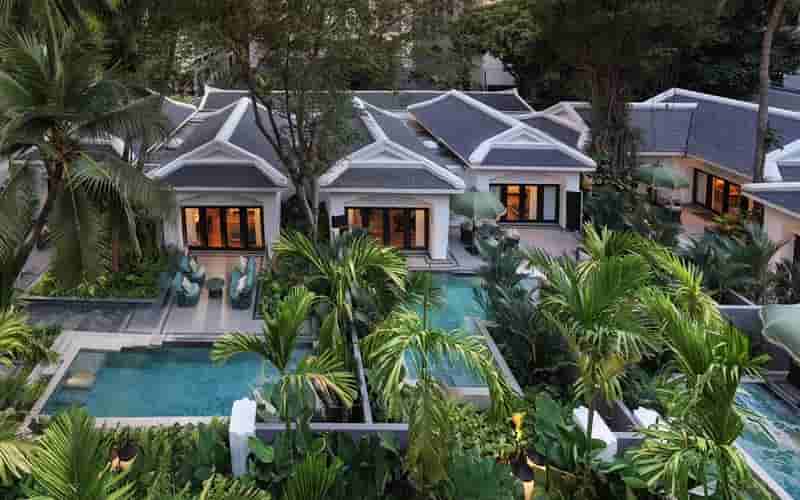
Bangkok has plenty of hotels that like to call themselves icons. Anantara Siam Bangkok has a stronger claim than most. It has the history, the architecture and one of the city’s best-known central addresses. Now, after a US$50 million transformation, the 43-year-old landmark has stepped confidently into a new era.
Minor Hotels unveiled the reimagined property on 9 September 2026 after a major enhancement programme first announced in 2025. The work reaches across all 335 guestrooms, suites and villas, as well as the lobby, spa, fitness areas, restaurants, bars, ballroom and meeting spaces.
That is serious money, even in the rarefied world of five-star hotels. It is also a fairly emphatic show of faith in Bangkok’s luxury hospitality market.
A Bangkok favourite brought carefully into the future
The hotel officially opened on 15 April 1983 at 155 Rajadamri Road and was designed by noted hotel architect George Wimberley. Over the decades, its appeal has rested on Thai art, warm teak, garden courtyards and that increasingly rare luxury-hotel commodity: a genuine sense of place.
The transformation has wisely resisted the temptation to erase that history. Instead, many of the features that made the property recognisable in the first place remain firmly on duty.
A sensible decision, really. Fashion dates quickly. Fine craftsmanship, graceful proportions and proper Thai hospitality tend to have a rather longer shelf life.
One of the most important survivors is the vast hand-painted artwork around the lobby. Minor Hotels describes a 100-metre mural associated with Thai muralist Paiboon Suwannakudt, together with 19 ceiling panels depicting the “Heavens in Thai Thought”.
A fascinating historical footnote emerges here. Scholarly research published in The Journal of the Siam Society records that the hotel commission was Paiboon’s final project and that his daughter, Phaptawan Suwannakudt, and his workshop completed it after his death in 1982. That is an important piece of history and is worth preserving accurately, rather than letting a good story become a convenient one.
The mural has been retained as part of the restoration. It matters because this lobby is much more than a place to collect a key card.
For generations of returning guests, it has been part of the hotel itself.
The project has been guided by the theme “Transformed. Timeless. Thai.” It neatly sums up the challenge: bring the property thoroughly up to date without polishing away the very character that persuaded guests to return.
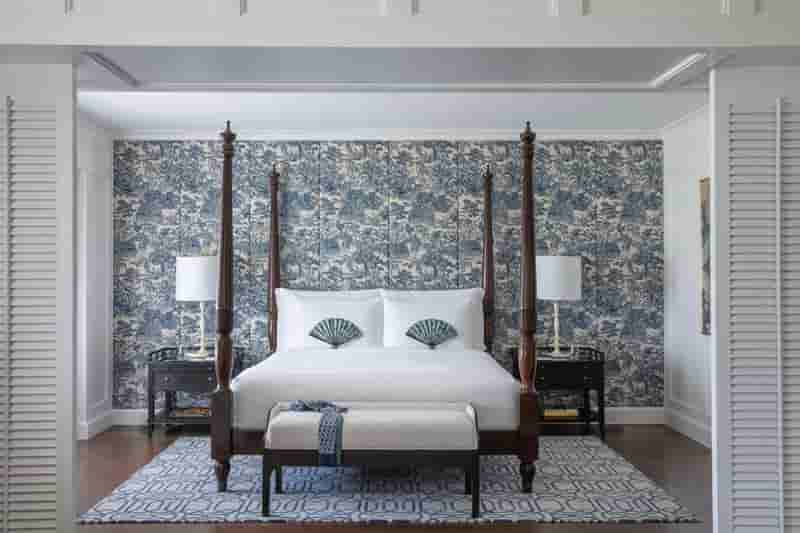
Anantara Siam Bangkok Hotel Guest Room Two Bedroom Jim Thompson Explorer Suite King Bedroom
All 335 rooms get a new look
The most commercially important part of the transformation is, naturally, upstairs.
All 335 guestrooms, suites and villas have been reworked with a contemporary interpretation of Thai design. Teak, silk, handcrafted details and calm residential tones feature throughout, while bathrooms have received marble finishes, new vanities, enhanced lighting and modern fittings.
The accommodation range begins with refreshed Deluxe and Siam rooms and rises through larger suites to serious residential-style territory.
At the upper end, the Garden Pool Suites and Villas give Anantara Siam a stronger resort-within-the-city proposition. Private pools, tropical gardens and indoor-outdoor living deliver a degree of privacy more often associated with a beach resort.
Yet guests remain in central Bangkok, close to Ratchaprasong, major shopping centres, business districts and the BTS Skytrain. The hotel’s official factsheet places Ratchadamri station directly beside the property.
That combination could prove one of the transformation’s cleverest moves.
Luxury travellers increasingly want privacy and space, even on an urban break. A private pool without several hours in Bangkok traffic is not a bad solution.
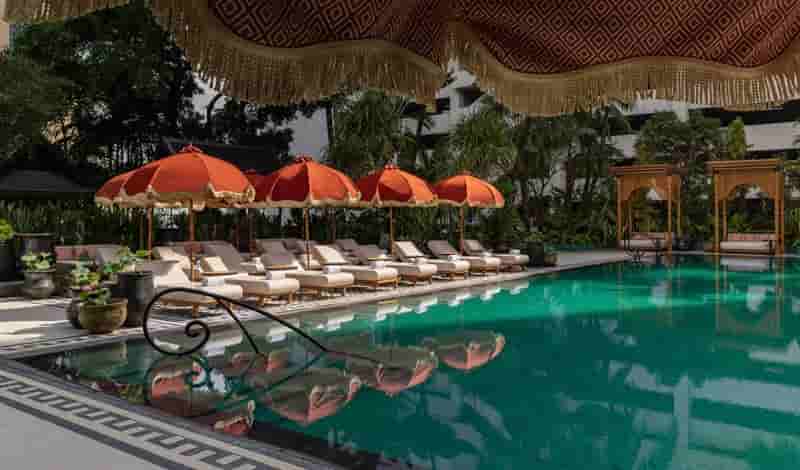
Pool at Anantara Siam Bangkok Hotel
Jim Thompson adds silk, story and substance
One of the headline additions is the Two Bedroom Jim Thompson Explorer Suite.
Created in partnership with Jim Thompson, the 198-square-metre suite draws inspiration from a Thai summer home. It features polished teak flooring, painted panelled walls, curated artwork, expansive living and dining areas and a private library.
The collaboration makes commercial and creative sense.
Jim Thompson remains one of the world’s most recognisable names associated with Thai silk and design. Anantara, meanwhile, has built much of its brand identity around destination, culture and local experience.
Put the two together, and the hotel gets something rather more useful than merely another very large suite.
It gets a room with a story.
And in contemporary luxury travel, a memorable story can matter almost as much as the thread count.
Nine venues keep food and drink firmly on the agenda
Food and beverage remains a major weapon in Anantara Siam’s armoury, with nine restaurants and bars spanning Thai, Italian, Japanese, steakhouse, South American and more casual dining.
Spice Market remains the Thai flagship, while Biscotti delivers contemporary Italian cuisine and Shintaro covers Japanese dining. Madison Steak Avenue looks after those who believe vegetables are primarily decorative, while Guilty Bangkok brings a more exuberant South American influence.
Mocha & Muffins, The Lobby and The Garden Terrace cover the daytime, afternoon-tea and poolside shifts.
Then there is AQUA Bar.
It now has rather more than refreshed décor to talk about. In July 2026, AQUA made its debut on Asia’s 50 Best Bars at No. 48, placing the hotel firmly on the regional cocktail map.
That gives Anantara Siam a valuable point of distinction in a Bangkok market where outstanding bars are hardly endangered species.
AQUA’s courtyard setting also reinforces the thinking behind the wider hotel transformation. The greenery, gardens and established architecture remain, while the product operating within them has become distinctly more current.
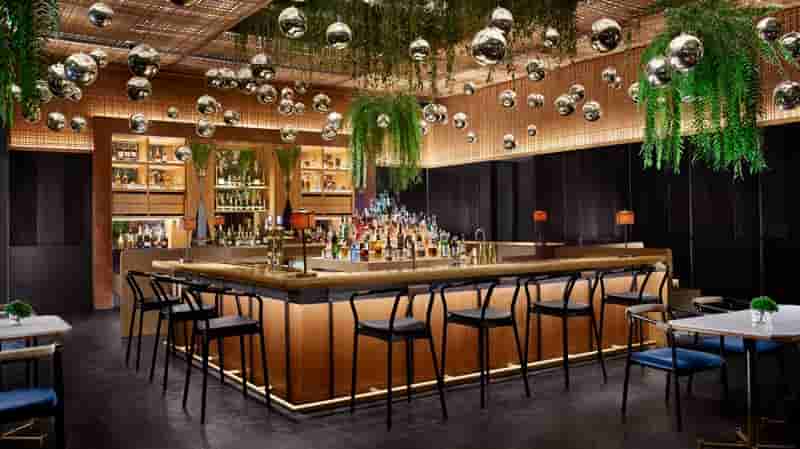
AQUA Bar Bangkok at Anantara Siam Bangkok Hotel
Meetings, events and wellness get equal attention
The investment is not aimed solely at holidaymakers.
Anantara Siam’s Grand Ballroom and broader collection of meeting and event spaces have also been redesigned, with upgraded technology supporting conferences, weddings, gala dinners and corporate events.
That matters in Bangkok, where luxury hotels compete for regional meetings, incentive groups, weddings, and major celebrations.
A beautiful ballroom is useful.
A beautiful ballroom equipped with modern technology and connectivity is considerably more useful.
Wellness has also climbed the priority ladder.
The Anantara Spa has been transformed, while the Siam Sports Club now features a Technogym-equipped fitness centre and a dedicated Pilates studio.
Outside, things get more energetic, with a Muay Thai boxing ring, rock-climbing wall, and functional training zone as part of the enhanced wellness facilities.
It is certainly an improvement on the traditional hotel-gym formula of two treadmills, one lonely exercise bike and a television nobody quite knows how to switch off.
The real asset is heritage
General Manager Torsten Richter has consistently described the project as a balancing act between progress and preservation.
When the transformation was originally announced in 2025, Richter said: “This transformation marks a defining moment in Anantara Siam’s journey.”
He was equally clear about where management believes the opportunity lies: “We believe there is still extraordinary growth potential in Bangkok’s luxury hospitality segment.”
The US$50 million investment puts considerable financial muscle behind that confidence.
Bangkok’s luxury hotel market is crowded, sophisticated and fiercely competitive. New openings have the obvious advantage of freshness.
Established hotels must offer something different: reputation, service, location and a sense that the building has accumulated stories worth knowing.
Anantara Siam has all four.
Its challenge was never to become new.
It was to become current.
The US$50 million programme appears to have tackled that assignment firmly. Rooms are fresher. Bathrooms are sharper. Wellness has considerably more depth. Event spaces have been upgraded. Private-pool accommodation creates a genuine urban-resort option, while the Jim Thompson partnership gives the suite product an unmistakably Thai point of difference.
Just as importantly, the murals, courtyards and visual language that have defined this Bangkok address remain.
That is how a landmark should be renovated.
Fix what has aged. Improve what today’s guest expects. Add technology where it is genuinely useful.
And, for heaven’s sake, don’t throw out the soul with the old carpet.
For travel advisers, event planners and luxury travellers, the transformed Anantara Siam Bangkok Hotel provides a compelling reason to look again.
It isn’t pretending it was built yesterday.
It is attempting something considerably more difficult: carrying more than four decades of Bangkok hotel history into the future without becoming trapped by its past.
For hotel details, accommodation and bookings, visit the official Anantara Siam Bangkok Hotel website.
By: Prae Lee – © 2026.
Read Time: 6 minutes.
Author Bio:
 You can tell a great deal about a person by how they meet a Bangkok morning. Prae Lee doesn’t charge into it; she glides, unhurried, as if time itself has agreed to behave. There is a calm assurance about her, the sort earned by knowing both your roots and your destination.
A graduate of Chulalongkorn University, she took her business degree with quiet pride, then polished it further in Singapore and Australia. Travel didn’t change her. It refined what was already there: curiosity, discipline, grace.
Back in Bangkok, she slipped modern life into the family business, mastering social media with an instinct for listening and selling with Thai gentleness.
Prae never seeks attention, yet everything she touches grows brighter.
Now with Global Travel Media, she writes with authenticity, drawing on culture, travel and a rare, steady confidence.











