

Bangkok has never been a city that whispers about food. It sizzles, steams, pounds, grills and occasionally sets your taste buds alight without offering so much as an apology.
Yet, several floors above the familiar commotion of Phloen Chit Road, Paste Bangkok delivers something more measured. On the third floor of Gaysorn Village, the restaurant transforms Thailand’s culinary history into an elegant, deeply flavoured dining experience.
Paste is not merely another polished Bangkok dining room decorated with handsome glassware and ambitious plates. It is the flagship restaurant of celebrated Thai chef Bongkoch “Bee” Satongun, whose cooking is grounded in historical research, regional ingredients and a determination to preserve recipes that might otherwise quietly disappear.
That purpose is evident throughout the meal.
A serene escape above Bangkok
Walking into Paste feels like leaving Bangkok’s traffic several floors—and possibly several emotional states—below.
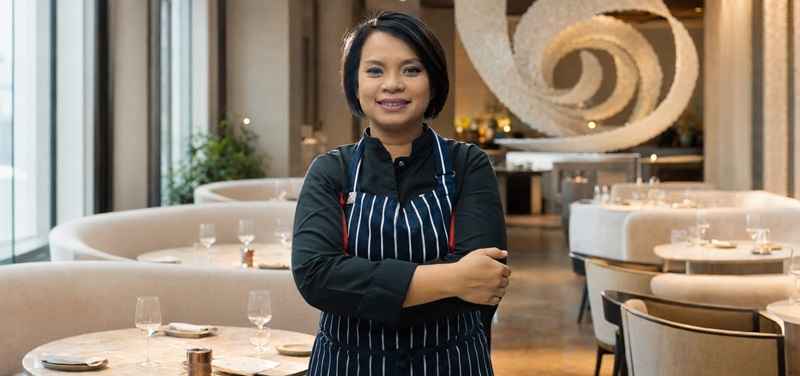
The dining room is light, contemporary and reassuringly calm. Curved seating, floor-to-ceiling windows and a dramatic spiral silk cocoon sculpture give it a distinctive identity. The Michelin Guide aptly compares the intricacy of the cooking with that striking centrepiece.
The restaurant is elegant without becoming ostentatious. More importantly, it is comfortable. Paste does not make diners feel as though they have accidentally wandered into an art gallery and must sit bolt upright for fear of disturbing an exhibit.
The staff are attentive, informed and polished, yet the atmosphere remains warm. Each course is introduced with sufficient detail to explain its ingredients and historical inspiration without turning dinner into a university lecture.
This balance matters because there is a considerable amount of history on the plate.
Thai flavours with their backbone intact
Chef Bee’s cuisine draws inspiration from royal Thai recipes, aristocratic family cookbooks and regional culinary traditions. However, Paste is not trying to reproduce a palace banquet beneath museum lighting.
Instead, historical dishes are reinterpreted using modern techniques and elegant presentation while retaining their essential Thai character.
Chef Bee has described her approach as preserving approximately 80 per cent of a traditional dish and reserving 20 per cent for innovation. It is a sensible calculation—and considerably more appetising than most mathematics.
“We innovate about 20 per cent and we keep 80 per cent of the traditional dish,” Chef Bee told The World’s 50 Best Restaurants.
The opening courses immediately revealed that philosophy. Aromatic herbs, roasted coconut, chilli, ginger and galangal arrived in carefully balanced combinations. Nothing tasted timid, yet no single ingredient elbowed everything else off the plate.
Thai cuisine depends upon balance, but balance should never be mistaken for bland restraint. Sweetness, acidity, salt, spice and bitterness must all know when to advance and when to retreat. At Paste, they appeared to have rehearsed.
A soufflé that remembers where it came from
The hor mok soufflé with red grouper was one of the meal’s most refined expressions.
Traditional hor mok is a steamed curry custard commonly prepared with fish, coconut and aromatic herbs. Paste’s presentation was considerably more polished, but the dish retained the warmth, fragrance and depth that give the original its identity.
The red grouper brought substance and delicacy, while coconut and spice created a texture that was light without becoming insubstantial. It was elegant, certainly, but it still tasted unmistakably Thai.
That distinction is vital. Refinement can sometimes remove the very qualities that made a traditional dish worth refining. Paste avoids that trap.
Southern curry makes its presence felt
The smoky southern yellow curry with blue crab and Thai samphire was another highlight.
This curry wasn’t designed simply to soothe. It possessed maritime sweetness, earthy turmeric and a slowly building heat that arrived politely before making itself entirely at home.
The blue crab remained the hero, supported by spice and the salty freshness of samphire. The curry was rich without becoming heavy and powerful without obliterating the delicate seafood.
One mouthful encouraged another, which is generally a more reliable recommendation than any framed certificate.
The dish appears on Paste’s current tasting and à la carte menus, though the restaurant cautions that selections can change with market availability and produce quality. That flexibility is sensible in a kitchen so dependent upon fresh regional ingredients.
Hang Lay brings northern warmth
The Northern Shan-style hang lay curry delivered a darker, earthier mood.
Paste’s current version features slow-cooked pork belly with pickled garlic. The meat was wonderfully tender, with enough richness to carry the curry’s warm spices. Pickled garlic provided acidity and lift, preventing the dish from becoming overly heavy.
It was robust, comforting and unmistakably northern in spirit. This was fine dining with its sleeves rolled up: beautifully presented, but still determined to satisfy.
The kitchen also offers a separate 12-hour-braised Australian beef cheek dish accompanied by fermented chilli paste, roasted mushroom and soy sauce. Diners should not confuse it with the pork-based hang lay, although both demonstrate the restaurant’s command of slow cooking and layered savoury flavours.
Texture is treated as an ingredient
Paste excels not only at flavour but also at texture.
Crisp garnishes meet tender seafood. Fresh herbs brighten slow-cooked sauces. Creamy coconut preparations are sharpened by citrus, chilli or pickled ingredients. These contrasts prevent the richer courses from becoming exhausting.
Even the smaller elements earn their place. There is little evidence of a garnish being added simply because someone in the kitchen discovered a pair of tweezers.
The visual presentation is undeniably modern, yet the plates never feel engineered solely for social media. They are attractive because the food has been thoughtfully constructed—not because dinner wishes to become an influencer.
Paste offers both tasting and à la carte menus. Its official menu page describes the cooking as “a symphony of spice, balance, and botanical brilliance”.
That may be grand language, but the kitchen does a convincing job of earning it.
Chef Bee Satongun: preserving flavour, not embalming it
Chef Bee’s personal story is central to Paste.
She grew up around her family’s food business and, from a young age, helped her mother prepare curry pastes and other dishes. After initially working outside professional cooking, she returned to the kitchen and built her career alongside her Australian-born husband and fellow chef, Jason Bailey.
According to Paste Bangkok, the couple spent nine years operating Thai restaurants together before opening the first Paste restaurant in 2013. They later opened Paste at Gaysorn Village in 2015.
Chef Bee’s achievement isn’t simply discovering old recipes. The real skill lies in understanding why they worked, identifying the flavours essential to their character and making them accessible to modern diners without stripping away their identity.
She was named Asia’s Best Female Chef in 2018, while Paste reached No. 28 on the Asia’s 50 Best Restaurants list in 2019. The World’s 50 Best Restaurants continues to recognise the restaurant’s contribution to Thai dining.
Paste is also included in the 2026 Michelin Guide Thailand. The guide praises its intricate cooking, royal Thai influences, century-old techniques, local ingredients and accomplished service.
The restaurant was awarded a Michelin star in earlier editions of the guide. Its current 2026 listing, however, does not show a star, so Paste should be described as Michelin-selected rather than currently Michelin-starred.
Accolades tell only part of the story. Chef Bee’s greater contribution is her insistence that traditional Thai cooking deserves patience.
Curry pastes must be prepared properly. Sauces require time. Aromatic ingredients need to be handled with knowledge, not thrown together in the hope that a heroic quantity of chilli will conceal the evidence.
In an age when “modernisation” can mean reducing dinner to foam, droplets and a lengthy explanation, Paste’s approach is reassuring. Its presentation may be contemporary, but its flavours remain gloriously substantial.
Dessert provides a graceful finale
Dessert continued the kitchen’s fascination with Thai ingredients and contrasting textures.
Paste’s current selection includes smoked coconut noodles with palm-sugar sabayon, lemon basil seeds and dried pineapple. Another option combines blood-orange sorbet with hibiscus, plum, longan, chilli-seasoned guava and aquafaba meringue.
These desserts are creative without becoming peculiar for its own sake. Coconut, tropical fruit and aromatic accents provide a refreshing finish rather than a brutal dose of sweetness.
That lightness is welcome after the cumulative richness of the savoury dishes. It also proves that Paste understands the rhythm of a complete meal. A finale should leave diners satisfied, not requiring mechanical assistance to leave the dining room.
The verdict
Paste Bangkok is ideal for travellers wishing to understand Thai cuisine beyond its most familiar international exports.
There is certainly no disrespect to a fine pad Thai eaten beside a busy Bangkok street. The city would be poorer without it. Paste simply opens another, equally important door.
Behind that door are regional traditions, royal and aristocratic recipes, indigenous ingredients and flavours shaped by generations of Thai cooks. Chef Bee Satongun treats that inheritance with respect, intelligence, and enough confidence to let it evolve.
Dining here is refined but never bloodless. The chilli retains its authority, the herbs remain fragrant, and the curries arrive with their backbone firmly intact.
Paste is therefore more than an elegant Bangkok restaurant. It presents a persuasive argument that culinary heritage should be cooked, eaten, enjoyed and passed forward—not sealed behind glass.
May’s rating: 9/10
Restaurant details
Restaurant: Paste Bangkok
Chef: Bongkoch “Bee” Satongun
Cuisine: Heritage-inspired creative Thai fine dining
Address: 3rd Floor, Gaysorn Village, 999 Phloen Chit Road, Lumphini, Pathum Wan, Bangkok 10330, Thailand
Opening days: Monday to Sunday
Lunch: Noon–3.30 pm
Dinner: 6–11 pm
Telephone: +66 (0)2 656 1003
Email: [email protected]
Website: Paste Bangkok
Dress code: Smart casual
Reservations: Strongly recommended
Price category: Premium fine dining; current menus and prices should be confirmed when booking
Best for: Culinary travellers, couples, celebrations and business dining











