


Qantas has posted a solid $2.064 billion underlying profit before tax despite a sharp rise in fuel costs. New aircraft, better cabins and loyalty upgrades now lead its next act.
Qantas Group has closed a tough year with strong profit and higher revenue. Yet its fuel bill took a heavy toll. The result sets up a year of rapid fleet change, new routes and fresh benefits for passengers.

The Street during the FY26 results presentation in Mascot
The Group reported an underlying profit before tax of $2.064 billion for the year to 30 June 2026. That was $330 million below FY25. Statutory profit before tax fell to $1.828 billion. Statutory profit after tax fell to $1.289 billion. Revenue, though, rose from $23.823 billion to $25.516 billion.
Qantas uses underlying PBT as its main management measure. It is not a statutory accounting measure. The Group excluded $236 million of items from this figure. They included $114 million for the Qantas Flight Credits Class Action and $48 million for the Jetstar Asia closure. They also included $33 million for a restructure, $26 million for the FY25 staff share award and $15 million for the cyber incident.
In short, Qantas sold more but kept less. Fuel was the main culprit, though it wasn’t the only pressure.
That makes the word “strong” worth a closer look. This was not a record profit. It was, however, a solid result in a year marked by high fuel prices and conflict in the Middle East. Qantas said management steps cut the net earnings hit from higher annual fuel costs to $420 million.
Qantas Group CEO Vanessa Hudson called FY26 “another year of progress”. She said customer satisfaction was at its highest in a decade and described operational performance as world-leading.
The figures are set out in the Qantas FY26 results and the official Qantas market release. The filing also appears on the ASX Qantas announcements page. All dollar figures in this report are Australian dollars unless stated otherwise.
Fuel sends the bill sky-high
The Group’s total fuel cost reached $5.7 billion in FY26. The rise in the second half alone was $610 million. Hedges on Brent crude oil saved $400 million, but they could not fully offset the shock.
Qantas said jet-fuel refining margins rose from US$20 a barrel in February to a peak of about US$120. That is the sort of climb no airline wants to see unless it is on the altimeter.
Management changed fares and cut or moved capacity. It sent aircraft to routes where demand held up best. Qantas added almost 16,000 seats to Europe in the fourth quarter as travellers avoided the Middle East.
The move paid off on key European links. Qantas filled 90 per cent of seats across its London, Paris and Rome services in that period. Premium-cabin revenue rose 15 per cent. That was twice the growth rate in Economy.
The message for travel sellers is clear. Demand at the top end remains firm. Many customers will still pay for space, privacy and a sound sleep at 35,000 feet. A glass of something civilised rarely hurts either.
Domestic market stays firm
Group Domestic produced $1.44 billion in Underlying EBIT. EBIT is profit before interest and tax. Qantas Domestic revenue rose 5 per cent on 3 per cent more capacity.
Leisure travellers and small firms drove demand for much of the year. The resources market within Western Australia also held up. Large companies and government clients became more cautious late in FY26. Conflict in the Middle East and a softer economy prompted some to trim travel budgets.
Holiday demand was harder to shift. Australians may delay a new sofa, but many still guard the annual break with admirable resolve.
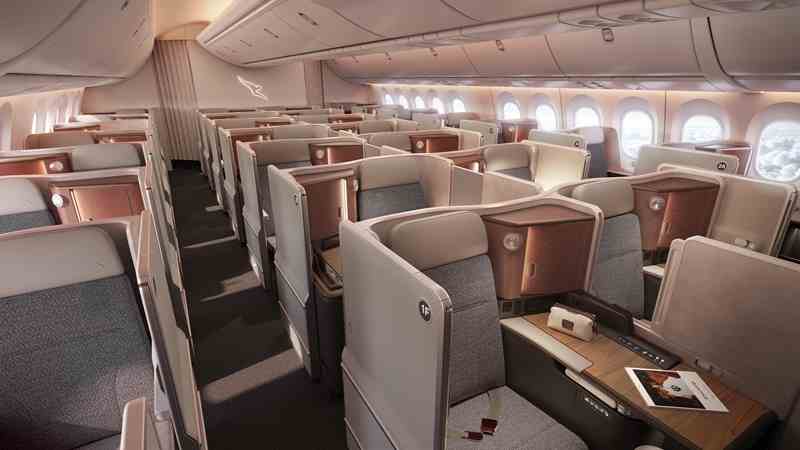
787 Cabin Overview
Qantas said almost 85 per cent of its domestic flights left on time in June. It also posted its best domestic Net Promoter Score in a decade. Net Promoter Score, or NPS, is a common measure of whether customers would recommend a brand.
The airline also called its June punctuality world-leading. That is Qantas’s own comparison with other large airlines, not a single audited global league table. Even so, the rise in on-time performance and customer scores matters. Both had become sore points after the pandemic.
Jetstar Domestic increased earnings by 15 per cent. Revenue climbed 11 per cent on 4 per cent more capacity. Record passenger numbers helped lift load factors, income from extras and yield.
About half of Jetstar’s domestic customers in Australia and New Zealand flew for less than $150. That shows the value of the low-cost arm when household budgets are tight.
The two-brand model did its job. Qantas won at the premium end, while Jetstar drew value-led leisure traffic. One sells range and polish. The other tries to keep a holiday from needing its own finance plan.
International demand shifts west
Group International Underlying EBIT fell to $650 million as fuel costs rose. Still, sales and demand remained sound.
Qantas International revenue grew 8 per cent on a 7 per cent rise in capacity. Premium demand and the Boeing 787 fleet helped its long-haul business. The strong Europe result also gave Qantas more faith in its coming Project Sunrise flights.
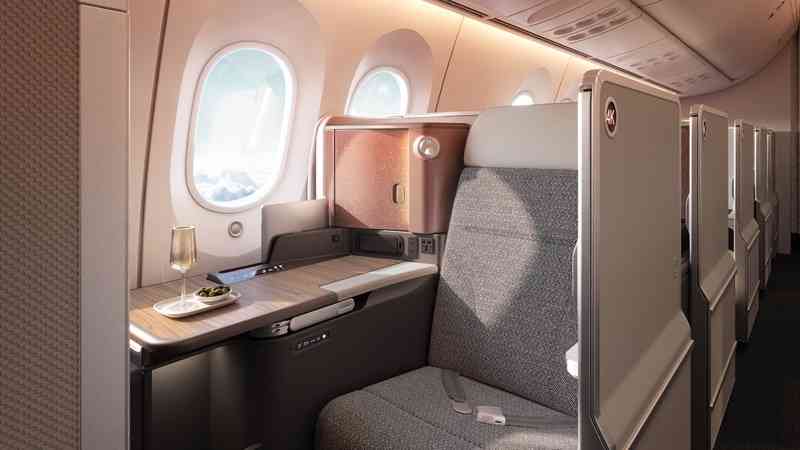
787 Business Suite
Jetstar International lifted revenue by 14 per cent. Capacity rose 11 per cent, and the airline carried a record number of passengers. New narrow-body jets helped it launch nine overseas routes. They also freed Boeing 787s for other work, including the new Melbourne–Colombo service.
Jetstar Asia ceased operations on 31 July 2025. Qantas has agreed to divest its 33.32 per cent stake in Jetstar Japan under a deal with Japan Airlines. The transaction is due to close by June 2027, subject to regulatory approval.
Freight also made ground. Net freight revenue rose 9 per cent. Qantas Freight began operations at Western Sydney International’s 24-hour cargo precinct in July 2026. The move places it close to growth in online trade and overnight freight.
New fleet moves from brochure to runway
Fleet renewal is no longer a glossy promise. New jets are now flying each day.
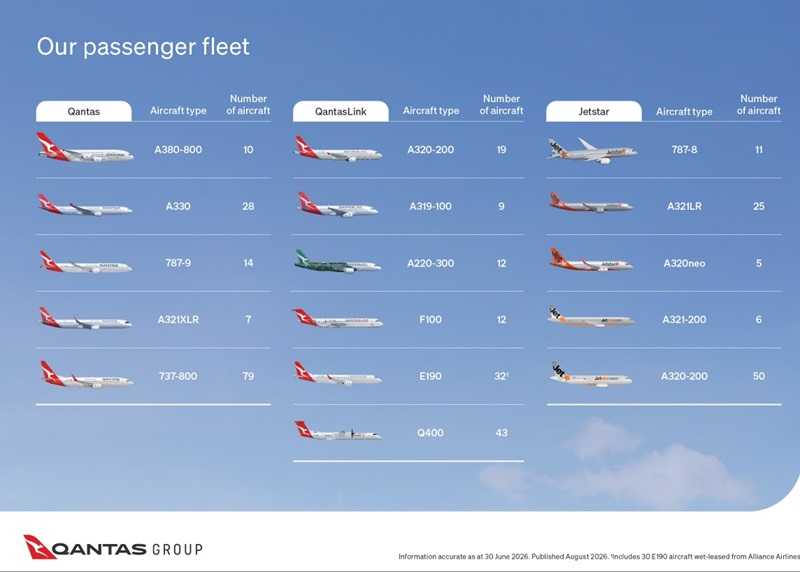
Qantas Group took delivery of 17 aircraft in FY26. It expects up to 31 more in FY27, with most set to join the Qantas fleet.
Seven Airbus A321XLRs were in service at year-end. The Airbus A220 fleet had grown to 12 aircraft. These jets and almost all Qantas Boeing 737s now have Economy Plus seats. The product will reach the Airbus A330 fleet in September 2026.

A321XLR Cabin Overview
Regional fleets are changing too. QantasLink is giving its Airbus A319s and A320s a mid-life refit. Mid-life Embraer E190s will soon begin replacing the old Fokker F100 fleet.
The headline act is Project Sunrise. The first Airbus A350-1000ULR is due in April 2027. Qantas plans to start non-stop Sydney–London flights in October 2027.
The Group has firm orders for 12 Project Sunrise aircraft. It has also ordered 12 more A350s and 12 Boeing 787s. Talks are underway with Airbus and Boeing to turn about 20 purchase rights into firm orders from 2030.
The first of the extra 787s is due in FY28. It will bring the next Qantas Business seat. The design will offer more room, a sliding privacy door and a larger screen. In modern Business Class, a door has become the new champagne. Most travellers, of course, will take both.
The new long-range jets will also spell the end of an era. Qantas will start to phase out its Airbus A380s from 2028. Many flyers love the superjumbo. Qantas says the newer twin-engine jets can fly further, use less fuel per seat and serve more routes.
Qantas expects the new fleet to simplify international operations and boost returns. It is targeting an international operating margin of 10 to 12 per cent from FY32. That is a goal, not a promise, and fuel prices could still have the last word.
Loyalty keeps earning its keep
Qantas Loyalty was again a steady profit driver. Underlying EBIT rose 12 per cent to $625 million. Active member numbers grew 6 per cent. Points earned and points used each rose 9 per cent.
Members booked a record five million flight Reward Seats. First and Business Classic upgrades grew 7 per cent. Bookings through Qantas Hotels, Holidays and Tours reached $1.6 billion.
More than 20 million searches have been made with the new Reward Seats tool. From September 2026, members will be able to request upgrades on Jetstar overseas flights operated by Boeing 787s. Status Credit rollover and new ways to earn status on the ground are due in December.
The division is forecast to lift Underlying EBIT by a further 5 to 7 per cent in FY27. Its goal is $800 million to $1 billion by 2030. Points, it turns out, are more than a garnish. They are one of the Group’s best shock absorbers.
Staff share in the result
Qantas spent more than $100 million on new training facilities during FY26. The work includes more A350, A220 and A320 flight simulators. The investment also covers new emergency-procedures training centres in Sydney and Perth.
A new Qantas Group training centre is now open at Mascot, near Sydney Airport. More than 10,000 Qantas and Jetstar pilots and cabin crew are due to train at the new sites each year.
The Group has created 4,400 operational roles in Australia since 2023. It expects to add thousands more as its fleet and network grow.
About 25,000 eligible non-executive staff will receive $1,000 in Qantas shares. The Group met the profit level defined in its annual share plan. It is a real nod to the people who kept the airline moving through a rough year—and rather more useful than a branded coffee mug.
Dividend returns as spending rises
Qantas ended FY26 with $13.3 billion in liquidity. That included $3.3 billion in cash, $2.1 billion in committed but unused facilities and $8 billion in aircraft and other assets not pledged as security.
Net debt rose to $6.2 billion. That sits near the middle of the Group’s target range. Net capital spending reached $4 billion as aircraft deliveries picked up.
The Board approved a fully franked final dividend of 19.8 cents a share. It is worth $300 million and is due for payment on 14 October 2026. The company paid an interim dividend of the same total in April.
The planned $150 million share buy-back will not go ahead. That leaves $150 million within the business as fleet spending rises. Capital spending is forecast at $4.3 billion to $4.6 billion in FY27. The cost of bringing new aircraft into service is expected to reach about $165 million.
FY27 brings promise and risk
Qantas says travel demand remains resilient. Overseas bookings are supported by travellers shifting trips away from the Middle East. Domestic demand is close to the level seen late in FY26.
Total unit revenue is known as TRASK in airline accounts. It shows the revenue earned for each seat kilometre offered. Qantas expects TRASK to rise by about 8 to 10 per cent for both domestic and overseas flying in the first half of FY27.
Total Group capacity is due to stay flat in the first half of FY27. Domestic flying will fall, while overseas capacity will edge up. This should support fares and help cover higher costs, but it may leave fewer cheap seats on some local routes.
Fuel remains the wild card. Qantas expects its fuel cost to reach about $3.6 billion in the first half of FY27. That figure includes hedges, carbon costs and fuel-saving work.
The Group is also seeking about $475 million in change and savings to offset inflation. It plans to use lower costs, new income and more technology. That includes wider use of artificial intelligence.
Passengers should see clear gains during the year. Qantas plans direct Sydney–Las Vegas flights, more Wi-Fi on overseas aircraft and a reopened Sydney International Business Lounge. Jetstar will keep upgrading its 787 cabins.
For investors, the test is simple. Can higher unit revenue and loyalty profit outrun fuel and fleet costs?
The FY26 result is not a victory lap, but it’s not a distress flare either. It is a profitable holding pattern before the largest fleet change in Qantas history gathers speed. Fuel may set the weather. Sound management will decide whether the flying kangaroo climbs through it.
By: Stephen Morton – © 2026.
Read Time: 9 minutes.
Author Bio:
 Stephen Morton has spent nearly fifty years shaping how the travel industry thinks, speaks and sells itself. From a family agency in 1976 to today’s digital frontier, he’s rarely followed the crowd; more often, he’s been waiting at the front long before anyone noticed the line forming.
In the mid-nineties, he pushed Agents Support Systems online while the industry still clung lovingly to the fax machine. In 2001 came e-Travel Blackboard, a daily bulletin that grew into Australia’s most-read industry newsletter, expanding across New Zealand, Asia, the Americas, and MICE.
Global Travel Media followed in 2009, earning international awards and spawning new titles, from Destination Thailand News to Global Cruise News and now GTM Holidays and the forthcoming GTM Mall.
Lecturer, founder, and agitator Morton has always turned instinct into impact.











